
View fullsize
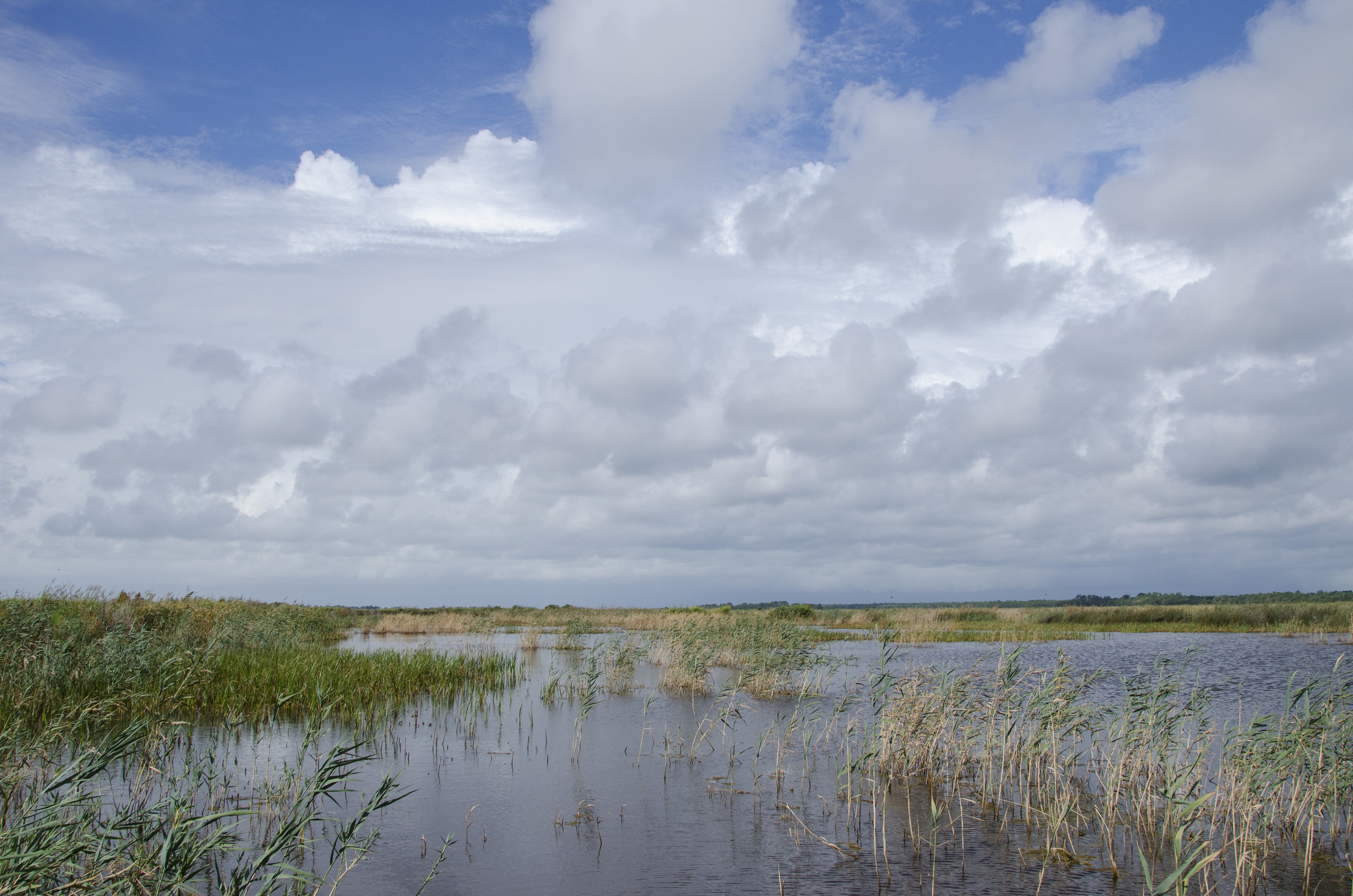
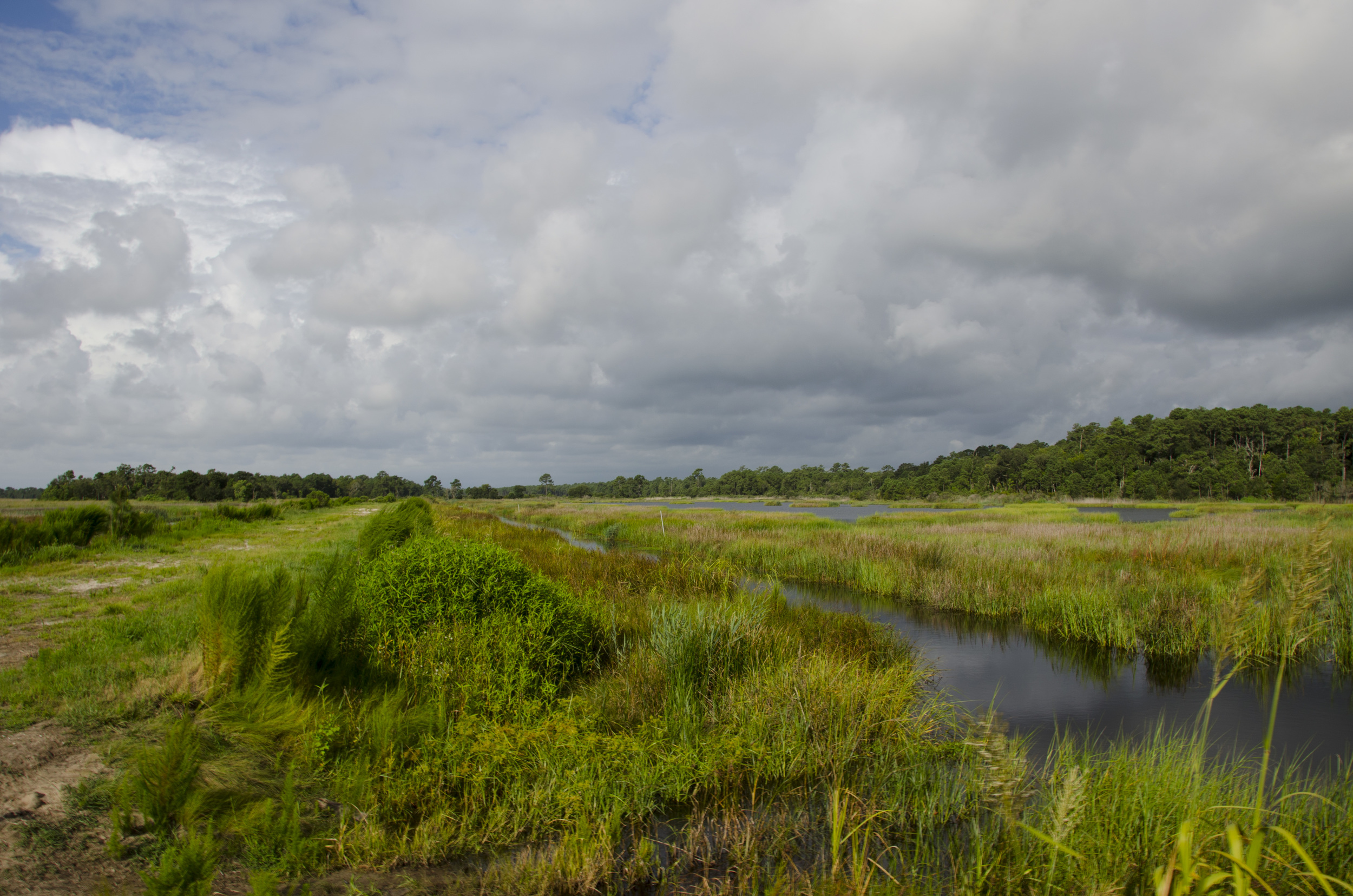
The view of The Cape at Santee Coastal Reserve WMA from the front seat of the “Marshmaster.” Managing a property like this takes the right tools and the right personnel.
Tucked between the Atlantic Ocean and the South Carolina mainland just north of McClellanville and east of U.S. Highway 17, where the once-massive flow of the North and South Santee rivers finish their run to the sea, you’ll find a true “sportsman’s paradise,” the SCDNR’s 24,000-acre Santee Coastal Reserve Wildlife Management Area. The upland portion of the property includes a massive cypress wetlands – the “Washo Reserve,” owned by the Nature Conservancy — and a considerable amount of upland pine and mixed-hardwood forest, but Santee Coastal Reserve is probably most well-known among sportsmen and women in the Palmetto State and beyond for its massive system of former rice plantation impoundments that extends for miles across “The Cape” and Murphy and Cedar islands, crisscrossed by a checkerboard pattern of dikes and canals. The former rice fields provide amazing habitat for a wide variety of waterfowl, and in August, I travelled to SCR to get a first-hand look at some of the highly-specialized pieces of equipment used by SCDNR property managers to maintain this incredible place.
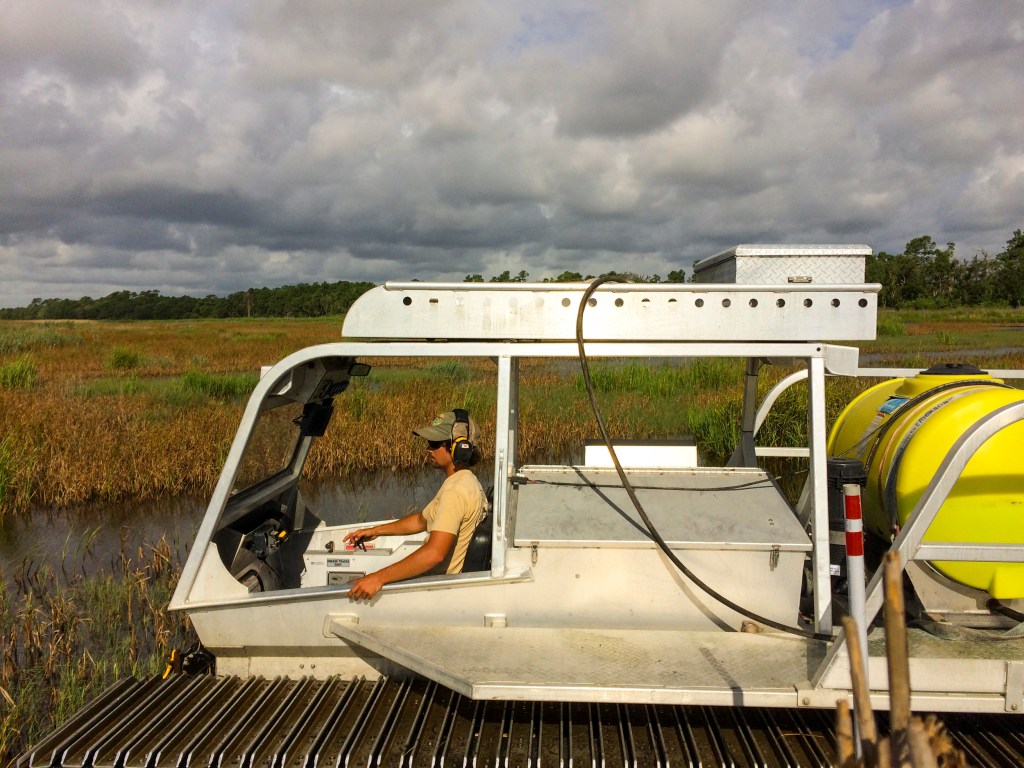
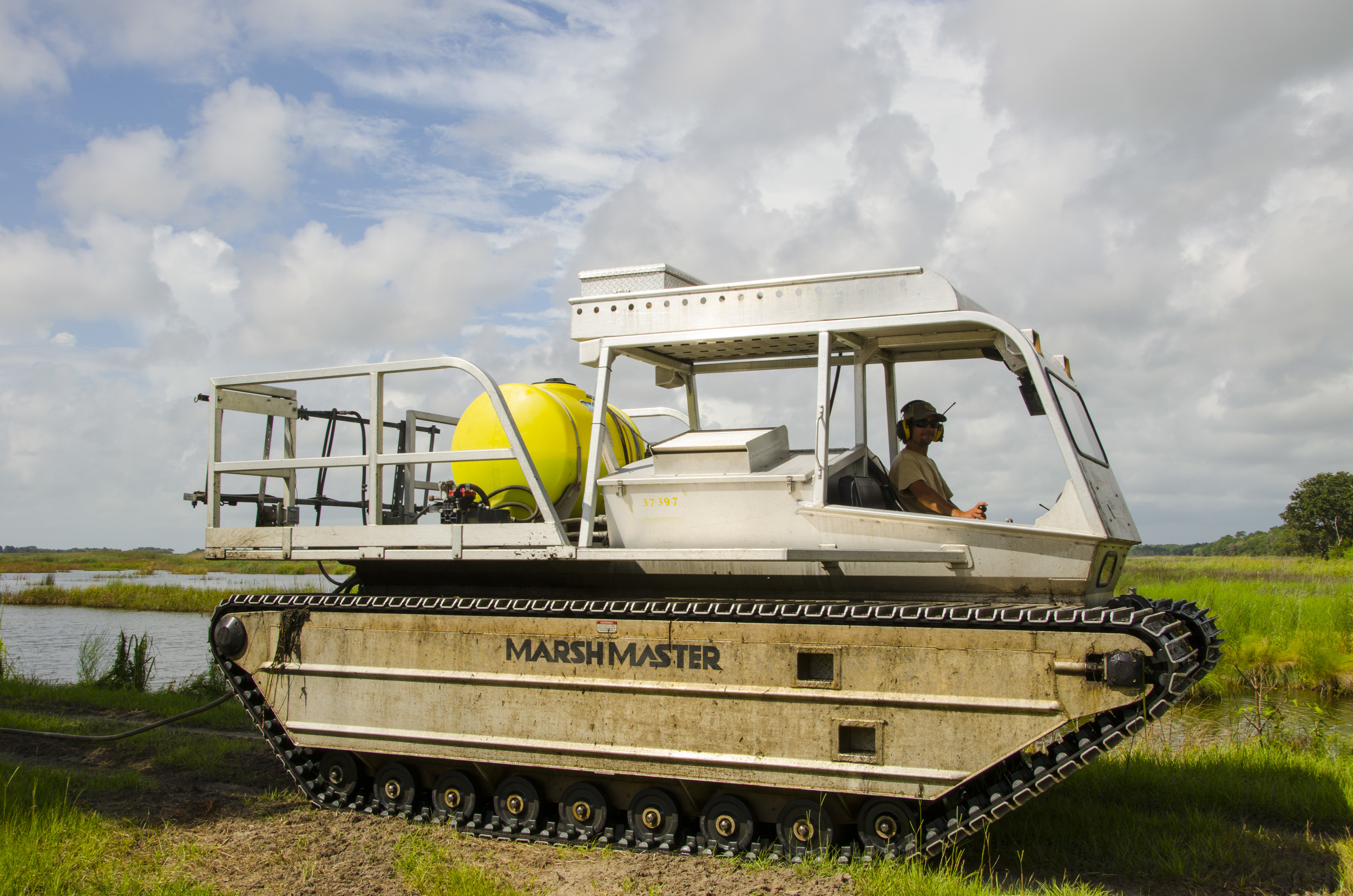
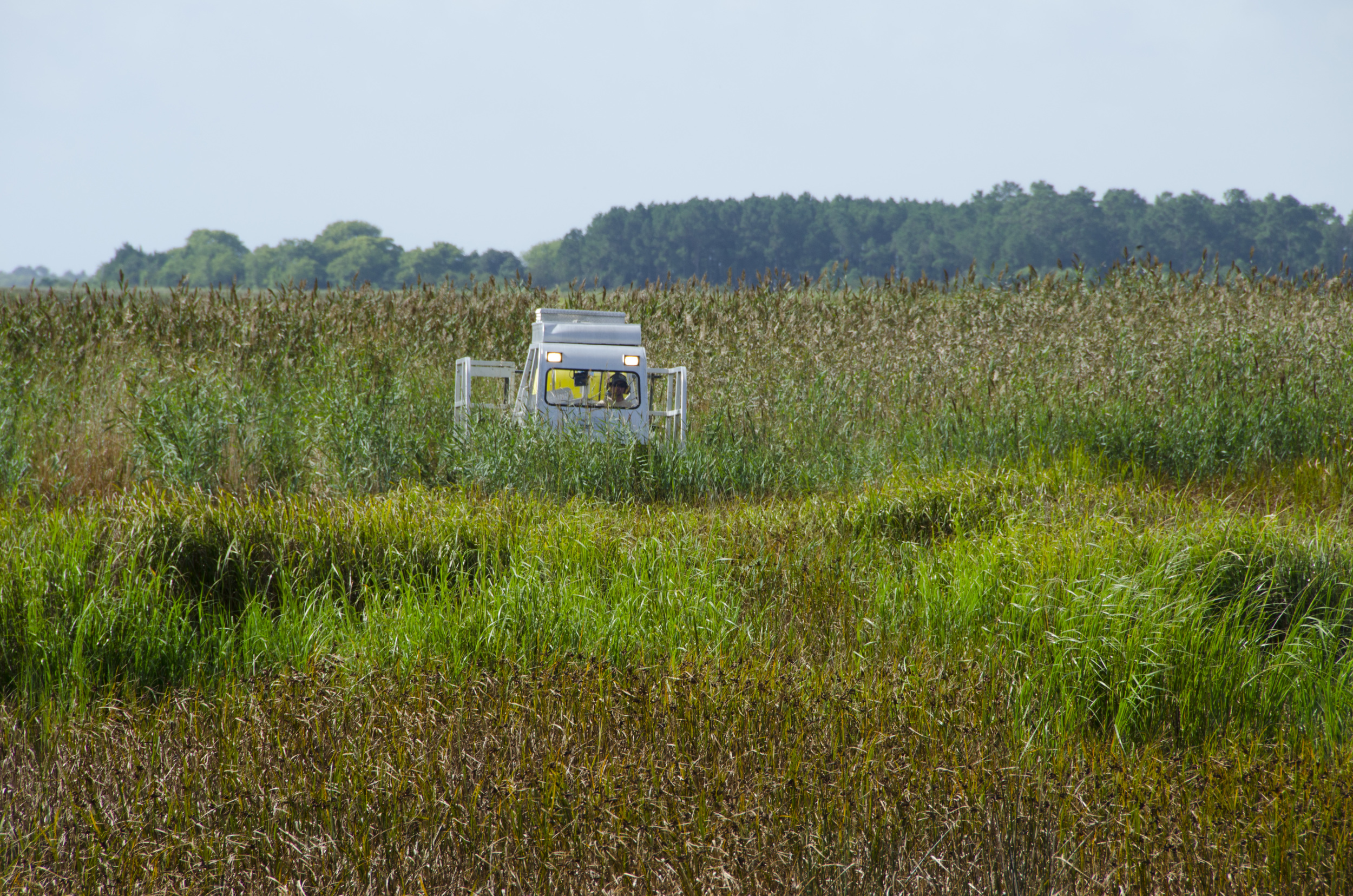
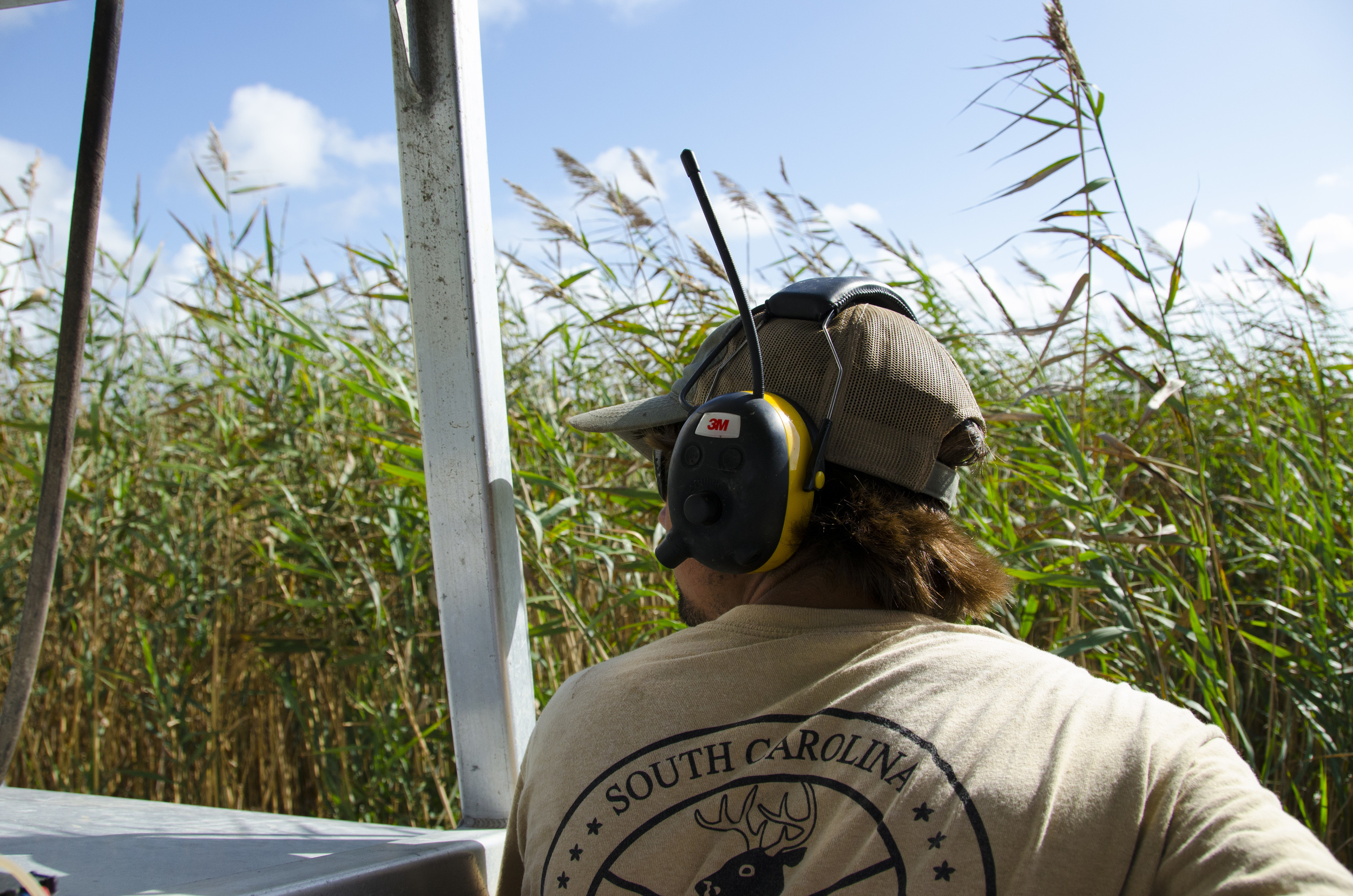
Imagine an ATV pumped up on more steroids than the Russian Olympic team; a massive diesel engine driving a pair of tank-like tracks above which sits a steel platform with just room enough for a cab for the operator and some cargo space. The tracks themselves spin around a set of pontoons, which gives the beast enough buoyancy to cross creeks and streams, with the turning tracks providing enough forward propulsion. It’s slow….and loud – both operator and passenger wear ear protection to guard against the diesel’s incessant roar at anything other than a dead idle – but the thing can go just about anywhere, and where it’s going right now is down and across a dike and ….Splash!… directly into the main canal feeding water to the impoundments of The Cape.
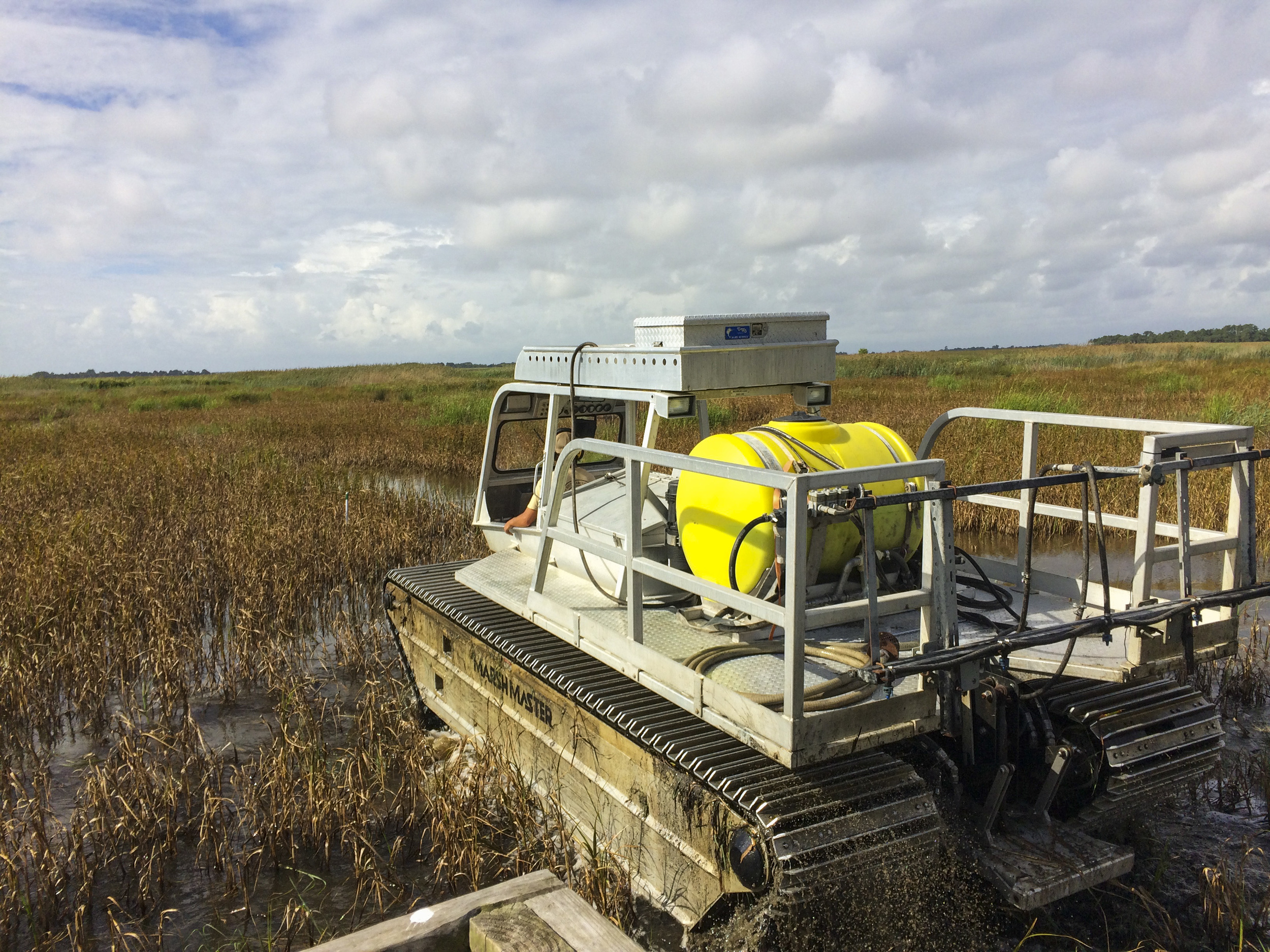
The Marshmaster takes off across a a managed impundment with SCDNR Wildlife Technician Simeon Thornhill at the controls.
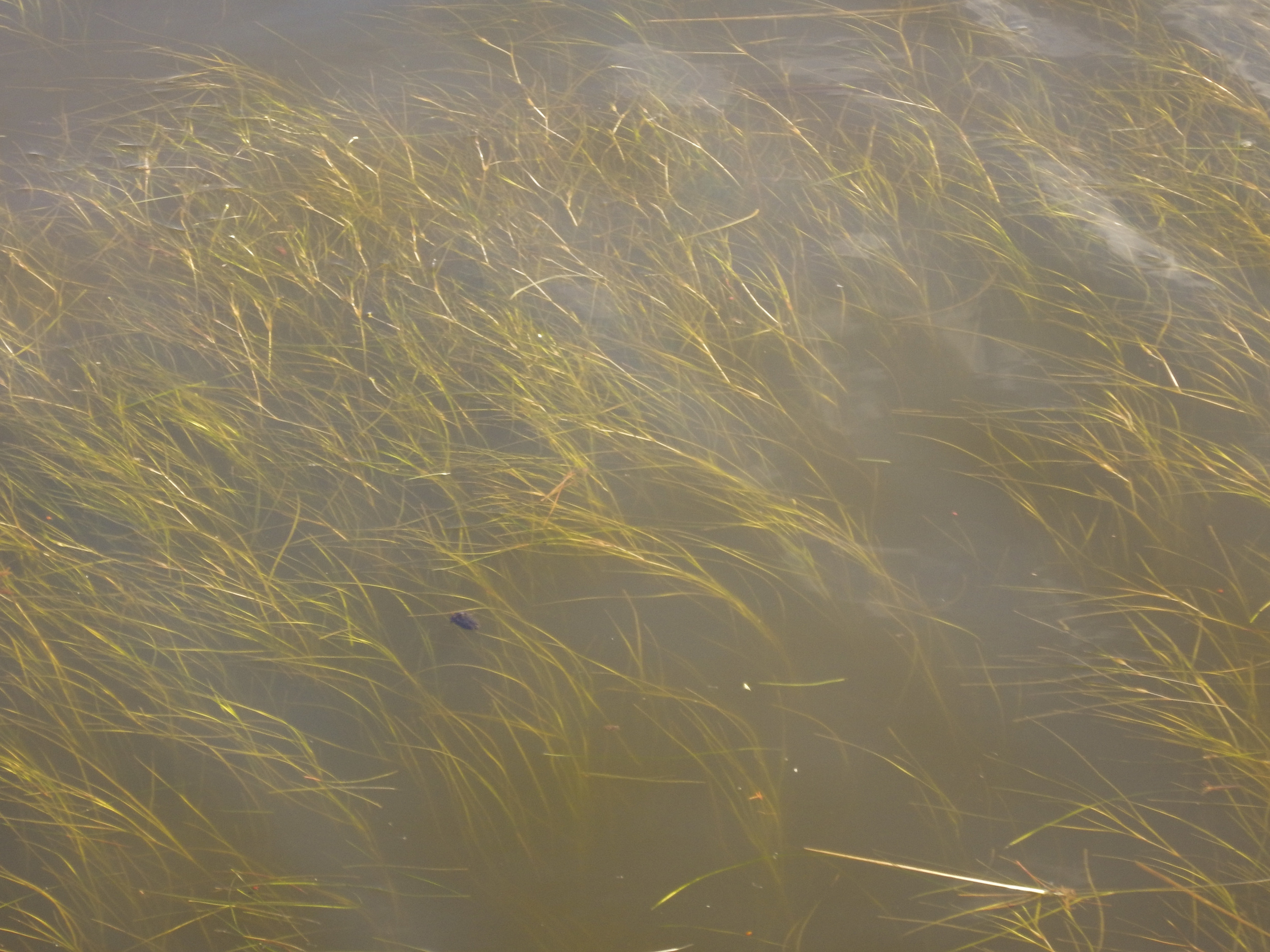
This is the “Marshmaster,” and I’m lucky enough to be riding shotgun in it with Wildlife and Freshwater Fisheries Division Technician Simeon Thornhill, a member of the team of technicians overseen by SCDNR Unit biologist Joachim Treptow that is responsible for maintaining Santee Coastal Reserve, as well as nearby Santee Delta WMA and Samworth WMA just up the coast in Georgetown, keeping these treasured public properties in the fantastic shape that keeps visitors to them coming back year after year. This time of year, Thornhill’s main job is piloting the Marshmaster across the impoundments on The Cape, spraying to control “phragmities,” a noxious invasive plant that, left untended, will choke out the widgeon grass, bulrush and dwarf spikerush that are preferred food sources for migrating and overwintering waterfowl here.
“Sim,” as his co-workers call him, has a serious demeanor that belies his youth, and is a man of relatively few words, but under questioning, he allows that, yes, “it’s possible” to get the Marshmaster stuck, but “not likely.” He has accomplished that feat before though, he says, on a couple of occasions when he was first learning to operate the machine.
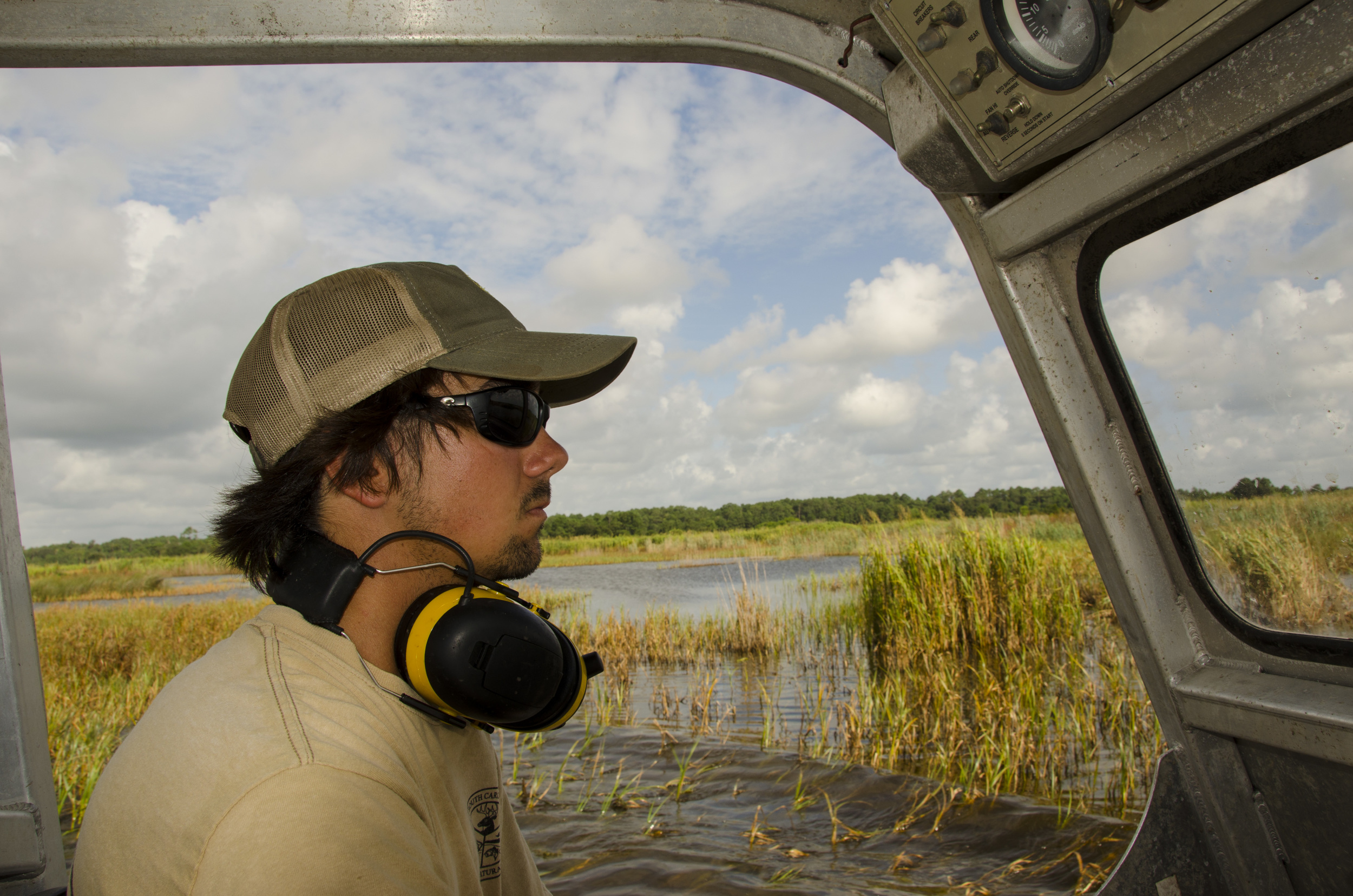
At just 22, and one year after graduating from Horry-Georgetown Technical College’s Wildlife Management program, S.C. native Simeon Thornhill has already found the job that he hopes will be a lifetime career.
I look around at the acres and acres of marsh where we are sitting – several miles from the equipment shed at SCR Headquarters and help, even as the crow flies (only we ain’t crows). “What do you do if that happens,” I ask? Sim shows me a sturdy steel anchor strapped to the steel cage on the roof of the cab and then points down between us to the big winch at the front of the machine. It’s a strategy that requires the operator to get down in the knee-to-waist-high water of the impoundment to stick the anchor in the mud bottom, slog back to the machine and hope the winch can pull you up to more solid footing. Lather, rinse and repeat as necessary. I think about that for a minute – slogging across fifty yards of prime gator habitat to bury that anchor in the mud – watching while a hawk circles on thermals above a faraway tree line. All of a sudden it feels kind of lonely. As if reading my mind, Sim kind of laughs. “There’s a lot of small gators out here,” he says.
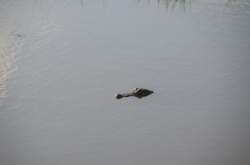
Yeah. . . . probably some big ones, too (is what I think, but leave unsaid).
So how’s that for a first job out of college? Pretty great if you grew up hunting and fishing in the Lowcountry of South Carolina and working in this environment is all you ever wanted to do since you were a kid, says Sim, who first came to work at SCR as a student intern while studying wildlife management at Horry –Georgetown Technical College. He graduated in the summer of 2015, and when a technician’s job came open at SCR, he jumped at the chance. I do the math in my head: this means he’s been operating the Marshmaster probably less than a year, yet it’s obvious he’s both skilled and comfortable with the machine. Coming out here, when we dropped off the edge of the dike and into the main feeder canal with a great splash and began crawling up the other side on the way into the impoundment, it took several tries for the machine’s massive floating treads to grab hold and pull us up the other side. Each time we’d tip sideways a little, Sim would back off a bit and try a new approach until finally the treads caught and we crawled up and over. I got the feeling he was taking it easy on me –– maybe understanding the fear a newcomer experiences when the machine dips hard one way or the other and all of a sudden that distant tree line visible through the muddy windshield is on a thirty-degree slant. I ask him about how he got so good, so quickly, at this seemingly endless task of maneuvering a howling diesel contraption back and forth across acres upon acres of salt marsh at literally the ends of the earth? The answer is hours spent in the driver’s seat, and a real passion for the work of managing Santee Coastal Reserve.
“I had experience on tractors and stuff like that [before working here], but this is a different kind of animal right here” he says. “It took some time doing it to really learn it. You just have to get a feel for how it reacts in soft spots. You get it stuck a couple of times, you start to see what it can take and what it can’t.”
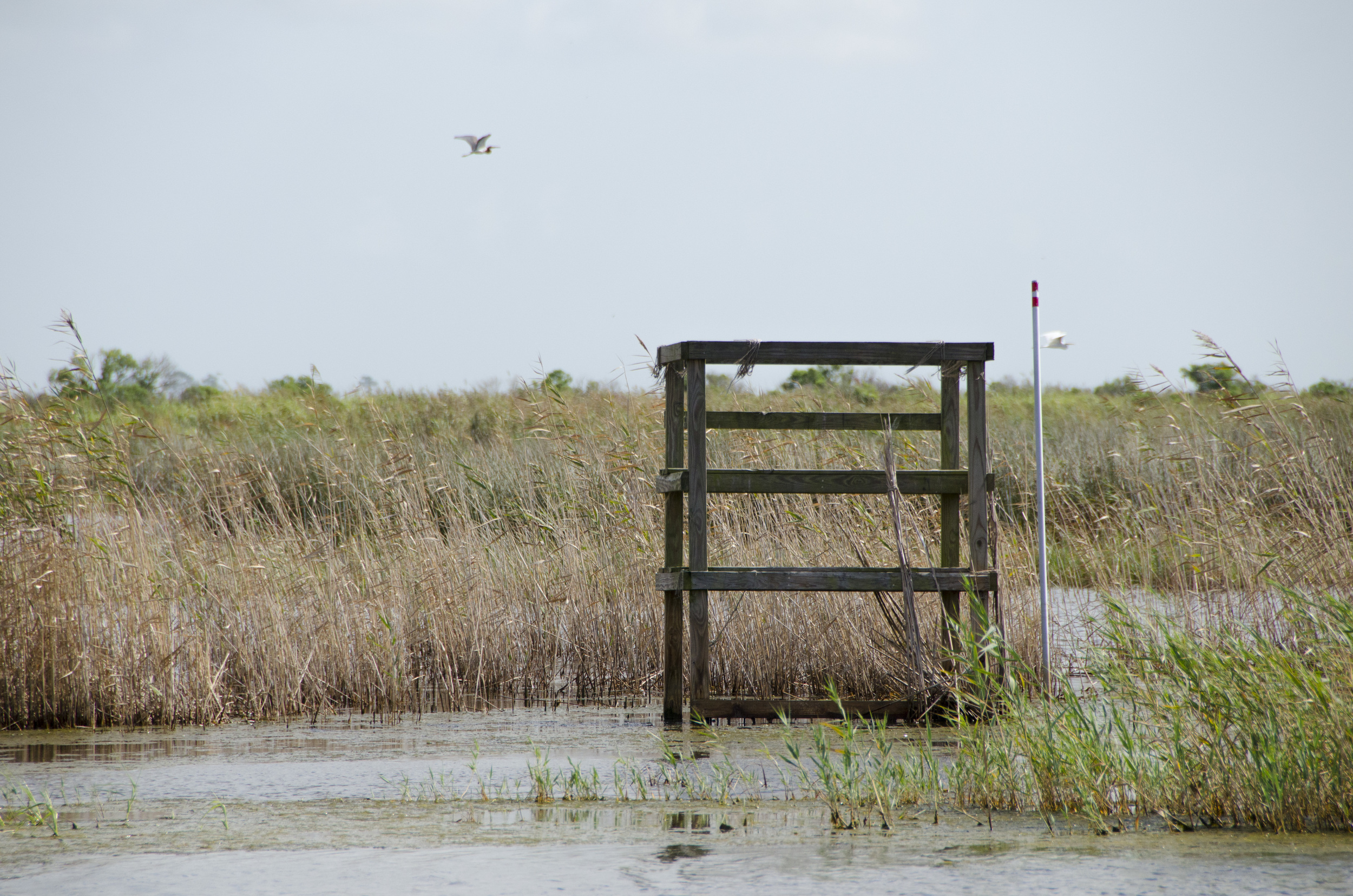
During this conversation, we are “parked” next to a small wooden blind that, come this winter, will be occupied by groups of excited duck hunters, successful applicants to the SCDNR’s incredibly popular lottery drawn hunts program, all eager to experience first-hand some of the finest coastal waterfowling the Palmetto State has to offer, me asking my questions while the Marshmaster’s diesel engine cools down a bit from where Sim has been driving it back and forth across an impoundment the size of several soccer fields, spraying large patches of phragmites while I take pictures from a distance.
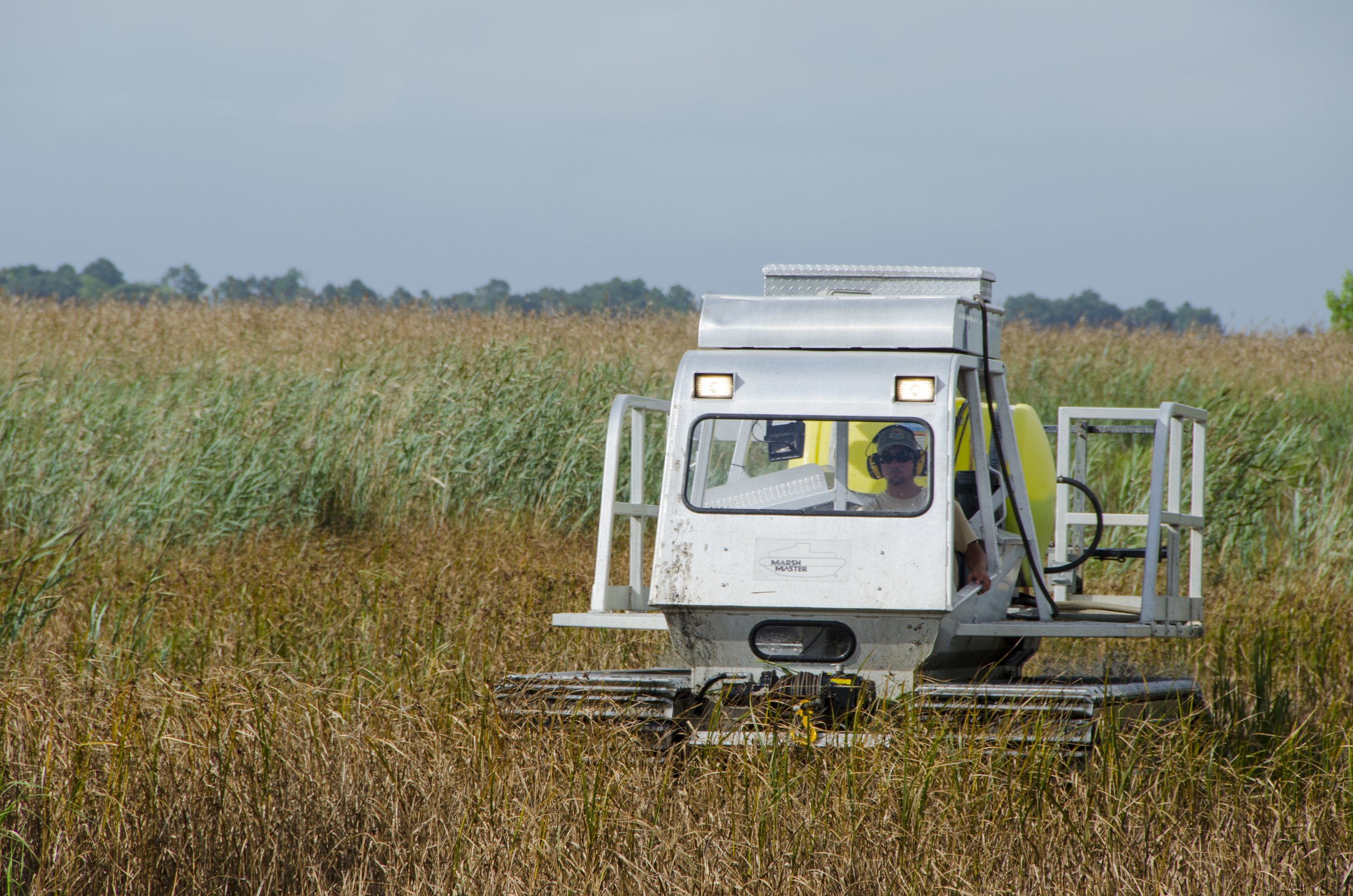
When it’s coming towards you, the Marshmaster makes a sucking-crunching sound that’s only audible above the roar of the diesel when you are standing outside watching it go. After being dropped off at the blind, I watch as Sim attacks a patch of phragmaties the size of a tennis court, the twin tracks of the machine cutting row after row through it just like a farmer’s tractor, but instead of plowing, he’s spraying a carefully mixed cocktail of aquatic herbicides designed to attack the noxious weed at its roots. The Marshmaster crushes through head-high stands of phragmities, and I can see the tall stalks pushing forward as the machine approaches the blind. Below the roar of the engine I can still hear that eerie grinding sound – maybe it’s the stalks getting crushed under the tracks and sucked through in a whoosh of water like some weird industrial-strength blender.
#block-yui_3_17_2_1_1471627556621_116939 .sqs-gallery-block-grid .sqs-gallery-design-grid { margin-right: -20px; }
#block-yui_3_17_2_1_1471627556621_116939 .sqs-gallery-block-grid .sqs-gallery-design-grid-slide .margin-wrapper { margin-right: 20px; margin-bottom: 20px; }
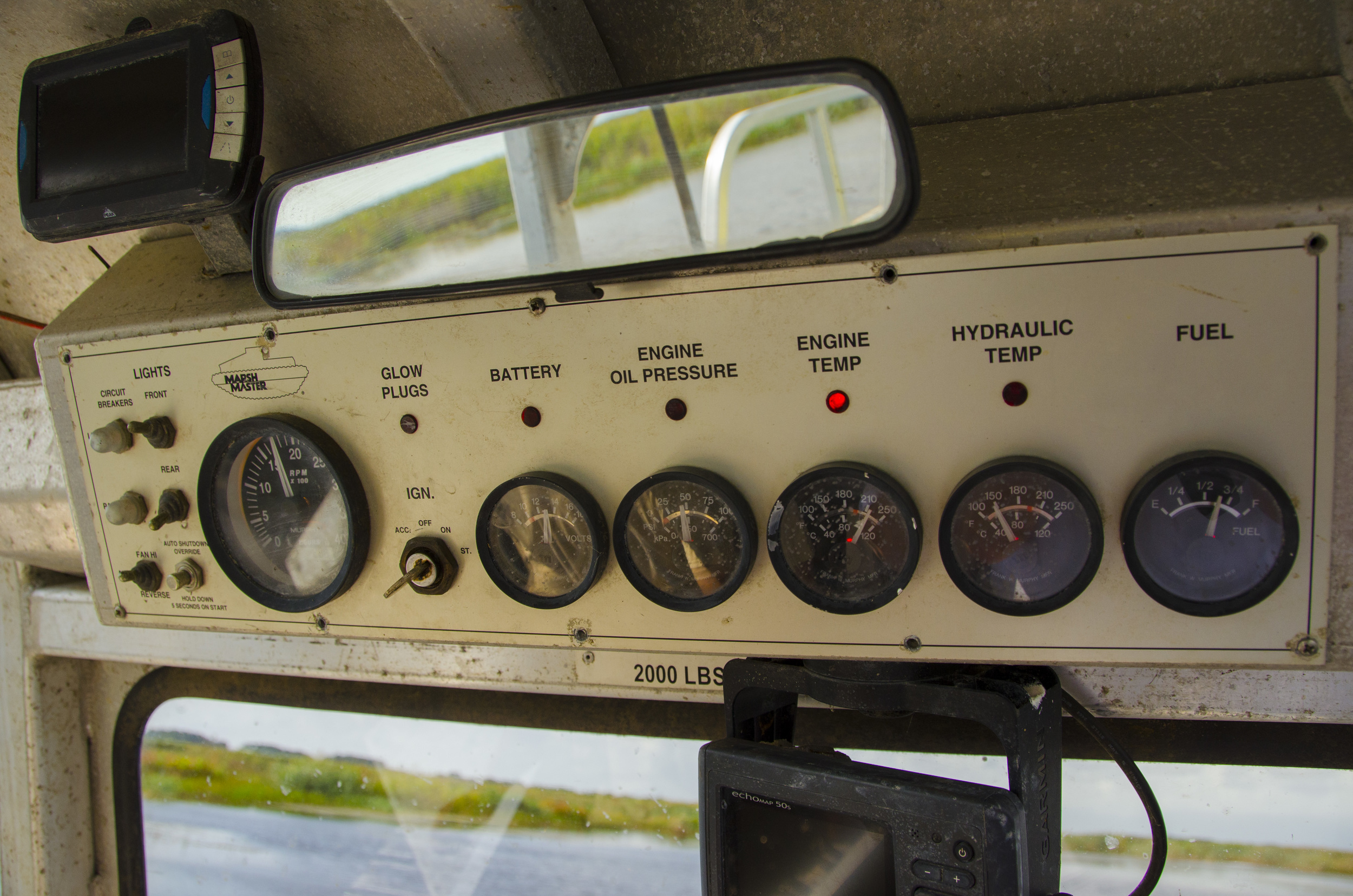
Upon his return, Sim circles the blind and pulls alongside with the practiced ease of a New York City taxi driver sliding into a primo parking spot and we sit talking, listening to the suddenly audible sound of a welcome breeze blowing across the marsh grasses and the ticking of the cooling engine. The Marshmaster’s powerful diesel is water-cooled, but even so, it can still run pretty hot under load, so it’s good a good idea to stop let it cool down every so often. The sprayer and other implements – a tow-behind mower for instance— run off an on-board a hydraulic system.
Does the repetitive nature of the job ever get boring? Not really, says Sim, “it feels good to know that we are working towards making it better for the wildlife, and I enjoy creating the habitat – bending the habitat – to do that.”
When the waterfowl hunts are held beginning in late November, “it’s really rewarding to help those people experience this and enjoy what we’ve done,” he adds
“You get to see a lot of things and experience a lot of things that most people don’t – you see a lot of wildlife and at the end of the day you feel pretty good about what you’re doing. “Here (SCR & Santee Delta), you’ve got saltwater and freshwater and you’ve got upland woods and coastal habitat. Right here is some of the best waterfowl habitat and shorebird habitat there is anywhere, so it’s something very special.”
— David Lucas
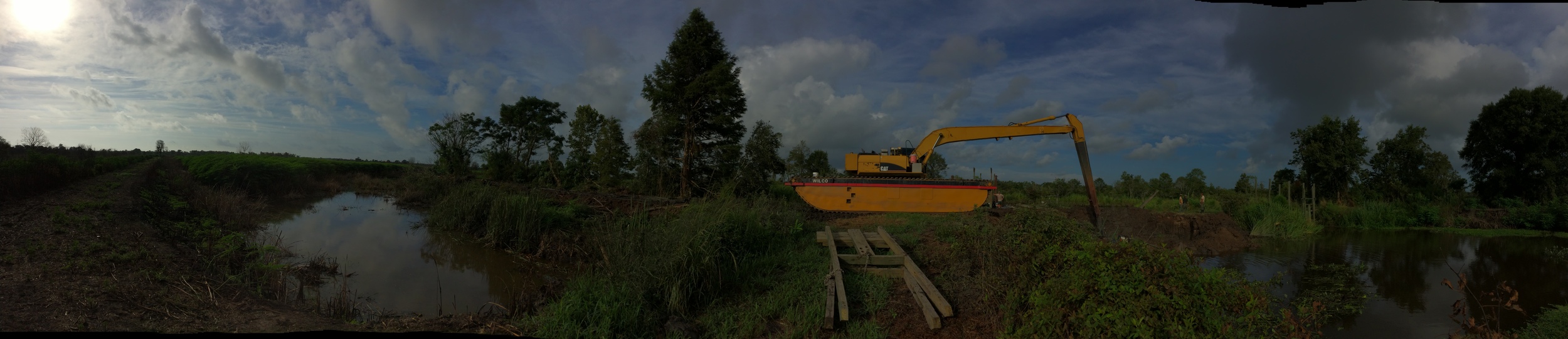
Next up, Cool Tools Part II: The Amphib
 SCDNR Blog
Leave a comment