
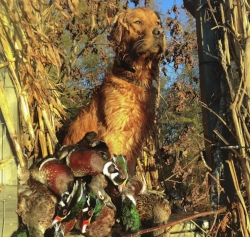
Thumbnail photo on home page: Retriever with a mixed bag of ducks near Pinewood, S.C. by Jeff Rosser.
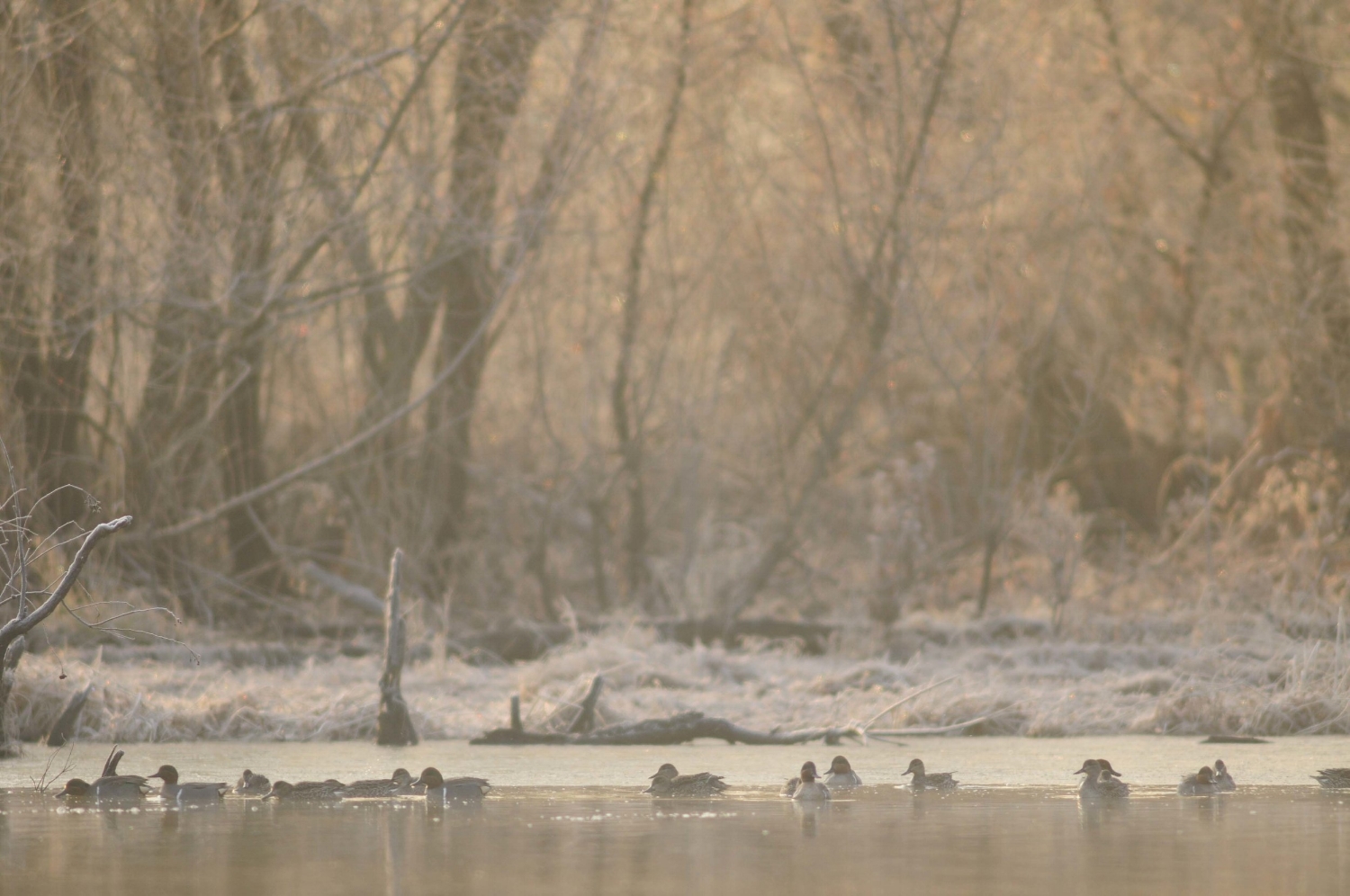
Waterfowl at Broad River WMA at daylight. (photo: SCDNR photo by Stewart Grinton)
If you follow the SCDNR at all, you may have noticed a greater push recently to provide our constituents and citizens with more and better online and digital information, stories and updates. No big surprise, in 2016, that’s how you reach people, and reaching out to South Carolinians to educate and promote awareness of our natural resources is a part of our mission. This new Blog and our sister South Carolina Coastal Resources Blog are a part of that effort, and in the coming months you might notice even more new digital content from the SCDNR coming your way.
One of those new content avenues will be a series of SCDNR “podcasts.” If you’re not familiar with the term (or, like me, you’ve heard of it but haven’t really embraced using them as yet), just think of them as little radio shows or video clips that you can take with you and listen to or watch at your leisure. Supposedly, the “pod” in “podcast” came about because Apple iPods were extremely popular when it was coined, but nowadays, just about any device with Internet connections can be used to download and get these blasts on the go, so very soon, you’ll be seeing a new series of SCDNR podcasts produced by our Office of Media and Outreach. One of the first will be an interview with SCDNR Waterfowl Project and Region IV Wildlife Coordinator Dean Harrigal. There’s no one more knowledgeable about the challenges of managing our state’s wildlife, particularly waterfowl. I learn something new every time I talk with Dean, and you will too. Recently I was lucky enough to give a listen to some raw audio interview of him talking with veteran SCDNR videographer Glenn Gardner for what will be the first SCDDNR podcast.
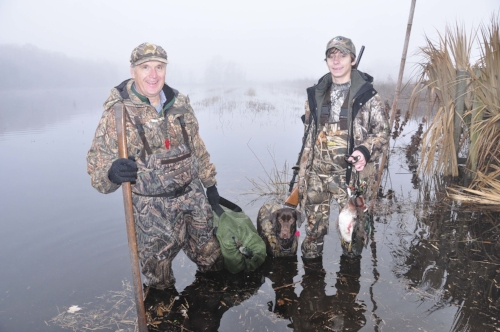
Veteran SCDNR biologist Dean Harrigal (shown here with his son on a youth hunt) knows ducks. And if you listen to him on the upcoming SCDNR Podcast, you will too. (photo: SCDNR photo by Stewart Grinton)
Here’s just a taste of what you’ll learn when you tune in :
First off, did you know that in Region 4 alone, the SCDNR is responsible for the management of more than 25,000 acres of prime waterfowl habitat? Well, it’s true, says Harrigal. Second, a major driver of when (and how many) ducks show up in South Carolina in a given year is the weather and water conditions – not necessarily in South Carolina itself, but in regions to our west and north.
“Our seasons (in SC) depend a lot on the weather….but you know, the availability of water to birds in other parts of the migratory pathways plays a big role [also]. If it’s really dry, inland from us, heading in a northwest pattern or up the coast, and there’s no water for birds to loaf on or to feed in, we see big influxes of birds a little bit earlier. An early cold snap that freezes up . . . it can be warm here in South Carolina and freezing to death 200 miles away when these cold fronts sag, and here they come! Also, the moons play a fairly big role . . . with our first big slug of birds coming in with the full moon that comes along usually in early November.
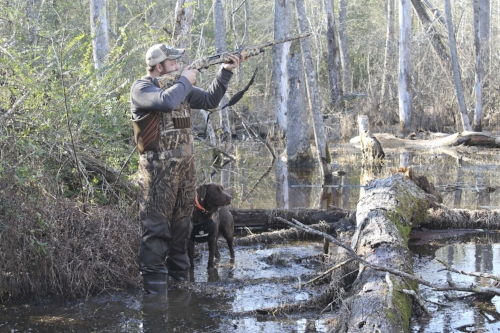
Finding the right habitat is key to finding ducks. After that, the weather, and even the moon, can play a large role. (photo: SCW magazine -Harry Hampton Photo Contest photo by Kaylee Hudson)
“In terms of Duck populations in our state, the coastal areas have the largest amount of habitat – the Santee Delta, the ACE Basin – and that’s where we see our largest concentrations of birds. Throughout our state, people can generally find wood ducks scattered around in the beaver ponds with some mallards mixed in…. Our river systems provide good hunting opportunities– major migratory corridors are the Pee Dee system, the Broad River system leading down to the Congaree and into the big lakes, and of course up and down the Savannah River. So, ducks are where you find them.”
On The Flyway:
“We are in the Atlantic flyway, but flyways are administrative units that were laid out based on early banding records . . . but just because we are in the Atlantic flyway doesn’t necessarily mean that ducks fly from Maine to South Carolina. As we’ve been able to further analyze the banding data using things like satellite telemetry, [we’ve discovered that] a good proportion of our birds come from the Great Lakes states. So they don’t migrate from Maine to New Hampshire to Massachusetts to North Carolina to South Carolina, they come down the eastern edge of the Mississippi Valley – over the hump and through the mountains and into South Carolina.

Mallard ducks near Mount Pleasant. (photo: SCW magazine -Harry Hampton Photo Contest photo by Sandy Bostick)
Wood ducks are a mainstay:
“The number one bird in the bag in South Carolina has been the wood duck, you know, that’s our bread and butter bird. So if you look at the proportion of a bag of ducks in our state, generally between 40 and 50 percent of the reported harvest is wood ducks, and then the rest are kind of proportioned out depending on the year and who decides to come to South Carolina that year.”
There’s LOTS more interesting information and discussion about waterfowl in South Carolina over the course of this wide-ranging interview. Be sure and look for the announcement about the podcasts over the next few weeks and tune in!
 SCDNR Blog