
by David Lucas
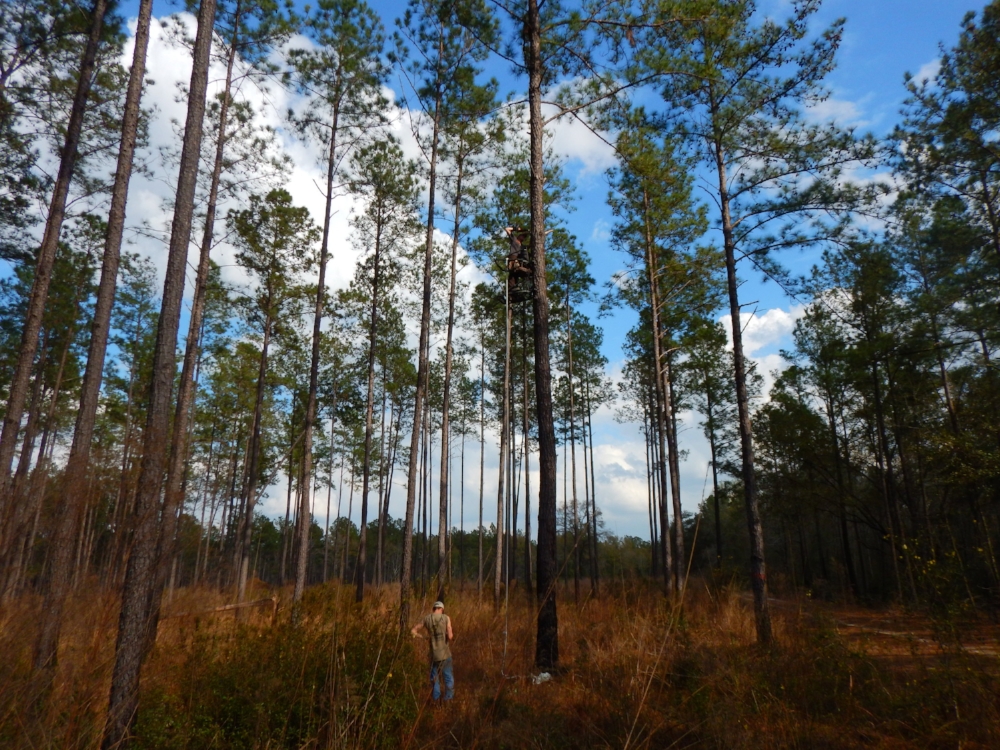
Researchers Kyle Zinn and Alaina Gerrits install a remote sound recorder on Hamilton Ridge WMA. Recordings from the unit will be used as part of a multi-years “chronology study” into the movements of wild turkeys.
At the SCDNR’s Webb Wildlife Center, a new generation of researchers is using a mix of high-tech and old-school research tools to gain fresh insights into the movements of Eastern wild turkeys.
Part II of a III-Part Series: The Trees Have Ears . . .
On another frustratingly warm but absolutely beautiful Lowcountry afternoon, I’m once again riding the roads of Webb, Palachucola and Hamilton Ridge WMAs with Alaina Gerrits and Kyle Zinn.
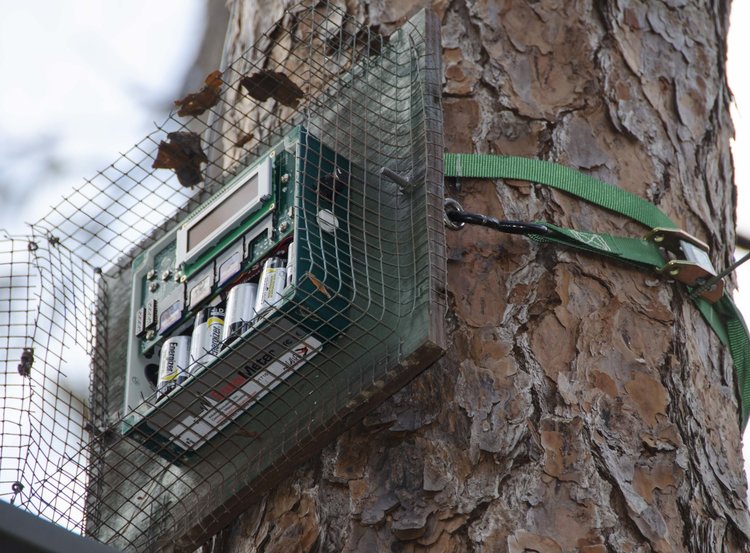
It being too hot to effectively rocket net this afternoon, we’re instead focused on another part of their multi-faceted data collection effort. Using a climbing tree stand, Gerrits and Zinn are mounting powerful listening devices high in the trees at strategic points on the Webb Center, Palachucola and Hamilton Ridge. Set to record during daylight hours, the powerful microphones are capable of capturing and saving hours of natural sounds. Birds singing, squirrels chattering, and . . . you guessed it . . . turkeys gobbling.
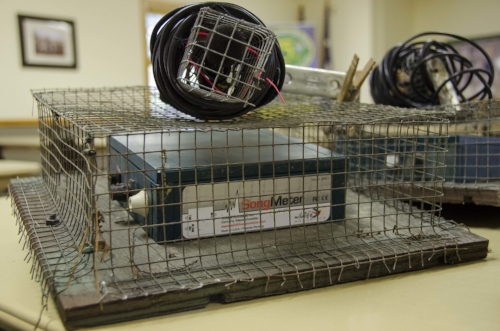

Powerful microphones like this one mounted high in a tree at the SCDNR’s Webb Wildlife Center can capture the sounds made by wild turkeys during the spring and give researchers new insights into the life history of these fascinating game animals.(Above) A row of sound recording devices sits ready to be deployed in a Webb Center classroom.

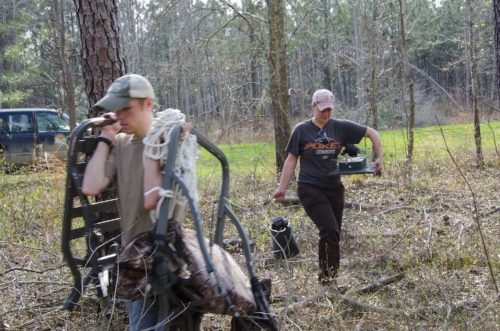
Using GPS coordinates marked during the previous field season, Gerrits and Zinn look for the perfect spot to locate a sound recorder, and then haul their gear in to the site on foot.
Earlier in the week, I’d been sitting standby, this time with Patrick Wightman, another LSU grad student who’s been working with the Webb Center study for three years.
“We’re also doing a gobbling chronology study out here, so we’ve got fifteen sound recorders that we put out from March first to June first, and we’re recording constantly from five in the morning until 8 at night,” said Wightman. “At the end of this season we’ll have three years’ worth of gobbling data.”
Only recently has such a method of data collection been available to researchers, Wightman told me. “The amount of data we’re collecting – we’re talking terabytes on top of terabytes of data to store and keep track of.”
The vast amount of storage capability needed alone would have made this project impractical just a decade ago. But with the cost of high-capacity memory chips and portable, high-capacity hard drives now a fraction of what they were then, hours of ambient sound can be collected and stored easily and relatively cheaply. A software program then separates out the gobbling from the other sounds picked up by the recorders by being able to recognize the precise frequency of a gobble. Sometimes it’s necessary for a person to listen and verify the sound, but the software makes it possible for students in a lab at LSU to process thousands of hours of recordings fairly quickly, and to mark the precise time of each gobble.
Once processed, the data from those sound recordings can be used to create a “gobbling chronology” based on when males begin to gobble and the number of gobbles. That data, along with GPS data from monitored nesting hens, will help researchers better determine when males pair up with females and start nesting, which has huge implications for determining the optimal time to begin hunting season (by making sure that most hens have been bred prior to the start of the season.)
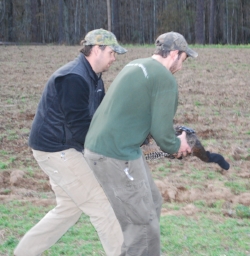
Wightman (right) and SCDNR biologist Jay Cantrell prepare to release a transmitter-tagged turkey.
Also an avid turkey hunter, Wightman can go from an enthusiastic description of a day spent in “chasing longbeards” with a shotgun to a complex discussion of the science behind his Master’s thesis without skipping a beat. It’s preliminary, he says, but some of the evidence they are finding through the sound recording work could point to a real breakthrough in understanding a key aspect of male turkey behavior.
“After winter flock breakup birds start gobbling, because they’re out there trying to get their hens grouped up” says Wightman. “Then there’s kind of a lull when they are breeding. It [gobbling frequency] increases again once the hens are nesting – at least that’s what the literature says – but we are finding some differences in that with our data. We’re still working on analyzing last year’s data, but what we’re seeing is more that the drop off in gobbling is really happening when the hens are on the nest.”
A male turkey movement study based on Wightman’s research is due to be published soon in the Journal of the Southeastern Association of Fish and Wildlife Agencies. Wightman is completing his Master’s degree at LSU, and like these other young researchers, is eager to forge ahead with a career in wildlife management.
According to Wightman, all of these new technologies make it a fascinating time to be a turkey biologist.
“People in this field have been working for a long time trying to answer the same set of questions with the same set of tools, but now, with this new GPS technology and other things we’re using, there’s just a tremendous number of questions that biologists wanted to answer back in the day that we may be able to [finally] answer,” said Wightman. “Now we can put a unit out there and get exact locations every thirty minutes on a bird’s life. It tells us a true story of what’s going on, on the ground, and I think that’s really exciting.”
“For instance, he continued,” from looking at the GPS data from several years, you can derive accurate average times for say…the start of incubation or the average time turkeys start laying eggs, then you get a good timeline for what that looks like and that has a relationship with the gobbling data. There’s just so many questions you can answer – we’re really just touching the tip of the iceberg.”
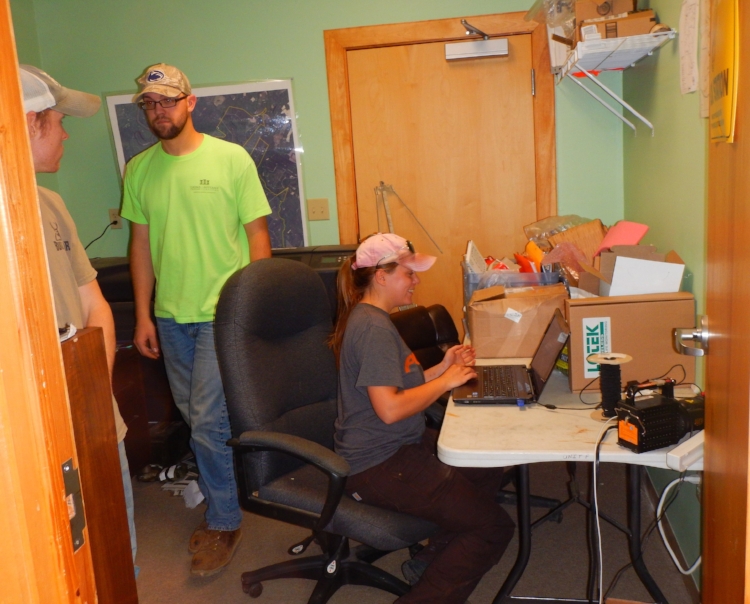
In a tiny office in the Webb Center crowded with equipment, Kyle Zinn, Ryan Klinedinst and Alaina Gerrits gather around a laptop computer to review data collected over the previous week. The three are looking forward to long careers as wildlife professionals, and their work on the SCDNR wild turkey research project will provide valuable experience towards their career goals.
Who knows, maybe in another decade researchers will be tracking the movements of these wily birds using tiny drones, or other technologies not yet even imagined. But one thing’s for certain, just as it has been since the 1950s, when it happens, the SCDNR and its partners in research will be leading that charge.
 SCDNR Blog