

Research being conducted at the SCDNR’s Aiken Gopher Tortoise Heritage Preserve is a true team effort that will help identify best practices for repopulating this imperiled species – hopefully keeping it from reaching “threatened” status here in South Carolina.
Text & Photos by David Lucas
The first thing I learned on a recent visit to the SCDNR’s Aiken Gopher Tortoise Heritage Preserve to photograph a group of juvenile gopher tortoises being released into a 2.5-acre “pen” is that two-year-old gopher tortoises reared in captivity are roughly the size of small grapefruits — that is, if the grapefruits were smashed a little flattish (and had cute, charismatic heads and small, scaly feet poking out of them). The one-year-olds are more tennis-ball-sized (or I guess avocado-sized, to keep the fruits and veggies metaphor going).
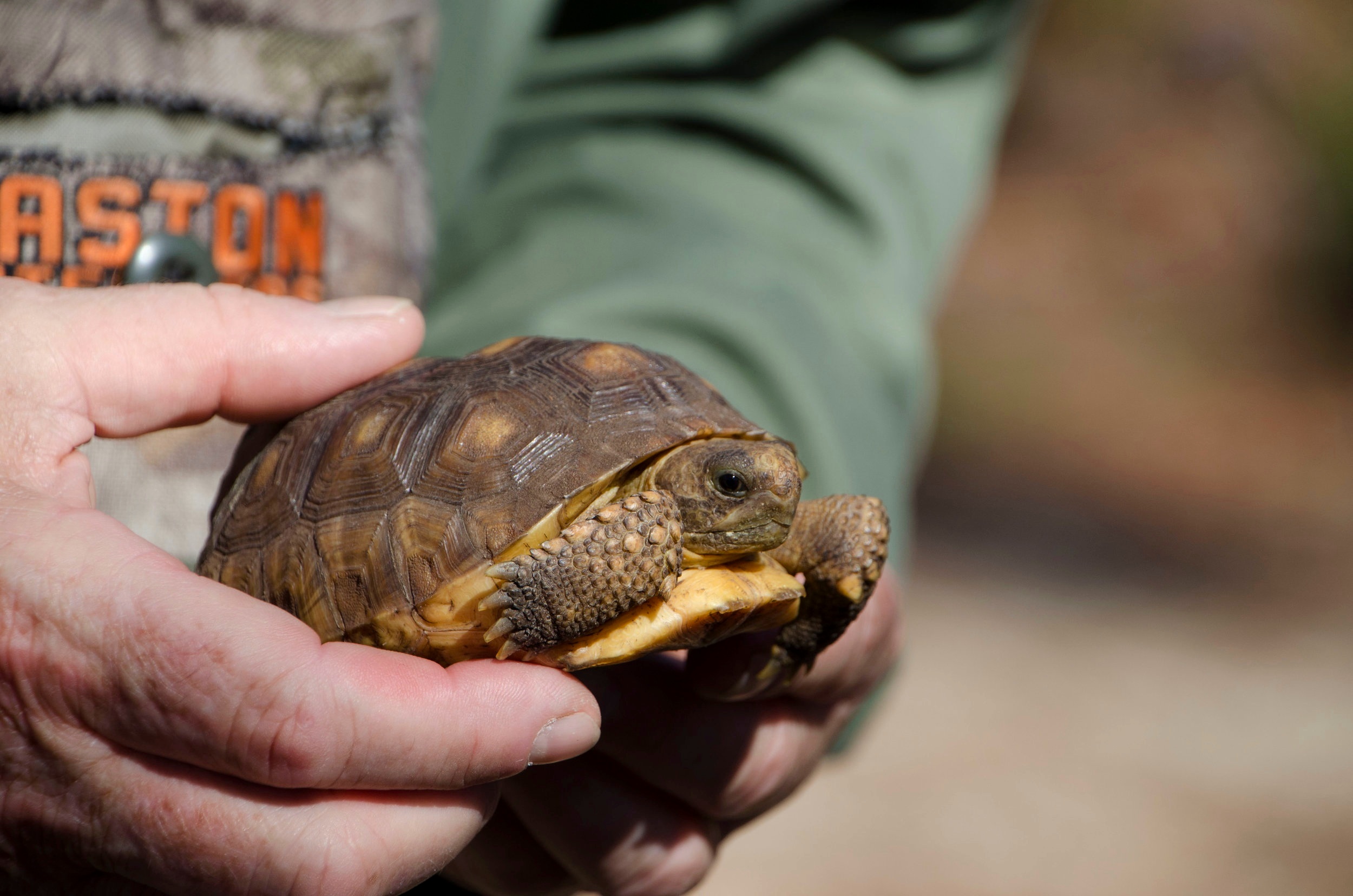
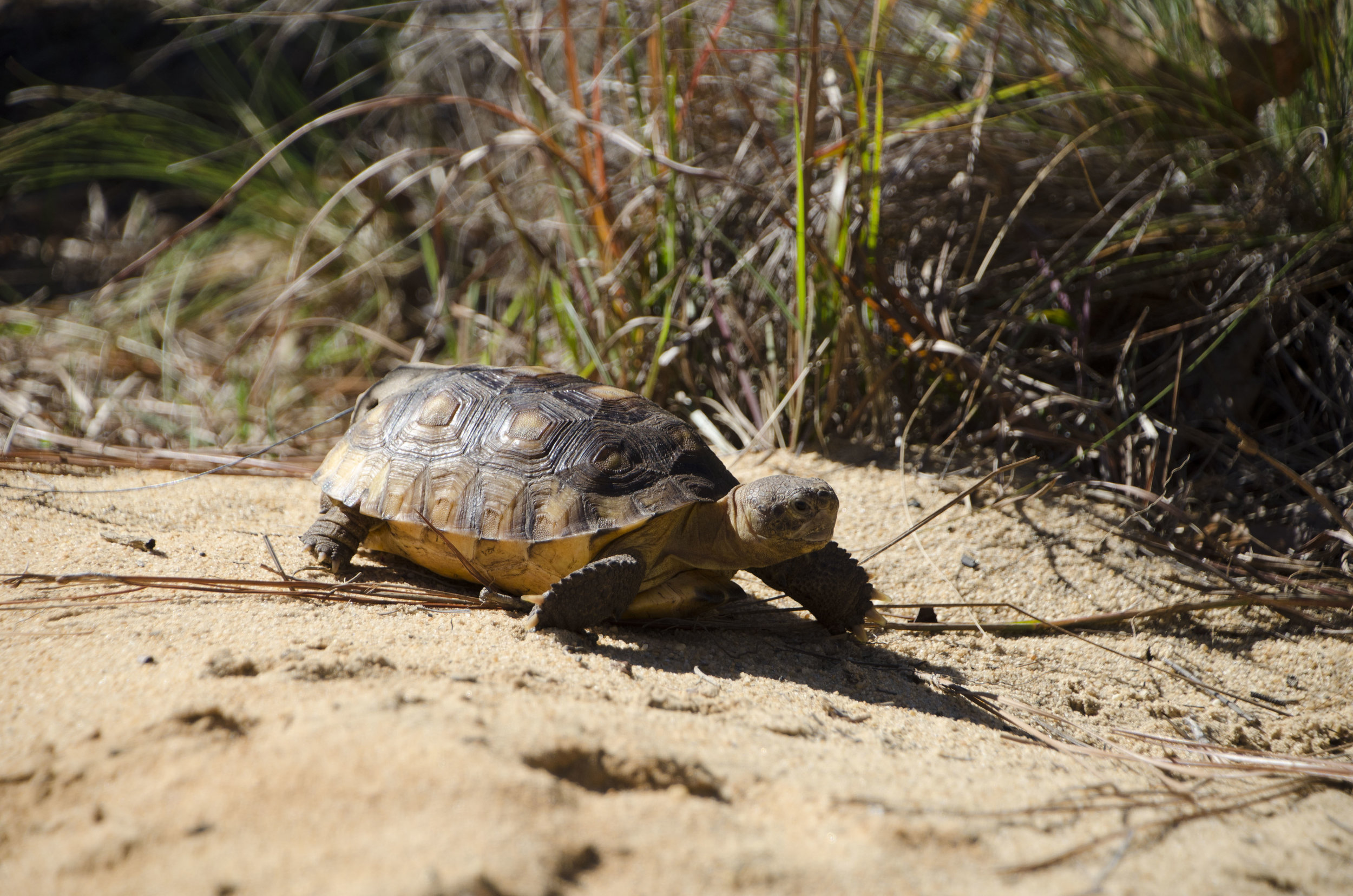
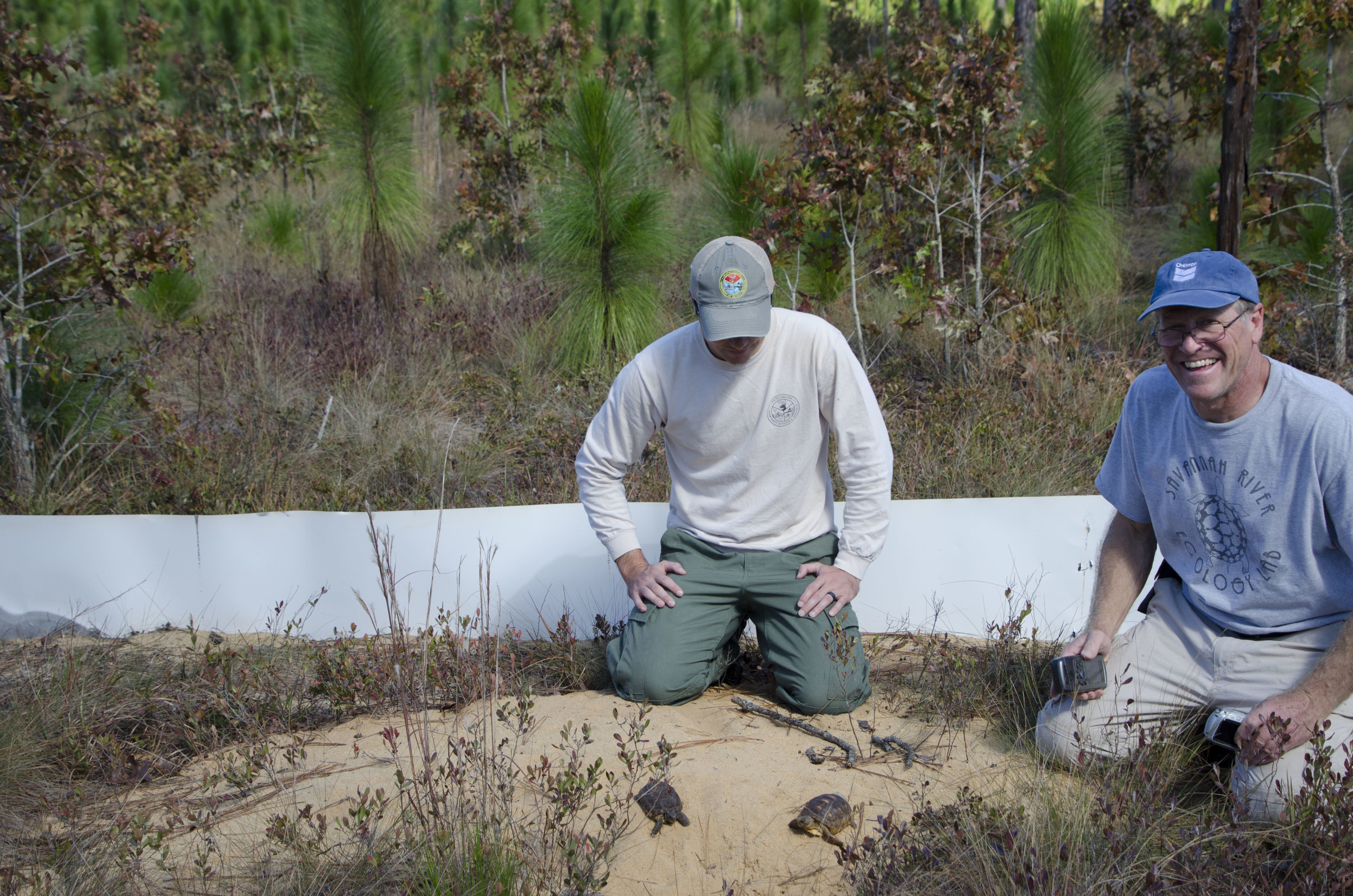
This tortoise was one of a group of tortoises reared at the University of Georgia’s Savannah River Ecology Lab from eggs collected at the SCDNR’s Aiken Gopher Tortoise Heritage Preserve.
That’s somewhat larger than their similar-aged counterparts would be in the wild, and the scientists working to repopulate this species at the preserve are hopeful that the “head start” provided to captive-reared tortoises will make a difference in their chances of long-term survival. Gopher tortoises are listed as a state-endangered species in South Carolina and are also candidates for federal listing under the Endangered Species Act.
Partnerships a key to success
Bringing a viable population of tortoises back to the preserve is a long-term joint project for the SCDNR and for the University of Georgia’s Savannah River Ecology Lab, where researchers have been studying these critters at AGTHP and other sites within their historic range for more than a decade. More recently, their efforts have been bolstered by partnerships with Columbia’s Riverbanks Zoo and by financial support from the nonprofit The Longleaf Alliance. The hatchlings are the offspring of “waif” tortoises rescued and translocated from other states such as Florida.
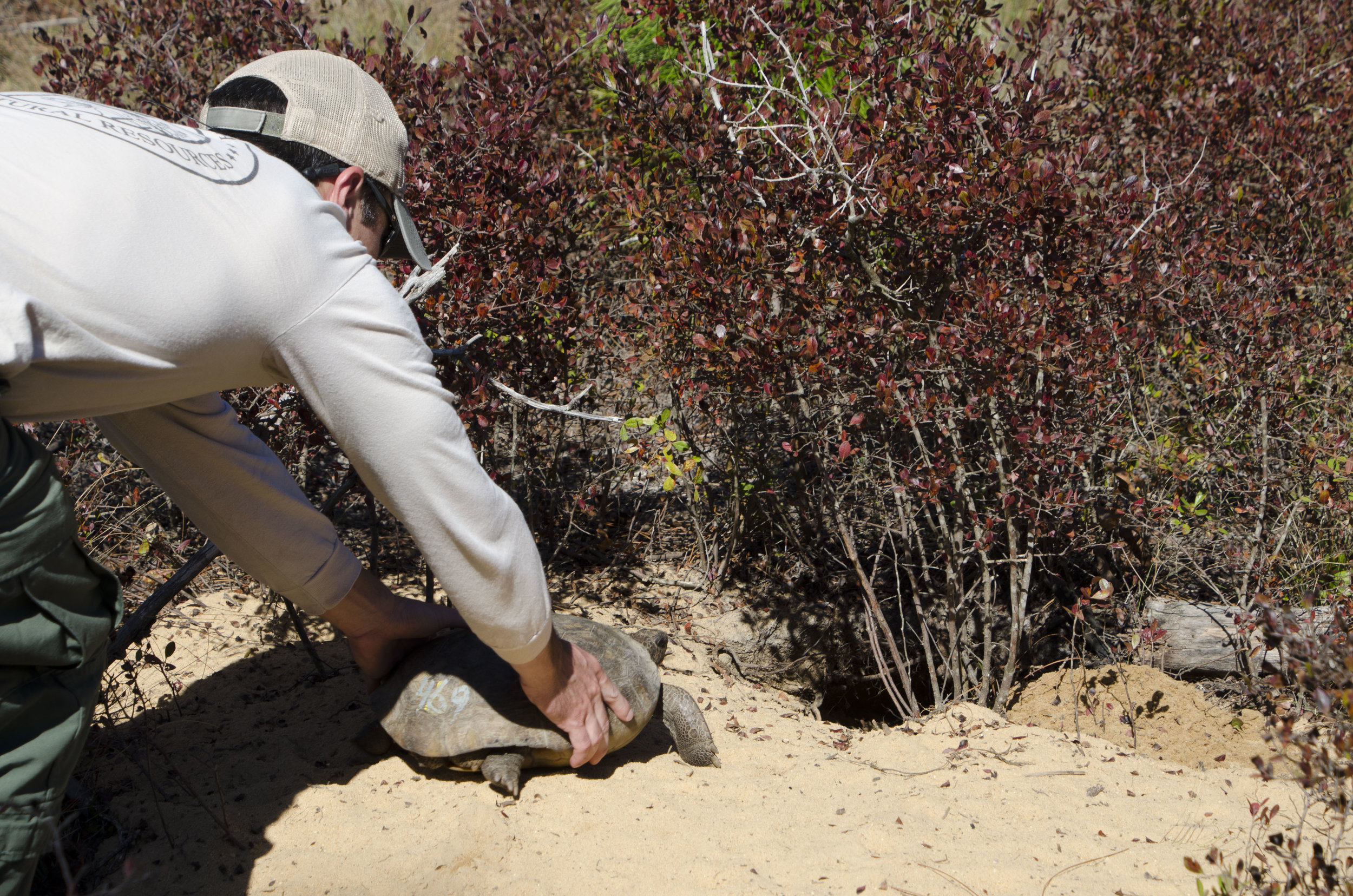
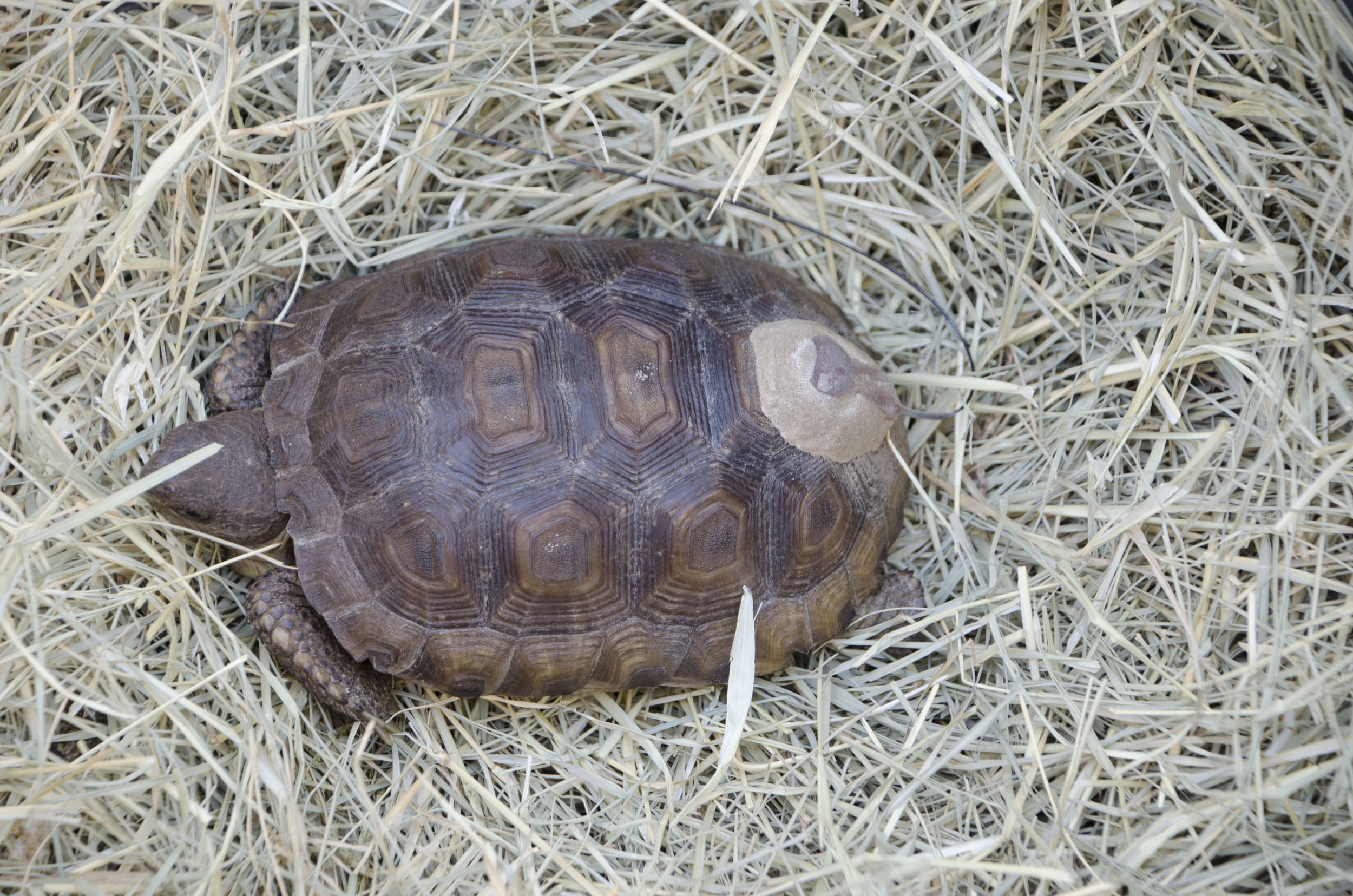
In addition to the juvenile tortoises, this adult “waif” tortoise was also released. Waifs are extremely important to the success of the program. These tortoises come from other states and would not normally be able to go back into the wild. They are a critical part of rebuilding populations here in South Carolina, providing the eggs that are eventually used to produce head-started juveniles.
The U.S. Fish and Wildlife Service (USFWS) has provided significant funding for activities to restore gopher tortoises at the preserve since the beginning of the project. Funding from the USFWS, Riverbanks Zoo and the Animal Welfare Institute has allowed partners to begin to evaluate the success of restoration efforts, and a recent grant award from the National Fish and Wildlife Foundation (NFWF) to The Longleaf Alliance, made through its Forestland Stewards partnership with International Paper, will help to increase SREL’s capacity to provide even more head-started tortoises for release into the wild. American Forests also recently provided some funding to support this project. This growing group of agencies is working together to conserve this imperiled species in South Carolina.
Gopher tortoises require a very particular type of habitat (fire-adapted longleaf pine sandhills), and the disappearance of much of that landscape in the southeastern portion of the Palmetto State due to development, timbering and agriculture is why, by the late 20th century, these once-fairly-common critters had begun to disappear from the landscape. So, step one in rebuilding a sustainable gopher tortoise population is restoring the appropriate habitat. That’s exactly what the SCDNR has been engaged in over the last decade at AGTHP, gradually bringing back the landscape on 1,400-odd acres to a long-leaf pine and wiregrass-dominated ecosystem using prescribed burning and other strategies.
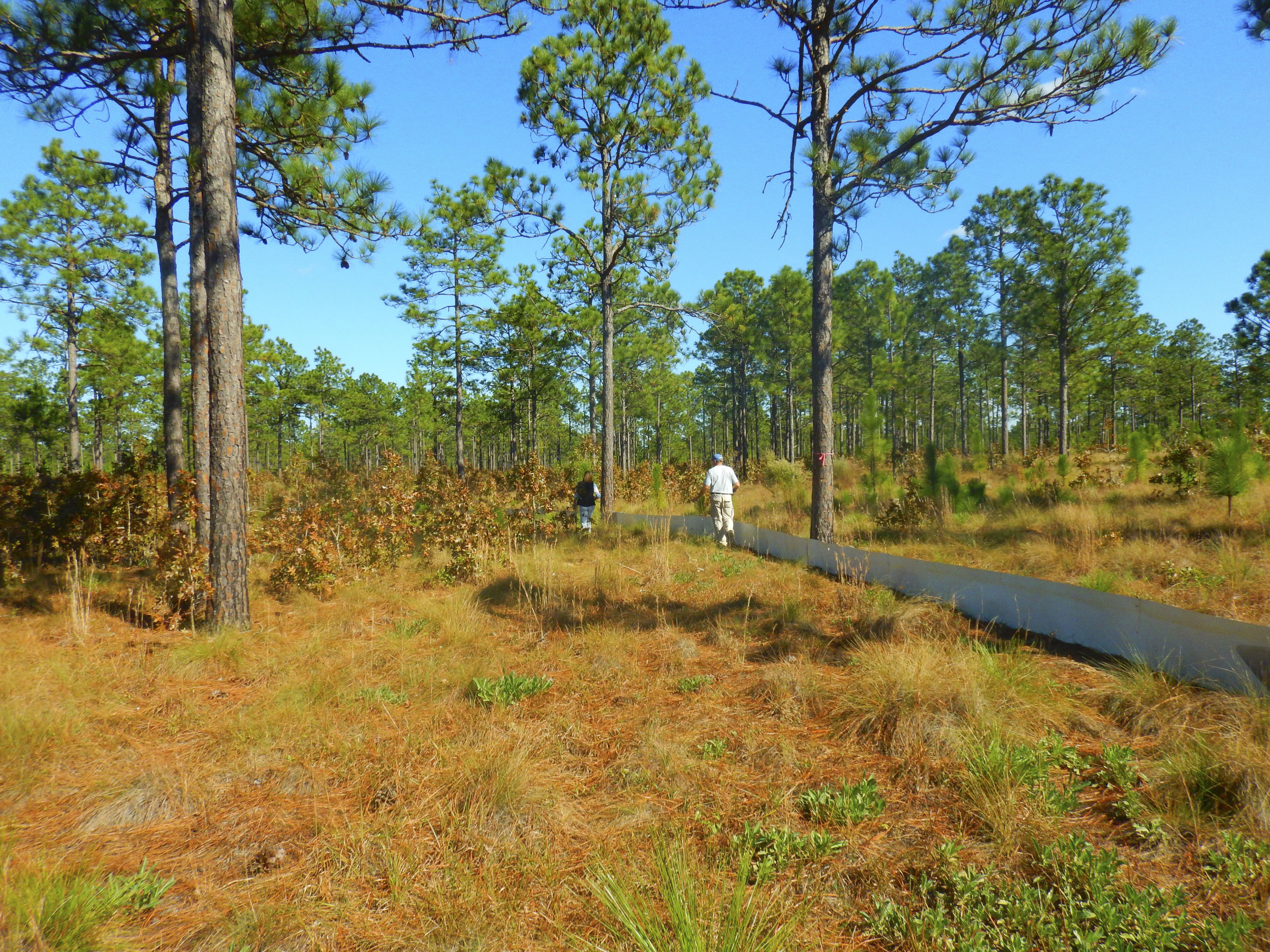
The low metal fence that forms the 2.5-acre “pen” where the released tortoises will live out the next phase of their lives cuts through a section of the heritage preserve that has been carefully managed over decades to produce a longleaf pine-dominated habitat that meets the tortoise’s (and many other species) needs.
Outside the confines of rearing facilities like the ones at the SREL and Riverbanks – where the routine includes optimal nutrition delivered daily and zero predators — life for small tortoise hatchlings is fraught with peril, says SREL Senior Research Associate Kurt Buhlmann.
“These things are snacks for everything,” he explains. “Maybe you’re lucky if two out of ten survive the first year, and remember, these guys have to survive for 15-20 years to produce their first clutch of eggs if they’re a female.”
Those are pretty daunting odds, but upon reaching sexual maturity, a female tortoise may produce up to 400 eggs (as many as 10 per year) over her lifespan. So, if just two or three of those 400 hatchlings make it to maturity, that’s enough to keep a population stable. With the headstarted tortoises, survival rates after that first year are more like 75 percent, says Buhlmann. And by closely monitoring the tortoises released on AGTHP, scientists hope to refine post-release strategies and protocols that will increase those odds even more over time.
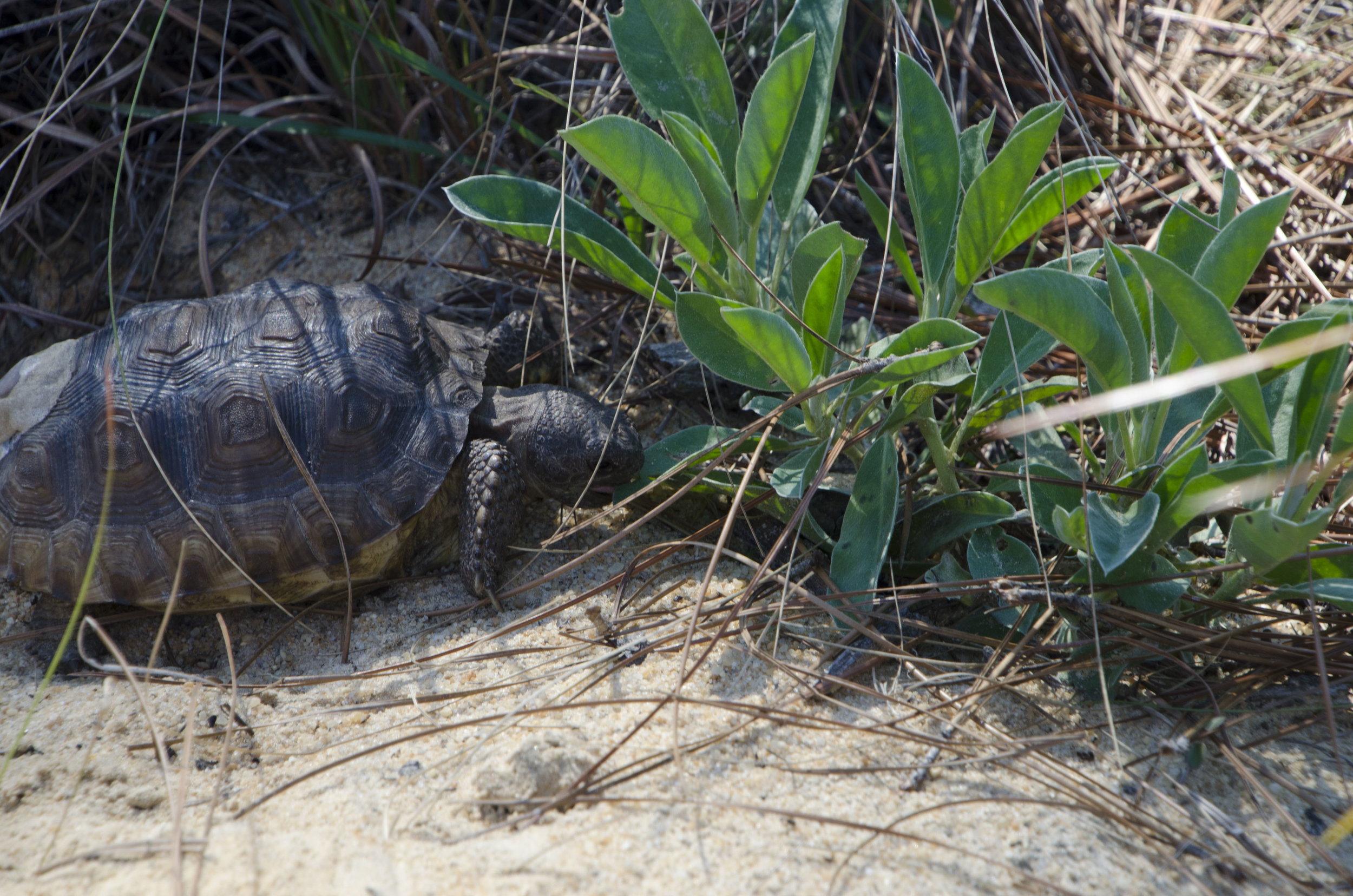
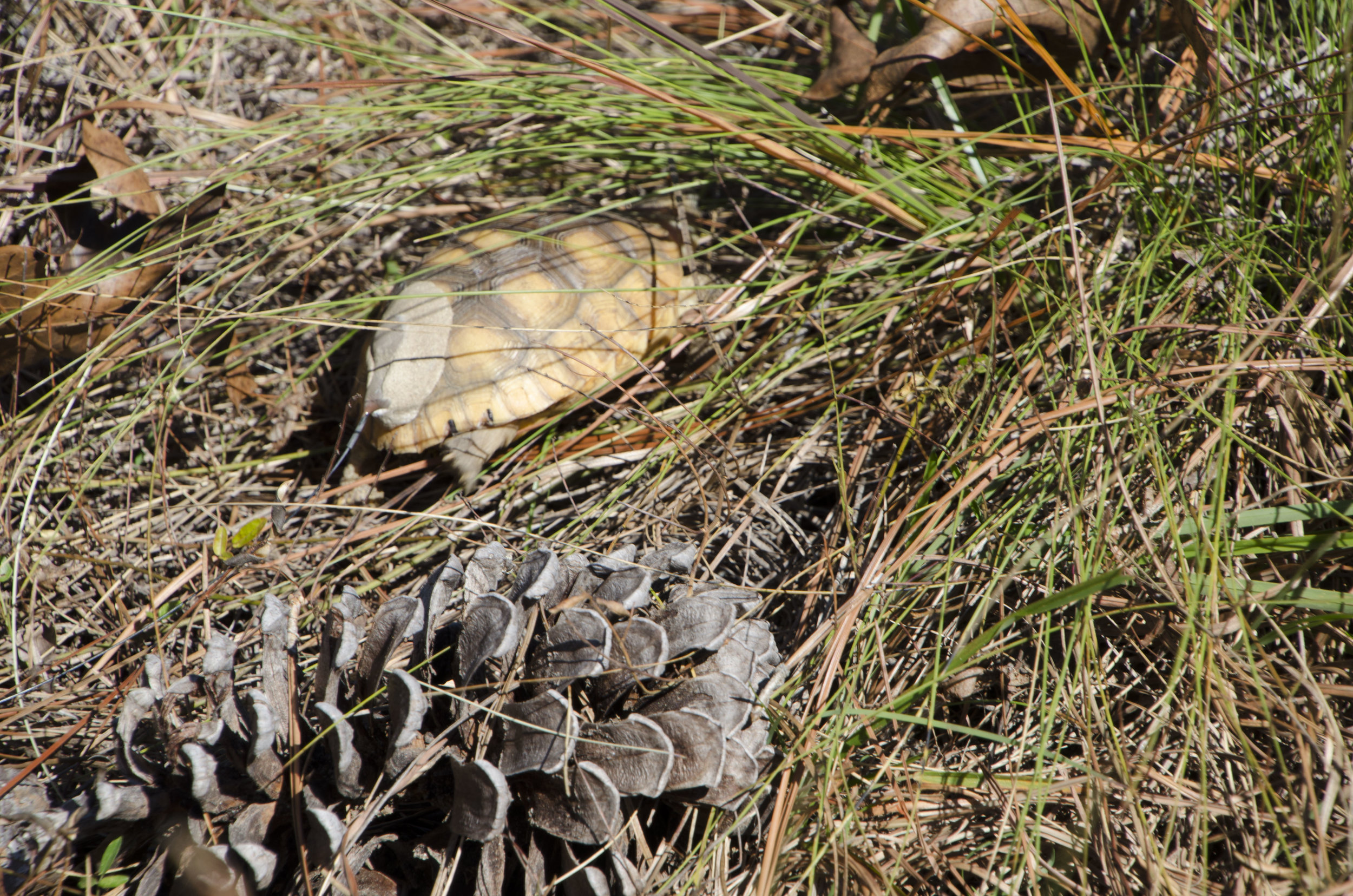
A released tortoise gives one of the many forage plants available in its new landscape a try.
Today’s group of head-started tortoises are released into a 2.5 acre “pen” (just a low wall made of thin sheet metal, but it’s enough to keep them from wandering very far) on a portion of the preserve with great habitat that is pockmarked with tortoise burrows. This technique, developed by SREL researchers, has proven to be effective for developing “site fidelity.” Eventually, the walls will come down, but the hope is that by that time the tortoises will have adapted to their new habitat and developed social groups with other nearby tortoises that will last throughout their lifespans.
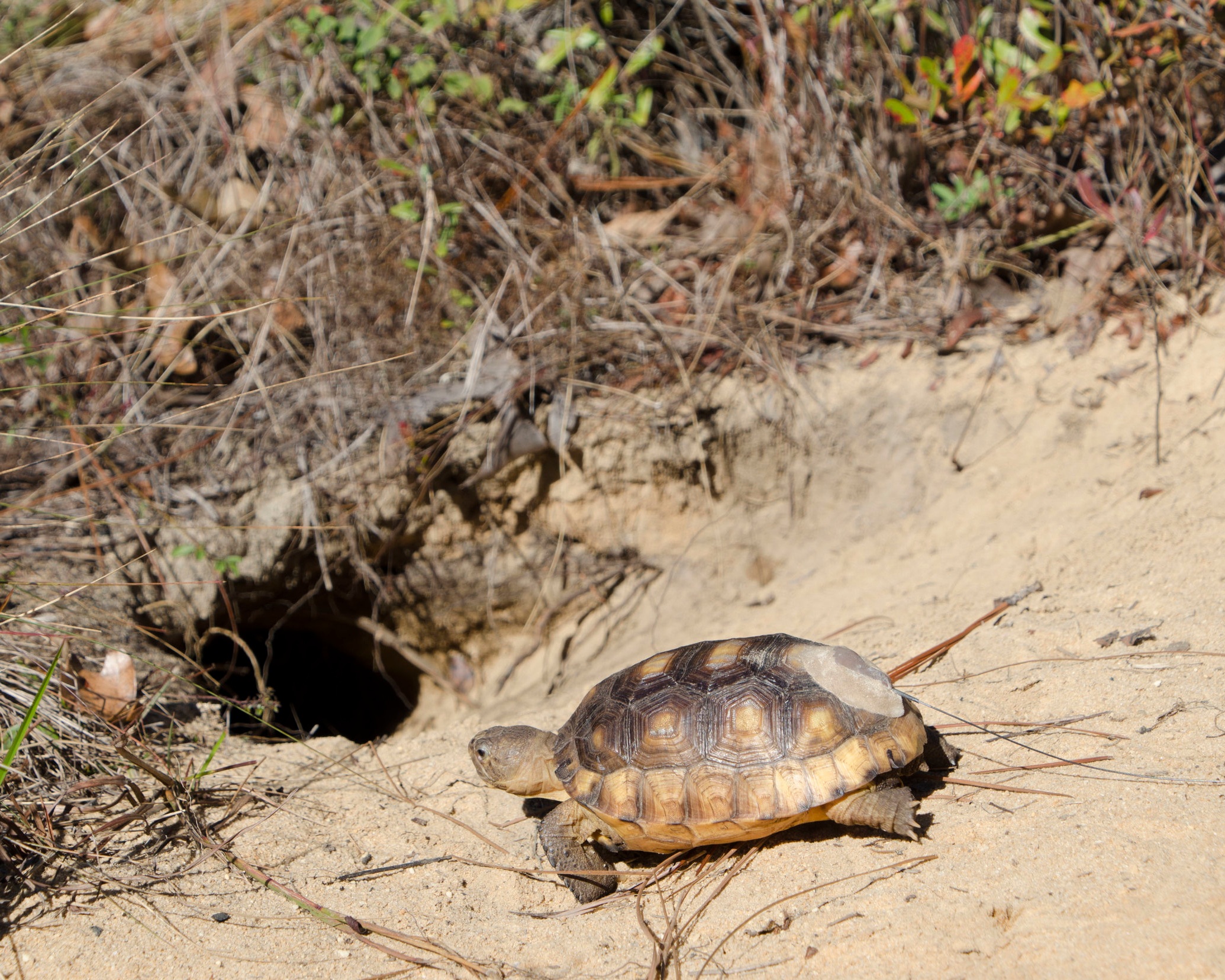
Radio transmitters on some of the released tortoises will enable researchers to collect detailed data about their movements, information that is rewriting the playbook for how tortoise reintroduction projects are done.
Needless to say, there’s a lot more to this project than just releasing the tortoises and waiting to see what happens. Each released tortoise — whether within the confines of the pen or outside it — is marked with a unique identifier, and the GPS coordinates where each is released are carefully recorded. These initial data points will form the baseline record for what will be years of intensive monitoring and data collection.
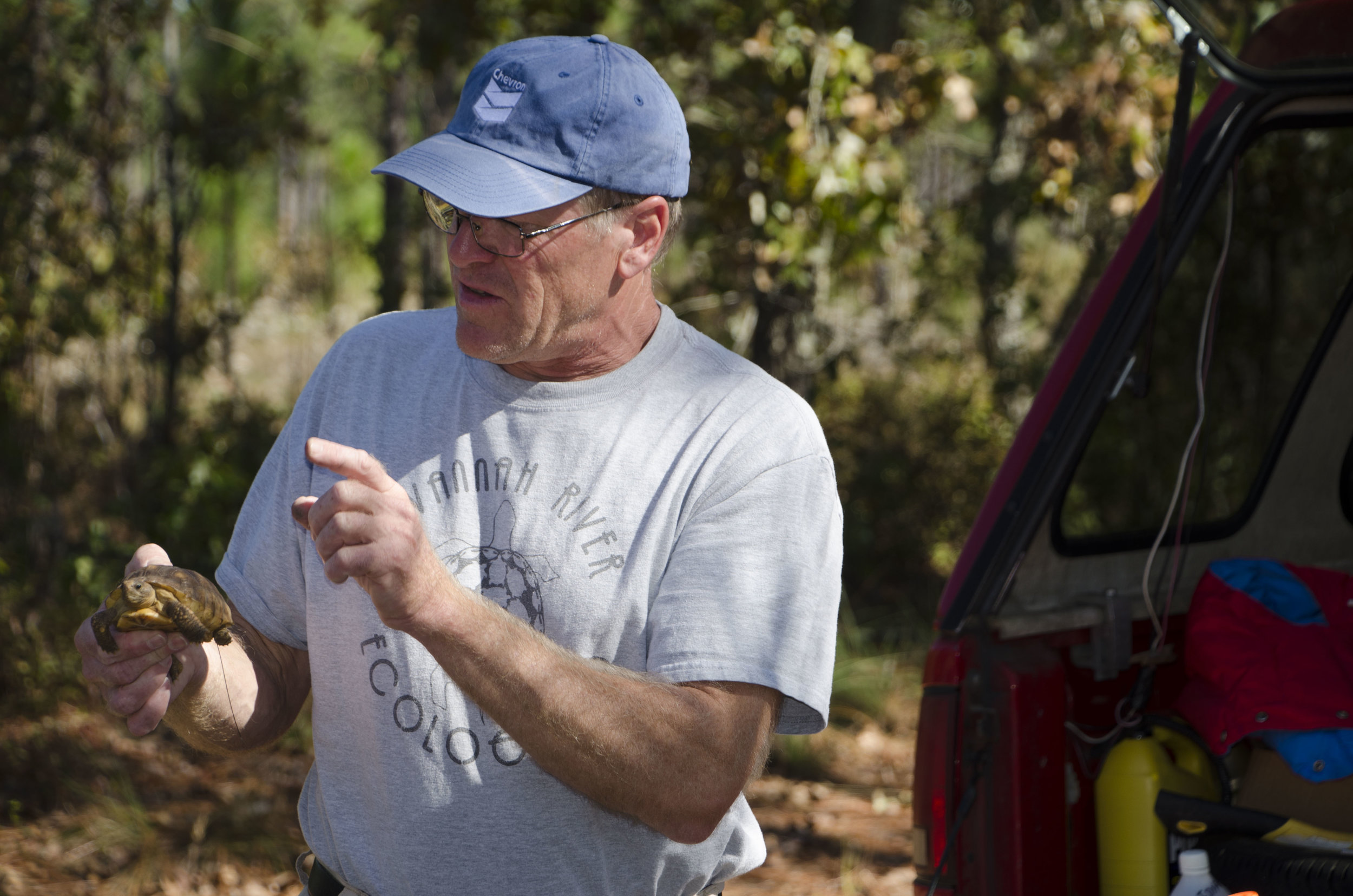
Some of the tortoises are equipped with radio tracking devices that allow technicians to find them using radio telemetry and download detailed data about their movements. Data is collected on a weekly basis during the warmer months, when they are most active, and every two weeks when they are hunkered down for the winter, says SCDNR Herpetologist Andrew Grosse, who recently inherited the project from former project coordinator Will Dillman, now SCDNR’s Assistant Chief of Wildlife.
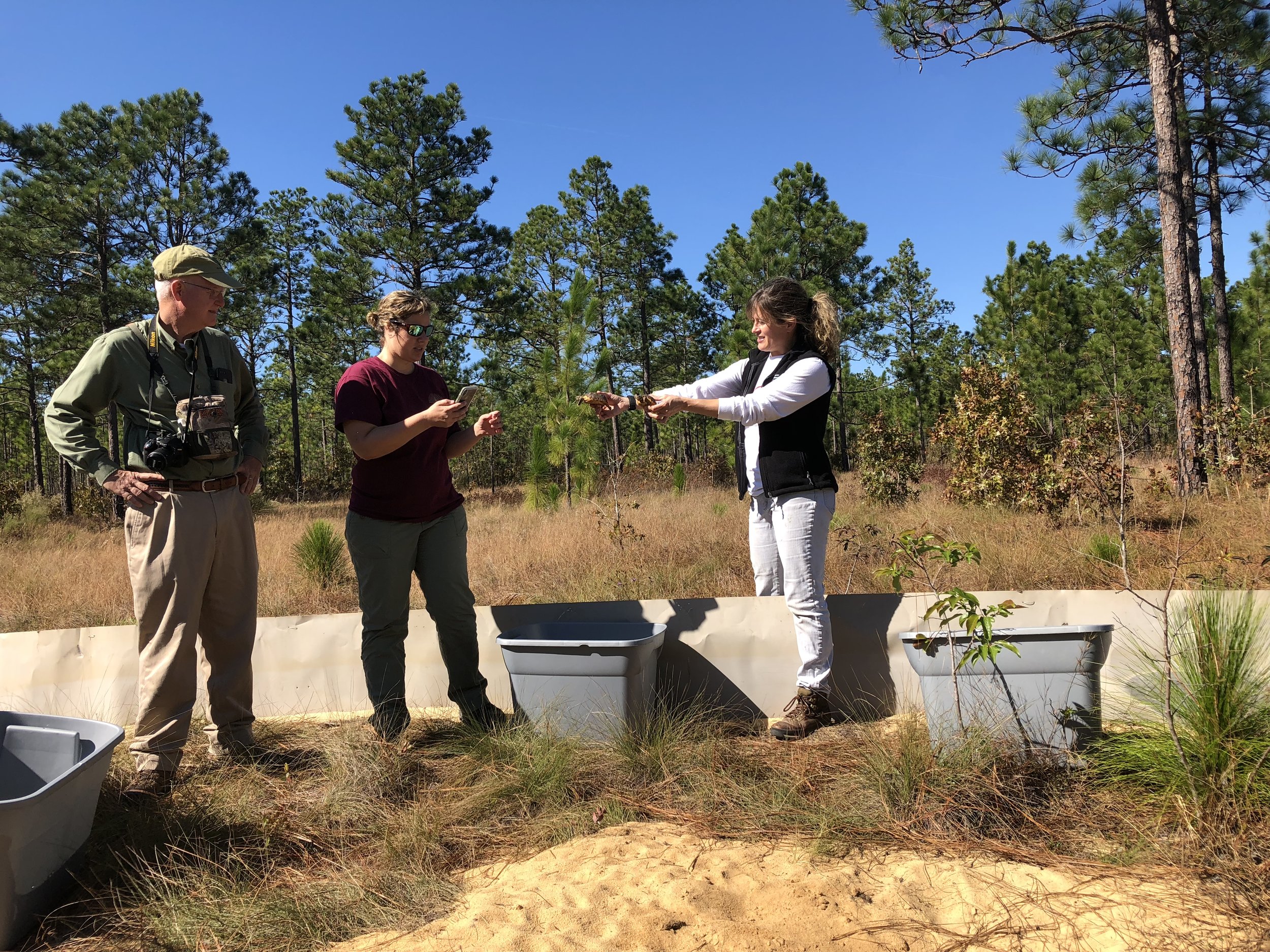
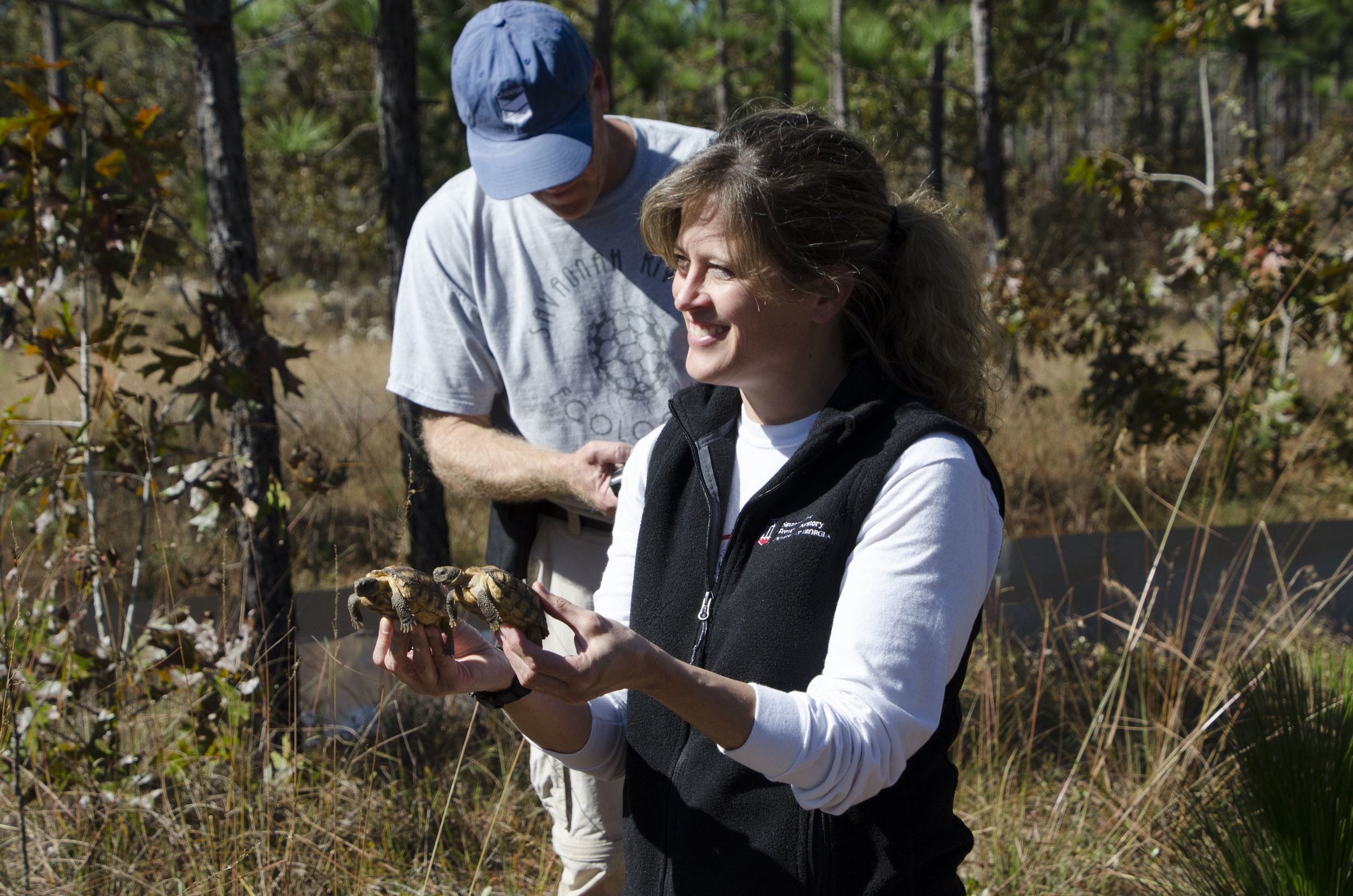
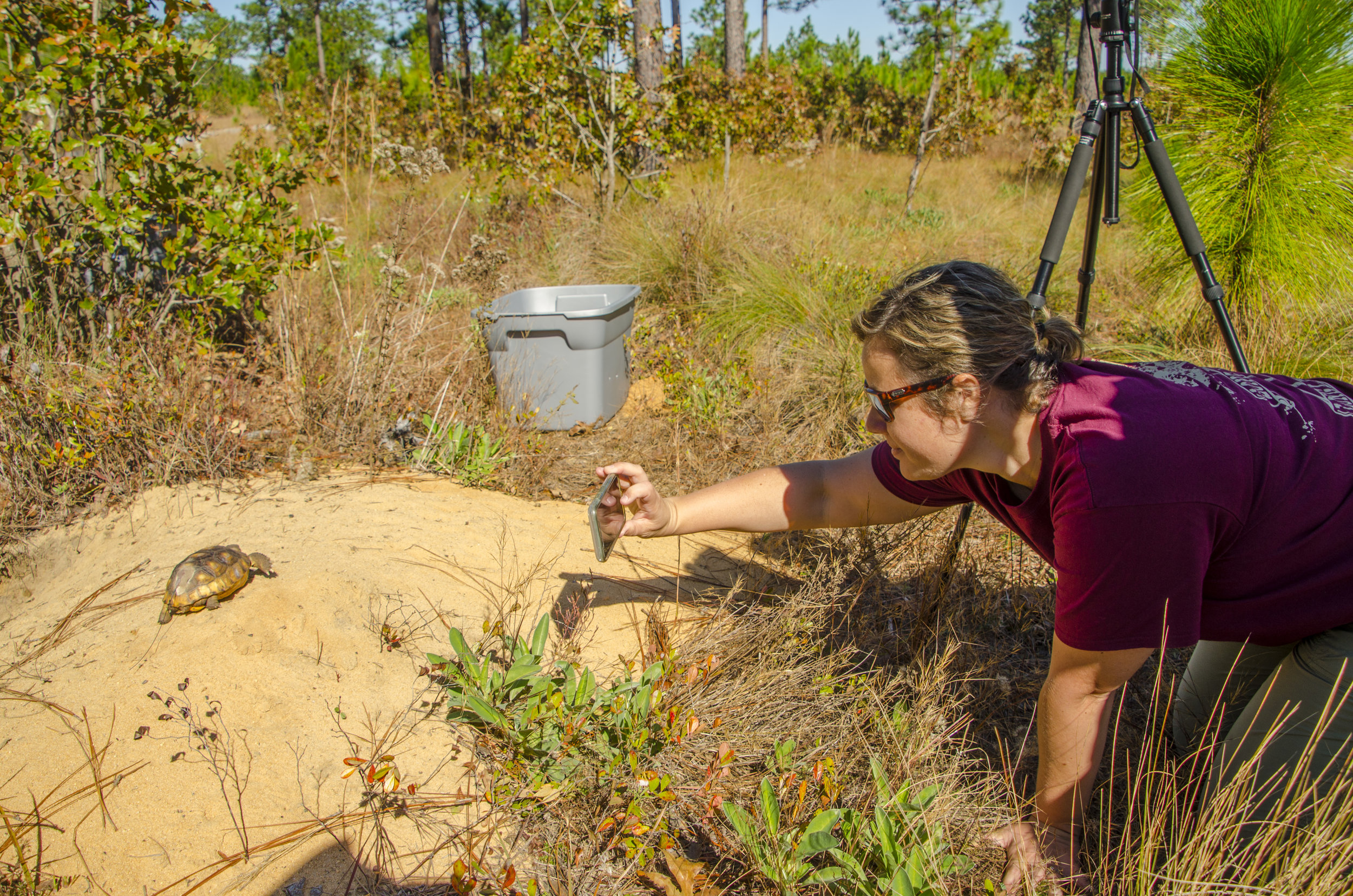
Gallery: Staff members from The Longleaf Alliance joined SCDNR and SREL researchers to release this group of tortoises and get a firsthand look at the research their grant is supporting.
View fullsize
View fullsize
View fullsize

View fullsize
View fullsize
View fullsize

View fullsize
View fullsize

View fullsize
View fullsize

View fullsize
View fullsize
#block-yui_3_17_2_1_1547062824867_22970 .sqs-gallery-block-grid .sqs-gallery-design-grid { margin-right: -20px; }
#block-yui_3_17_2_1_1547062824867_22970 .sqs-gallery-block-grid .sqs-gallery-design-grid-slide .margin-wrapper { margin-right: 20px; margin-bottom: 20px; }
“We’re really interested in where they are moving and how far are they moving,” said Grosse, “and more specifically, what habitats they are using and how well are they able to survive.”
The eventual goal for Aiken Gopher Tortoise Heritage Preserve is at least 250 animals released, the number that scientists working on the project feel will make for a viable, self-sustaining population on the property, but what they learn about these new techniques will have a much wider application and could change how these types of re-population projects are approached in the future.
 SCDNR Blog