
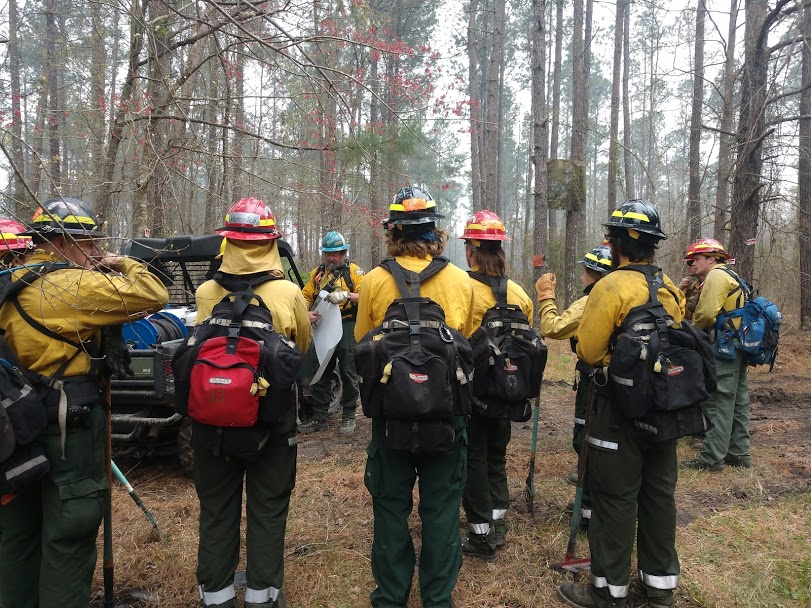
South Carolina Wild interview with Drew Atkinson and McKenna Hammons
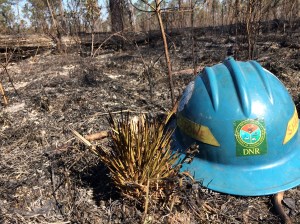
It’s becoming an annual tradition! Year after year, University of Wisconsin-Stevens Point (UWSP) forestry and wildlife students have passed up beachfront vacations to put their land management and prescribed burning skills to the test in South Carolina. UWSP’s Drew Atkinson and Fire Crew Squad Boss McKenna Hammons explain their annual trek to work alongside SCDNR professionals on WMA and Heritage Preserve lands.
Why did you choose to travel to South Carolina to practice prescribed burning, camping out most nights, instead of taking a conventional break to the beach?
“We all came because we have a strong interest in wildland fire. We had multiple students go out west to fight wildfires, and prescribed burning in South Carolina looks good on resumes when returning out west the following summer. Camping out several of the nights actually was a nice part of the trip, it was a great bonding experience; it strengthened our friendships as a whole.” (Drew Atkinson)
What are your most memorable events of the trip?
“We really liked the time we spent at the Yawkey Wildlife Center and at 40 Acre Rock. While at Yawkey we took a beautiful tour around the property and learned the history of the island. We were fortunate enough to spend a night in a cabin where we were able to take a well deserved shower and to sleep indoors. 40 Acre Rock was a very beautiful place to stay the night also. We toured the rock while we could with what daylight we had, and the next morning we woke up to see the sunrise and took a nice adventure through the preserve.” (Drew Atkinson)

What did you learn?
“It was cool to know that previous University of Wisconsin-Stevens Point groups have burned the same plot of land as we did. We worked with Johnny Stowe and his technician Allen to spread native grass seed to create a ecologically suitable longleaf pine savanna habitat for various wildlife.” (Drew Atkinson)
How many hours did you drive?
“It was a 16-hour drive from the middle of Wisconsin to Columbia, S.C. We broke up the long drive by spending a day exploring the Smokey Mountains and camping in the National Park there.” (Drew Atkinson)
As crew leader, what are your reflections on the experience?
“Most of the burns performed in Wisconsin are to manage and maintain prairies, barrens and oak savanna habitats. Burning in South Carolina provides the crew with a different perspective on the culture surrounding the use of prescribed fire and the ecological implications it has for management. Leopold states the 5 main tools for management are axe, plow, cow, gun and fire. Historically, we have observed the logging of the large trees, the plowing of land for agriculture, the overhunting of many species, and the overgrazing of pastures, but it is not until more recently we are using prescribed fire as a means for restoration and communicating that to the public in a way that eases their fear of fire. In the southeastern U.S., the red-cockaded woodpecker and the gopher tortoise are flagship species. The public recognizes these species, learns they need fire, and is more willing to accept the use of fire to help these species. Similarly, in Wisconsin, we have the federally endangered Karner blue butterfly that needs fire for the plant wild lupine, the only plant their larvae will eat, to persist. Education, outreach and involvement of the public is what is needed for fire to be applied more on the landscape.” (McKenna Hammons)
 SCDNR Blog