
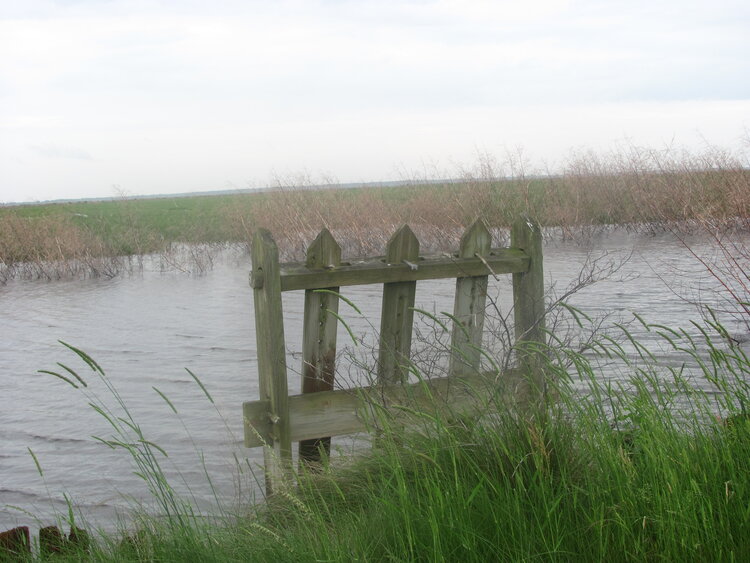
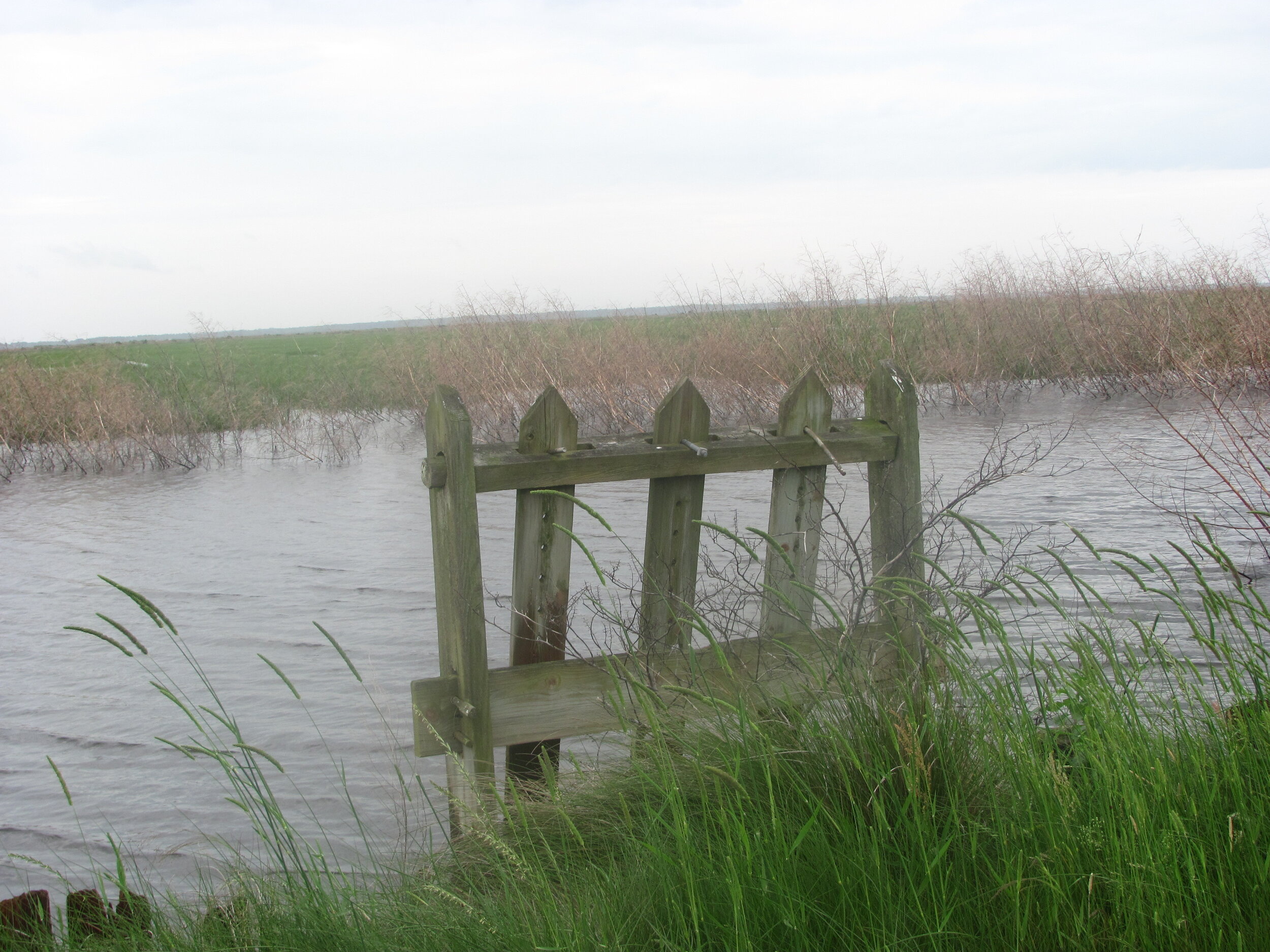
NAWCA has had tremendous benefit in terms of protecting critical waterfowl habitats in the Lowcountry of S.C.
The acronym “NAWCA” may not ring a bell with the average South Carolinian, but wildlife professionals and waterfowl enthusiasts know it as a landmark piece of funding legislation that has conserved and protected millions of acres of critical wetland habitats in South Carolina and beyond.
In December of 2019 and into 2020, the thirtieth anniversary of “NAWCA” (The North American Wetlands Conservation Act) will be celebrated. If you are a waterfowl hunter or involved with the organization Ducks Unlimited, then you are probably at least somewhat familiar with NAWCA, but the millions of acres of wetlands that have been protected under the Act have also benefited many non-game species, and every single American citizen has a stake in the protection of wetlands.
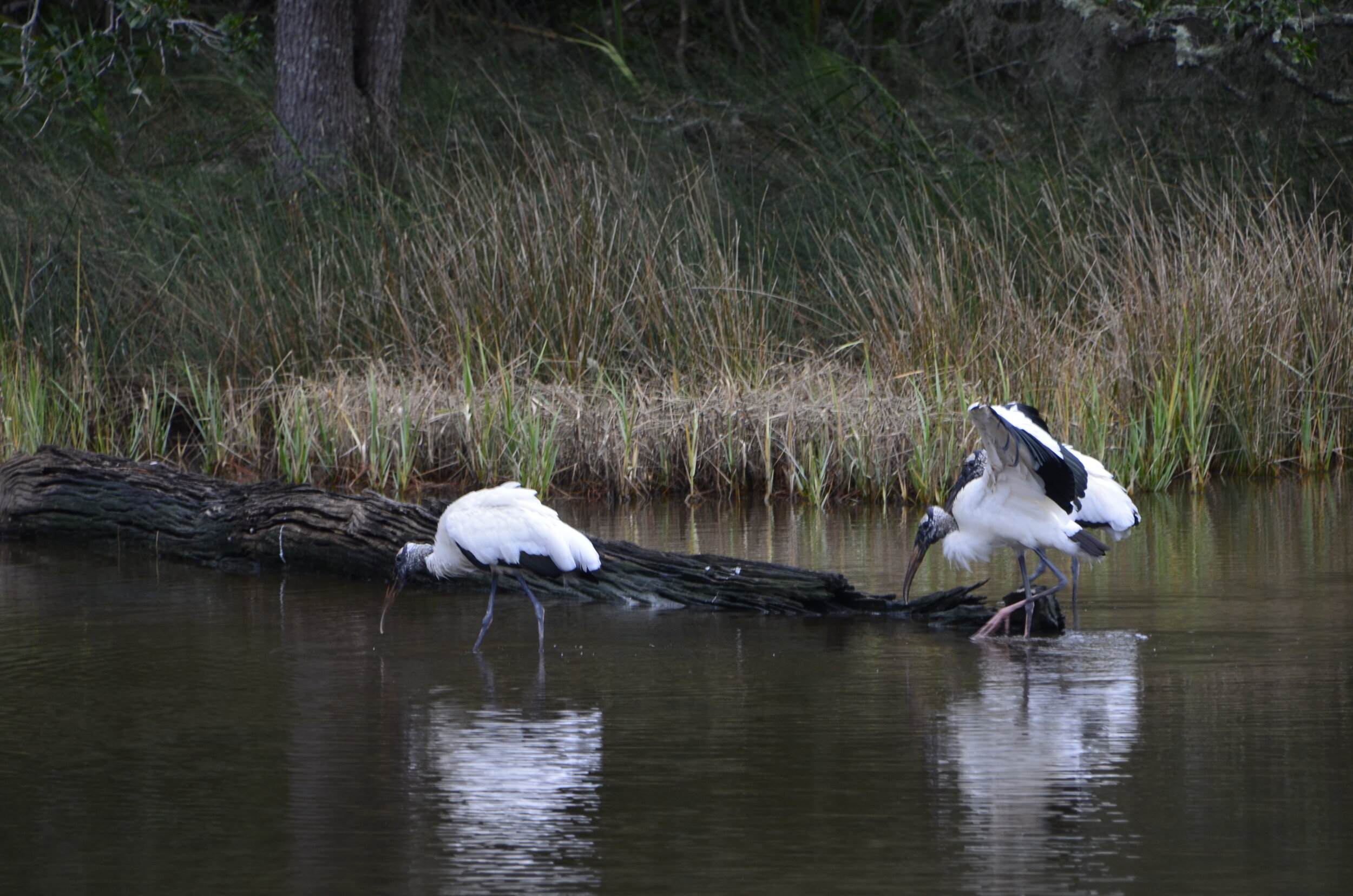
Wood storks forage in a wetlands area in Beaufort County.
Wetlands provide many ecological, social and economic benefits such as habitat for fish, wildlife and a variety of plants. NAWCA grants conserve bird populations and wetland habitats and support communities where outdoor recreation and family farms are an important part of the local economy. The protection of wetlands ultimately helps protect water quality by keeping ecological functions intact. Wetlands also provide a free filtration service which benefits surface drinking water reserves.
Over the three decades that NAWCA has been in place, the acquisition and restoration of wetland habitats in the U.S., Canada, and Mexico have provided healthy wetlands where waterfowl populations have grown, waterways and water sources are cleaner, and recreational opportunities (birding, hunting, hiking, boating, paddling and fishing) have all increased. According to Ducks Unlimited, since NAWCA’s inception in 1989, more than 2,833 grant projects have contributed to the conservation of almost 29.8 million acres of habitat across North America. What’s more, NAWCA’s “public-private partnership” funding model means that the federal grant dollars invested in these communities have been matched at the state and local level by funding provided by numerous partner agencies and non-profit organizations, giving NAWCA grants a tremendous “bang for the buck.”
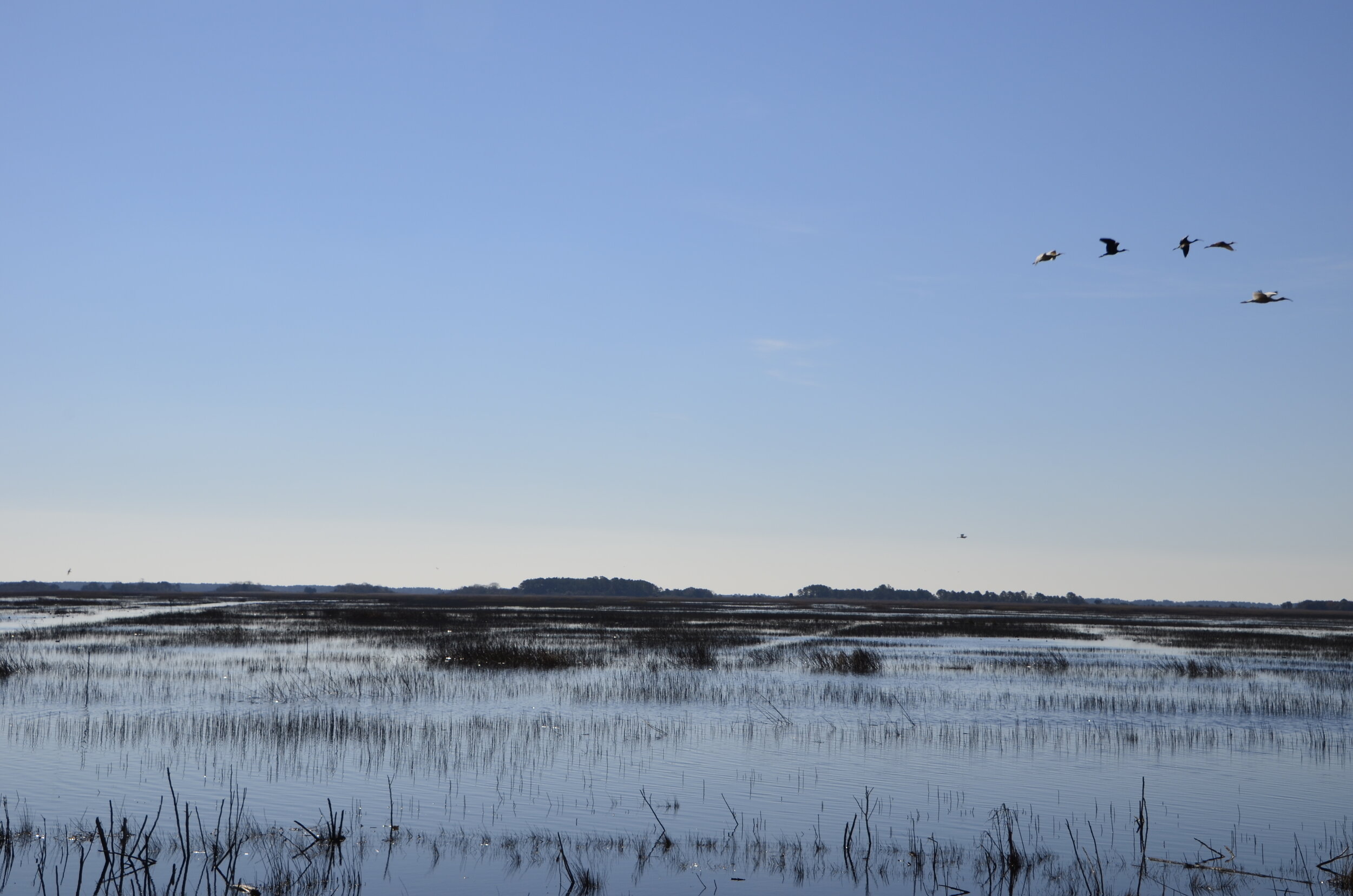
Waterfowl take flight over SCDNR-managed wetlands in the Santee River basin.
Here in South Carolina, dozens of NAWCA-funded projects involving the S.C. Department of Natural Resources and other partners have protected and restored hundreds of thousands of acres of wetland habitats to the great benefit of all South Carolinians, both now and in the future. Audubon South Carolina, Ducks Unlimited, The Nature Conservancy, and the U.S. Fish & Wildlife Service have worked with private landowners, regional land trusts, timber companies, foundations, and local governments to protect important landscapes in the Ace Basin (also celebrating its 30th anniversary this month), Winyah Bay, and Savannah River regions of South Carolina. In the ACE Basin alone, NAWCA grant projects have protected more than 200,000 acres, according to the Atlantic Coast Joint Venture organization.

NAWCA grant partnerships have played a critical role in protecting South Carolina’s most productive waterfowl habitats.
Learn more:
Visit The U.S. Fish & Wildlife Service’s NAWCA Information page
Read about the “Lowcountry Project” on DU South Carolina’s website, or find a list of NAWCA funded projects in South Carolina provided by DU
#NAWCA30
 SCDNR Blog