
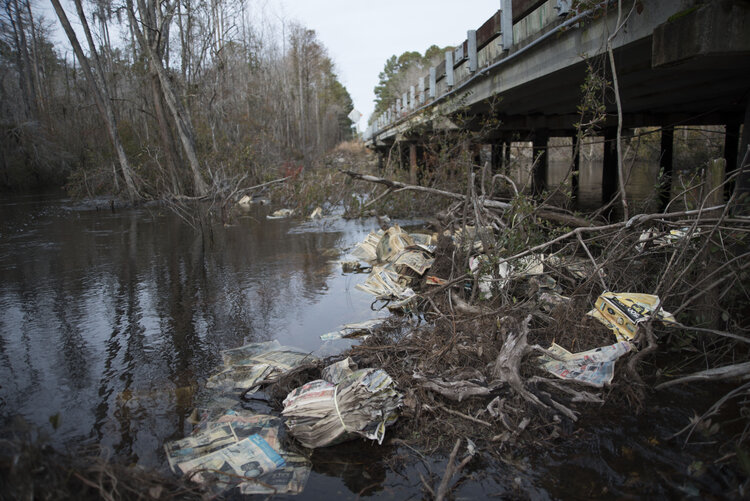
South Carolina’s county and municipal governments are eager to join the fight against the pervasive problems of litter and illegal dumping, and the S.C. Litter Commission is helping to provide them with new tools to keep roadways cleaner and trash out of our waterways.
David Lucas, SCDNR Office of Media & Outreach
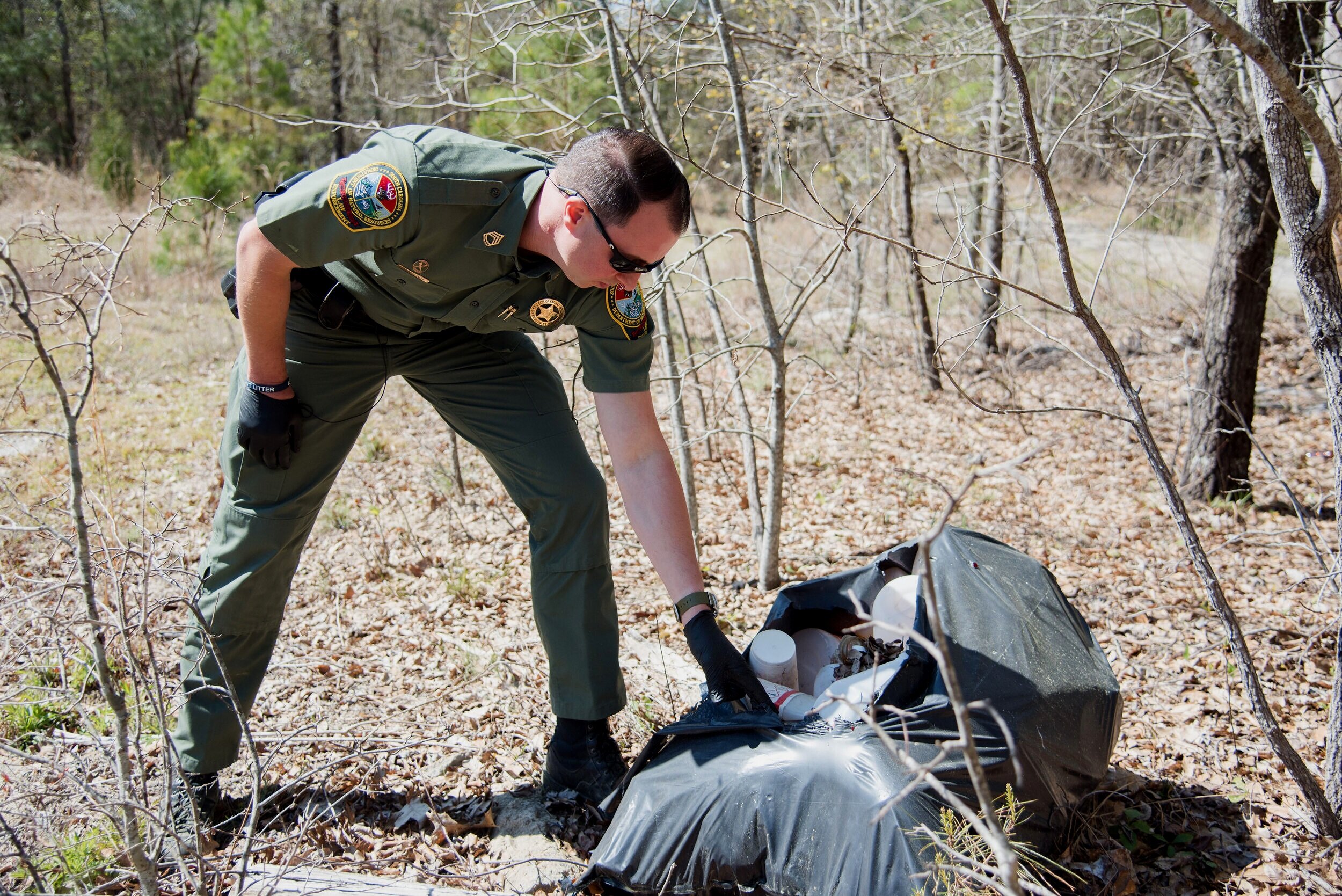
An SCDNR Conservation Officer investigates illegal dumping in a remote area. SCDNR Officers routinely find and investigate illegal dumpsites while on patrol, as well as assisting county and local litter control agencies with illegal dumping investigations.
Aiken County has been at the forefront of a successful effort to put more boots on the ground in the fight against the litter that seems to never stop accumulating along South Carolina’s highways and secondary roads. That effort has involved getting more aggressive about working with with their local judicial system, solicitor’s office and the S.C. Department of Probation, Parole & Pardon Services to direct more individuals who have court-ordered community service obligations to fulfill into litter removal programs in the county.
That successful strategy caught the eye of State Litter Coordinator Valerie Shannon last year. Shannon, a Department of Natural Resources employee who serves as staff to the S.C. Litter Commission urged the group to compile the useful information, contacts and best practices that Aiken County officials had figured out into a guidebook that other localities could use to replicate their success.
That’s precisely one of the things that lawmakers like Orangeburg County’s Rep. Gilda Cobb-Hunter had in mind when they created the Litter Commission and the job of state coordinator attached to the SCDNR, says Shannon, a valued member of SCDNR’s Office of Media & Outreach team. It’s a great fit, for the agency and for the Commission, because educating people and helping spread the word about the long-term environmental impacts of littering is a challenge that Shannon takes on with energy and creativity. The Commission and SCDNR’s efforts to combat the state’s litter problem were highlighted recently in the May-June 2019 issue of South Carolina Wildlife magazine.
This project was a little different – targeting government officials and litter control staff rather than the general public – but the desired outcome is the same, what’s known in the Communications and Public Relations business as a “call to action.”
“We just wanted to make it easy for them,” said Shannon, “Aiken County had this wealth of knowledge and experience that they were more than willing to share, so we figured a guidebook might be a real benefit to other communities in implementing these same types of strategies. Why re-invent the wheel if you don’t have to.”
So, in December, SCDNR published on its website the first edition of the Litter Commission’s “Best Practices Guide for Community Service.” The booklet is designed to help local governments navigate the ins-an-outs of organizing effective litter pickup programs using individuals who have court-mandated community service obligations to fulfill.

“Having the Litter Commission Program Coordinator position housed within our agency has been a valuable addition to our existing Outreach Office programs,” said SCDNR Interim Director Robert Boyles. “Even something as small as a cigarette butt or an empty soda bottle carelessly discarded on the side of a highway can quickly make its way into our rivers and even the ocean, and the collective impact can be extremely detrimental to the health of fish and wildlife populations or the quality of our drinking water.”

Litter isn’t just unsightly. Left unaddressed, roadside trash and debris such as plastic soda bottles can wash into creeks and rivers and, eventually, into the ocean, where recent studies have documented that “microplastics” (tiny bits of plastic from deteriorating plastic containers) is entering the food chain in marine ecosystems.
Litter pickup efforts address that problem directly at the source, sometime with community volunteers such as the major cleanups organized during Beach and River Sweeps in September, or through Earth Day cleanups held annually on or around April 22. But mandated community-service is also a major piece of the puzzle for cleaning up roadways. In South Carolina, community service is a required part of sentencing for littering or illegal dumping, and the law makes clear that trash pickup is the preferred form of service. S.C state law [S.C. Code 16-11-700 C] mandates that, in addition to any fine or imprisonment, individuals convicted in Magistrate’s Court of a misdemeanor charge of littering (which includes tossing out anything from a cigarette butt to up to 15 pounds of trash on public or private property) MUST also fulfill at least 8 hours of community service – either litter pickup or some “other form of community service.”
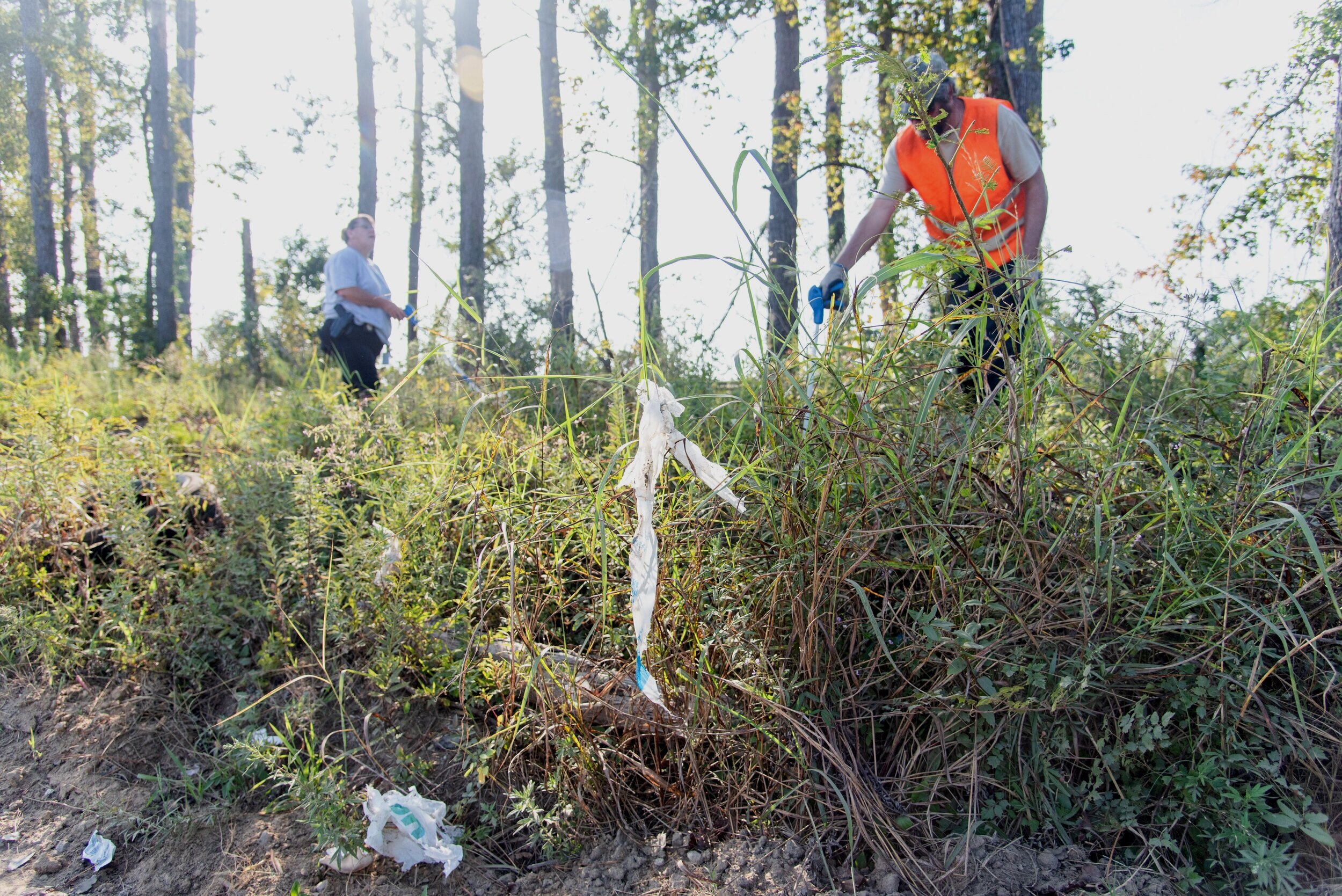
Court-ordered community service programs provide much-needed manpower for litter pickup efforts.
A primary goal of the new guide is to ensure that counties and municipalities are aware of the law AND that they have established programs and procedures in place to ensure community-service-eligible convicted litterers have a readily available slot for picking up trash – no excuses. To accomplish that, it’s important to have an established program to oversee that work and make sure that people being punished for littering are assigned to work where it will do the most good for the community.
While that may not sound like rocket science, there are important procedures to follow when setting up such programs, and the Litter Commission hopes the new Guide will help encourage communities who are in need of just this kind of service to set them up and run them smoothly. The Guide explains the law and the role of the magistrate’s court, prosecuting agencies in ensuring that it is carried out, as well as providing program contacts at SCPP&P and the Solicitors Offices for coordinating with their Public Service Employment and Pre-trial Intervention programs, both of which can include work picking up trash as an option for convicted offenders. The Guide also includes examples of paperwork needed for things like keeping track of participants and documenting their number of hours worked, and a simple “process flow chart” covers the basics of setting up a supervised community service litter program. Templates that county, municipal or state government agencies can use to create their own custom record-keeping documents can be downloaded via the electronic version of the Guide on the SCDNR website.
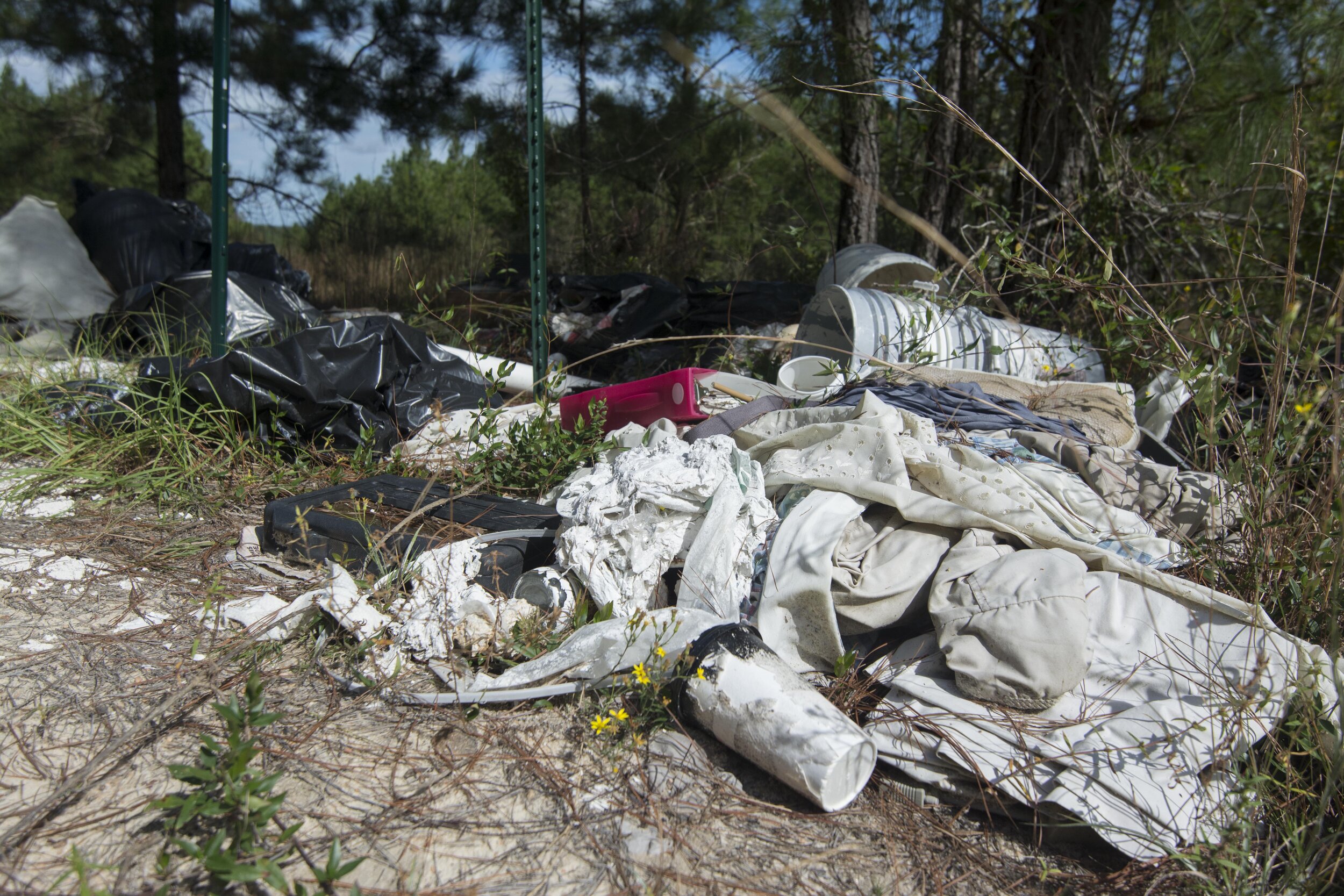
Utilizing the Best Practices Guide published by the S.C. Litter Commission and the SCDNR can help county and municipal governments get the most “bang for the buck” out of community service work hours designed to help clean up litter along roadways and in other public spaces.
“The intent is for it to be a really simple-to-use resource that will take some of the hassle out of creating the necessary documentation for these types of programs,” said Shannon. “And that this will encourage more agencies to embrace them as a litter-fighting tool.”
Just a few weeks after the Guide debuted on the SCDNR website, Shannon took the opportunity to appear in front of the monthly meeting of the Orangeburg County legislative delegation to talk up the project. After going over the guide in detail and answering lawmakers’ questions about other Litter Commission initiatives, she had another surprise for them.
Like many other largely rural counties, Orangeburg has a major litter problem on secondary roads and highways in the county. And as anyone who has ever participated in a community cleanup effort can tell you, picking up roadside trash is labor-intensive, with crews covering long distances, often through high weeds and rough terrain. Frankly, no one is shedding too many tears for the folks who are performing this chore as part of a punishment for illegally throwing out their garbage or cigarette butts on the side of the road, but still, what if there was a more efficient way to cover more miles of road in a day with the same amount of workers?
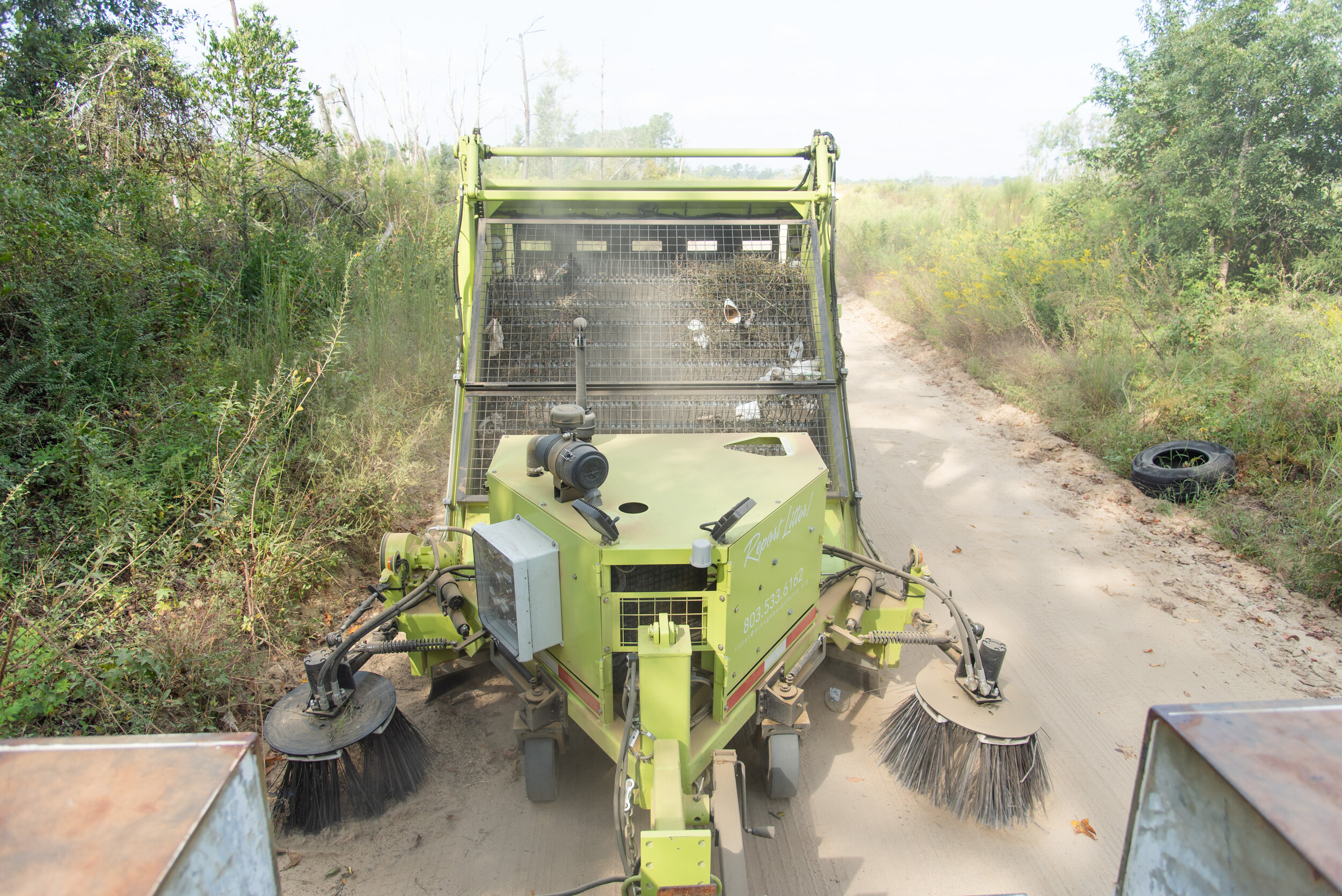
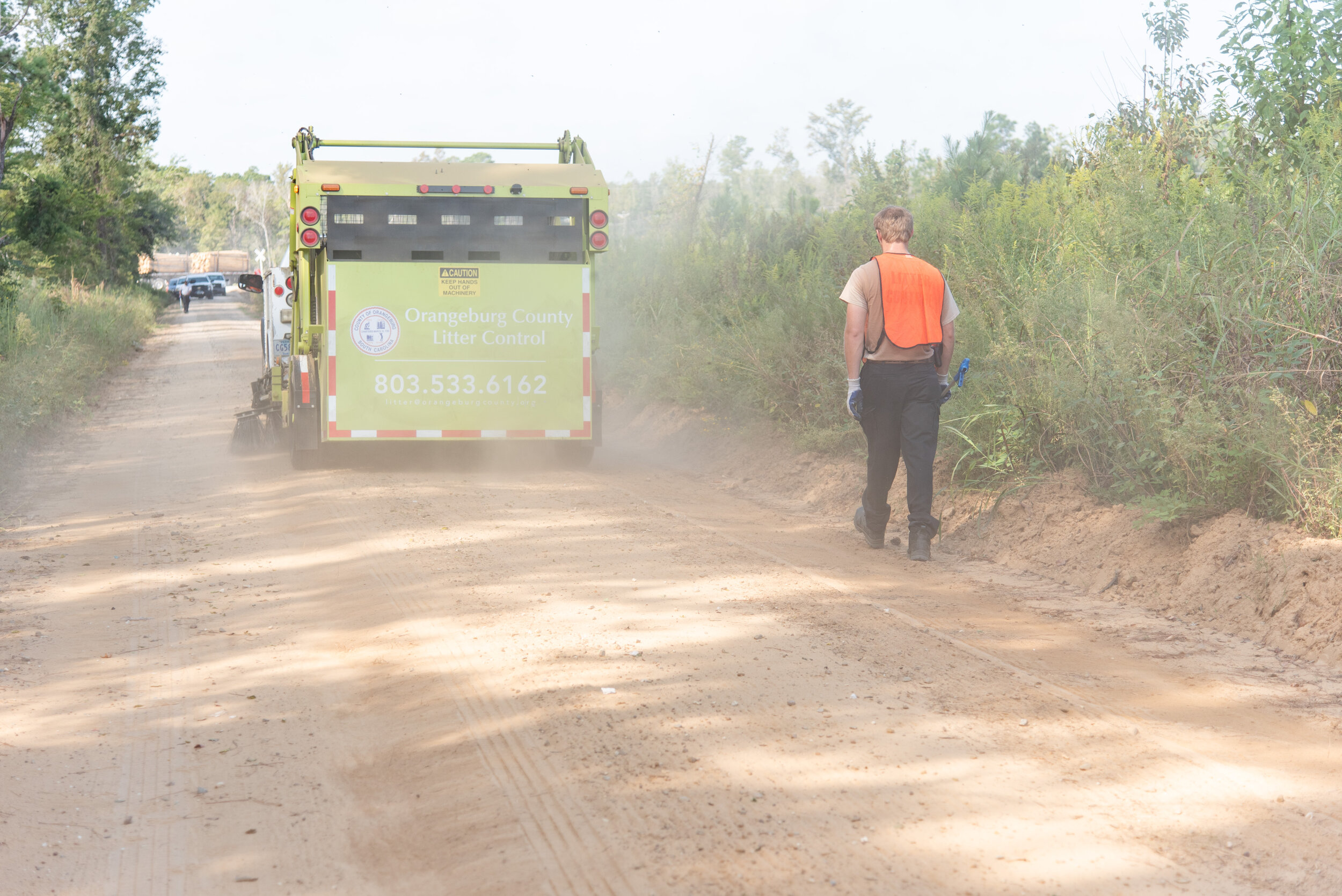
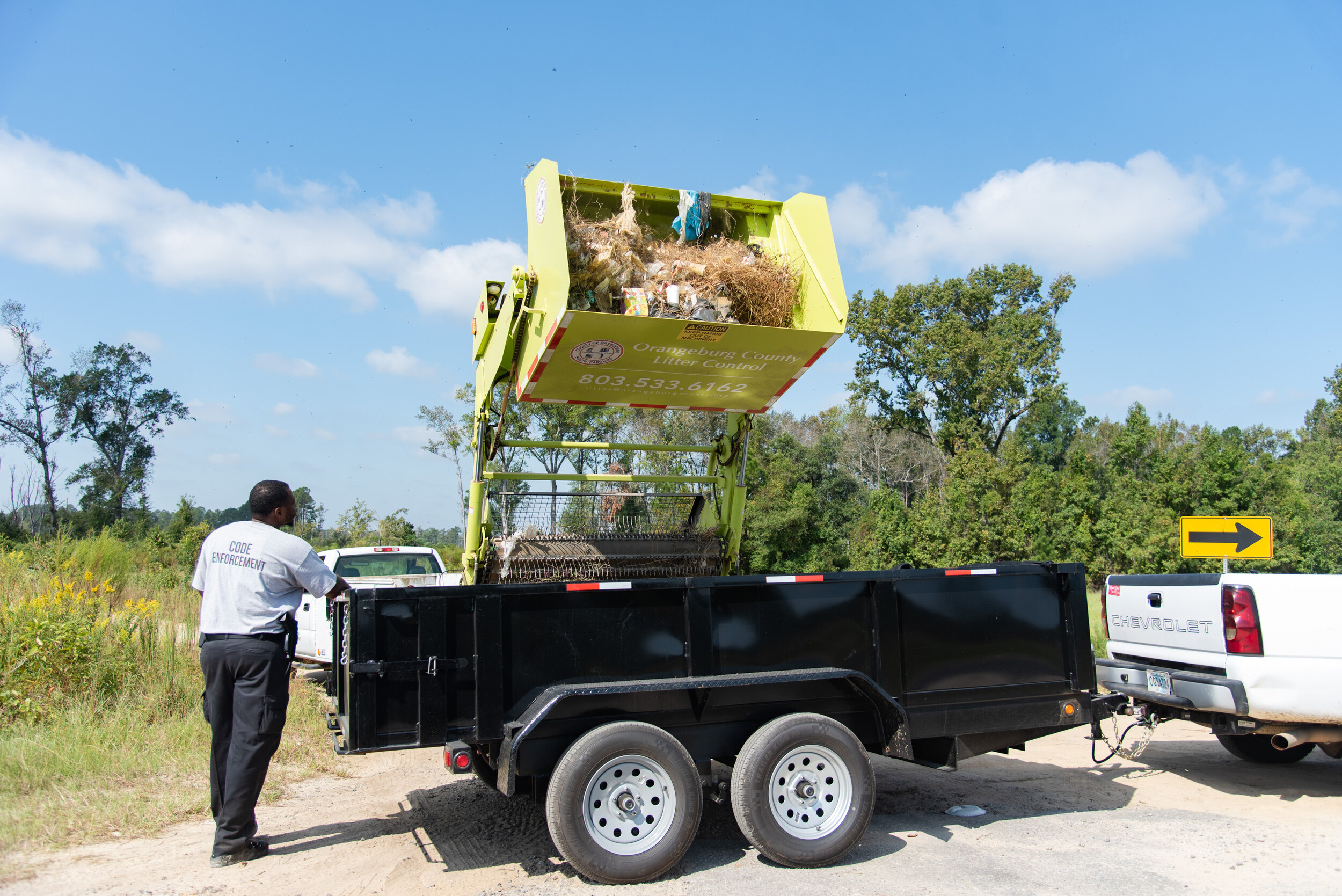
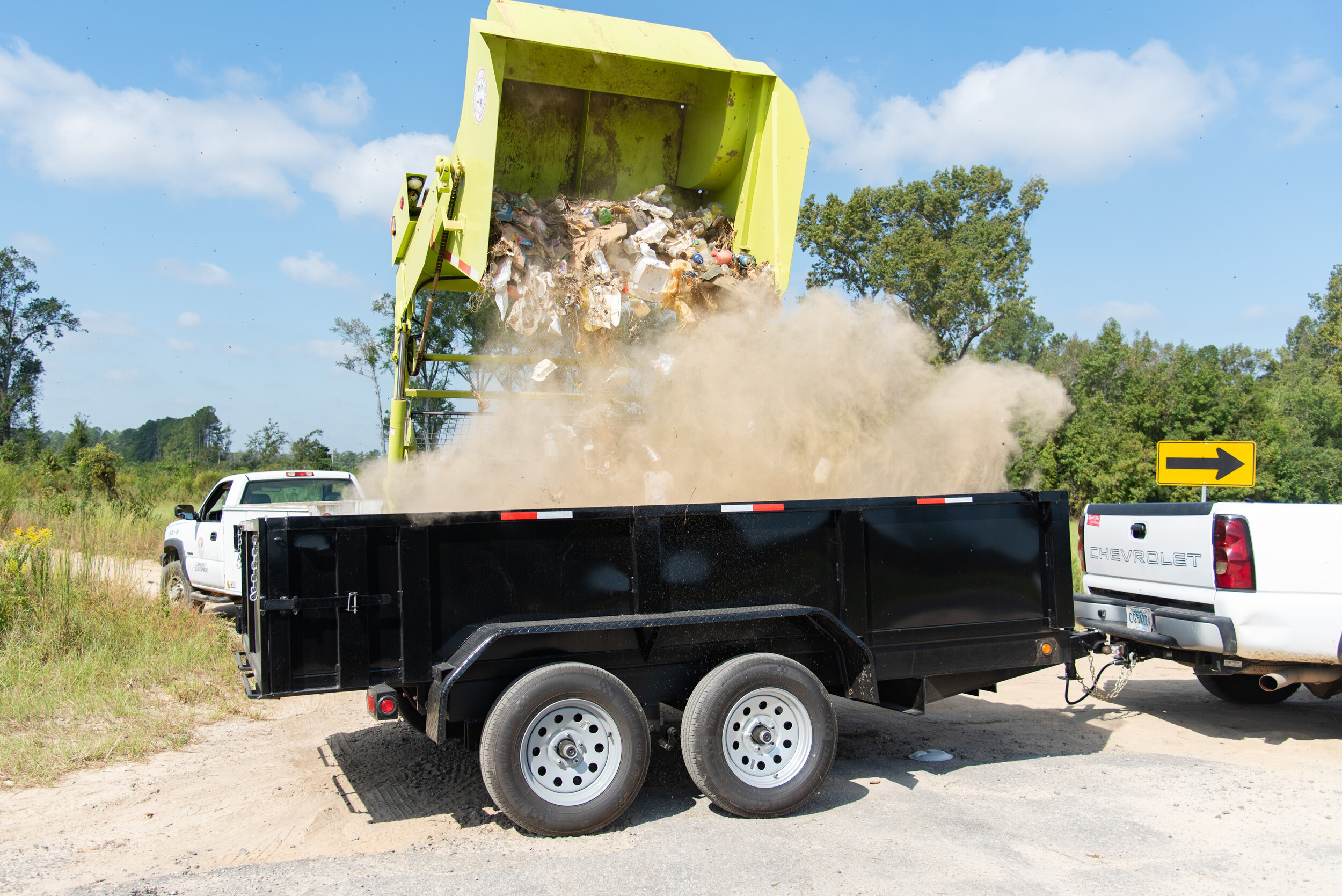
Turns out there is. Last year, Orangeburg County invested in the purchase of a “litter machine” that greatly speeds up the process for cleaning roads and ditches. Trash and debris can be tossed from the side of the road into the roadway itself, and the machine, towed by a truck, scoops it up onto a conveyer belt and dumps it in a carrier, making the process of clearing roadsides and illegal dump sites much faster. It’s one more tool for county waste managers to deploy in a toolbox that also includes stiffer penalties and more coordination with state agencies like SCDNR, whose officers are frequently involved in investigating illegal dump sites in wooded or remote areas.
[Pictures of the “road rake” in action in Orangeburg County — click on image to see it in more detail.]
View fullsize

View fullsize
View fullsize
View fullsize
View fullsize
#block-yui_3_17_2_1_1579879755555_90829 .sqs-gallery-block-grid .sqs-gallery-design-grid { margin-right: -20px; }
#block-yui_3_17_2_1_1579879755555_90829 .sqs-gallery-block-grid .sqs-gallery-design-grid-slide .margin-wrapper { margin-right: 20px; margin-bottom: 20px; }
At Shannon’s direction, SCDNR’s talented Media & Outreach staff has created a short video demonstrating the machine’s capabilities that will be played along with other important messages displayed on the closed-circuit screens in county buildings.
“I think that is just tremendous,” said Rep. Cobb-Hunter after watching the video. “That speaks volumes about the leadership of Orangeburg County, that we’ve been able to get this machine.”
It’s not hard to see that winning the fight against litter in South Carolina could benefit from even more and closer cooperation between state and local governments, and shared ideas and resources can make a big difference. Helping foster that spirit of collaboration will continue to be a primary goal of the SCDNR and the State Litter Coordinator’s Office.
 SCDNR Blog
2 responses to “New Tools Deployed in the Effort to Clean Up South Carolina’s Roadways”
PLEASE, PLEASE BE SURE THAT EVERY OFFICIAL IN COLLETON COUNTY AND THE STATE OF SC IS GIVEN THE BOOK AND GUIDELINES RELATING TO LITTER THROUGHOUT THE ENTIRE COUNTY & STATE HIGHWAYS/ROADS/OFF-ROADS — EVERYWHERE. SOMEONE NEEDS TO START FINING THE ENTITIES THAT SHOULD BE DEALING WITH LITTER BY FINING THEM AS WELL AS THOSE WHO ARE LITTERING BECAUSE AROUND COLLETON COUNTY AND OTHER COUNTIES IN THE STATE THE LITTERING IS DEPLORABLE & APPARENTLY NOT PROPERLY ADDRESSED FOR EVERYONE. THE COUNTY/STATE MAINTENANCE IS VERY LAX IN CLEANING UP LITTER AND CLEANING UP DITCHES/ROADWAYS/STREETS THAT HAVE DOWNED LIMBS, TREES, YEARS OF BEER CANS, BOTTLES, FAST FOOD BAGS, WHATEVER ARE THROWN INTO THE DITCHES AND ROADWAYS AND ONTO PERSONAL PROPERTIES. SOME OR MAYBE MANY RESIDENTS CONTINUOUSLY TRY TO KEEP THEIR COMMUNITIES CLEAN OF ALL OF THIS MESS; HOWEVER, APPARENTLY THOSE THAT SHOULD BE DOING SOMETHING ABOUT IT MUST NOT BE!!!!????PLEASE BE SURE ALL MUNICIPAL LEADERS THROUGHOUT ALL OF SOUTH CAROLINA ARE HELD ACCOUNTABLE FOR THIS UNNECESSARY LITTERING AND OF COURSE, ALL PERSONS WHO ARE DOING THE AWFUL LITTERING.THANKS TO ALL OF YOU WHO ARE TRULY TRYING TO MAKE SOUTH CAROLINA A CLEAN STATE THAT WILL MAKE ALL RESIDENTS AND VISITORS HAVE SMILING FACES FOR A BEAUTIFUL SOUTH CAROLINA THAT WE CAN ALL BE PROUD OF ("SMILING FACES, BEAUTIFUL PLACES")
LikeLike
I want to add to the post by L. G. Jacobs about Colleton County. I live in the small town of Yemassee in the corner of 4 counties (Hampton, Jasper, Colleton, and Beaufort). My home is just off US 17 Alt. and I love to fish and ride in the country. A short distance from my home in Hampton County part of town, travelling on US 17 Alt. North towards the Combahee River is 3 bridges in the swamp area. The area below the 1st two bridges have been used as a dumping ground for years. There is actually about a tractor trailer load of old tires dumped off to the south side of these bridges along with a variety of other junk and trash. Old Sheldon Church Road near my home has some very good citizens that clean the roadways regularly and place the trash in orange bags to be picked up by Beaufort County. Unfortunately, they have to clear this road 3 or 4 times per year. wish every road in our state was kept up like that one is.
LikeLike