
by Jessica M. Cooper
When the novel coronavirus made its way to the US in late February, many people thought it would be gone after a few weeks of lockdown; SARS-CoV-2 did not back down and continues to spread. The spread of the virus led to more lockdowns, job losses, and the cancellation of many summer jobs and internships on which some college students rely. Luckily, Meg Gaillard and the team at the SCDNR’s Heritage Trust Program found a way to move forward with their internship: this year, the Heritage Trust summer interns are working from home.
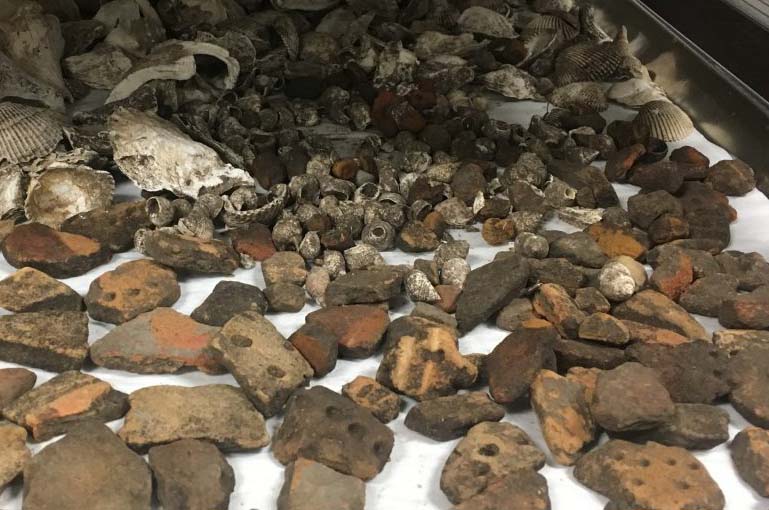
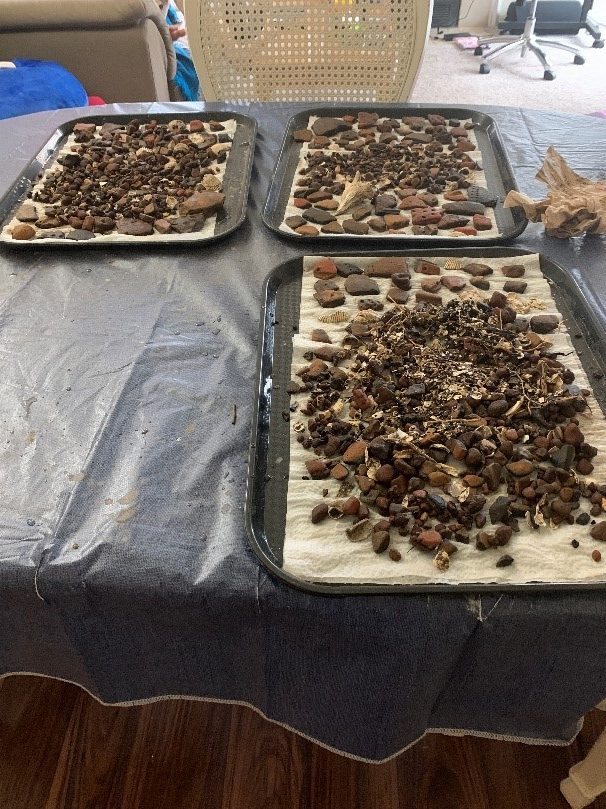
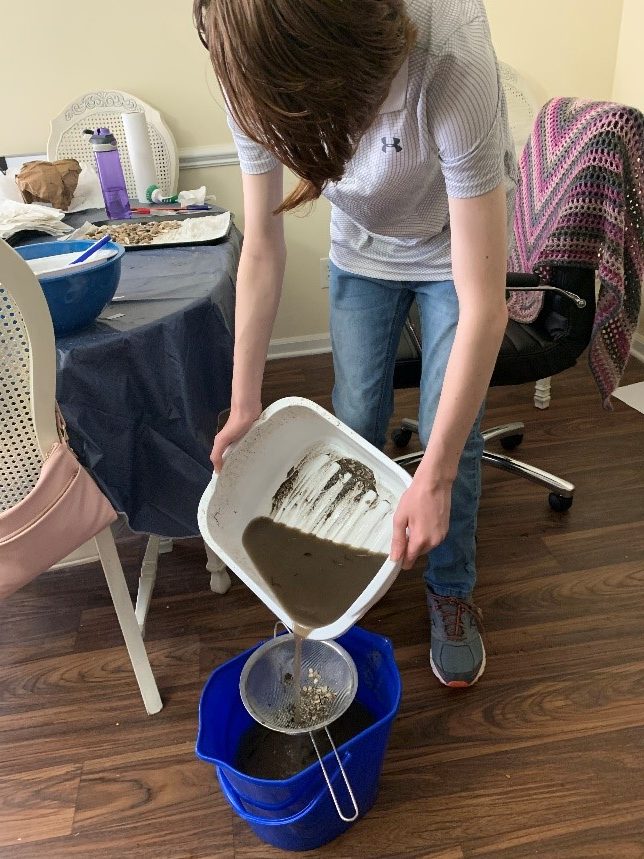
Working from home presents certain challenges; lab and storage space, for example are difficult to come by when you live in a tiny apartment. My dining room table was taken over by the artifacts from the Pockoy Island Shell Ring Complex, so my son and I had to eat every meal in the living room. Washing the artifacts was another challenge in a small space. Typically, a lab has large sinks or outdoor space for washing artifacts. My apartment just has a small kitchen sink and no outdoor water spigot; one bag of artifacts might mean five or six trips outside to empty the dirty water from the initial rinses, and more trips once the artifacts made it to the toothbrush cleaning phase.
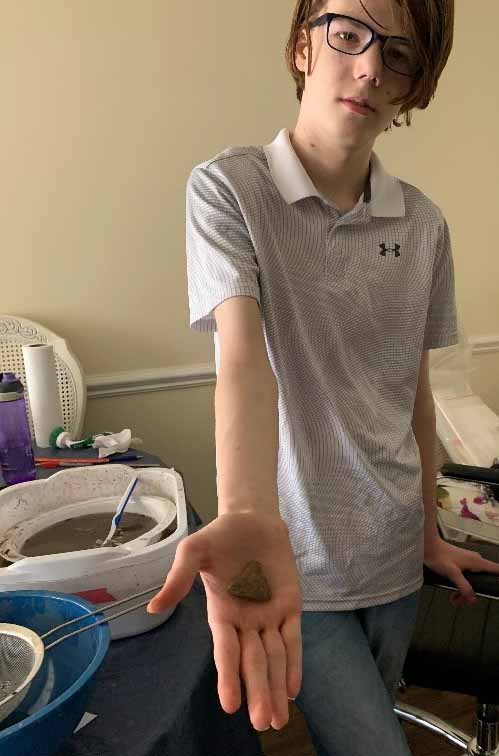
Though working from home is not all rainbows and unicorns, it does have its benefits. One of my favorite things about working from home is that I have the opportunity to share my love of archaeology with my son. Though Gabriel has attended a few excavations, he’s never seen what happens after or really been able to handle and learn about the artifacts because I worked on a secure federal facility for most of my career. I seized the opportunity to teach Gabriel about lab work and artifacts and enlisted his help in washing and sorting the artifacts.
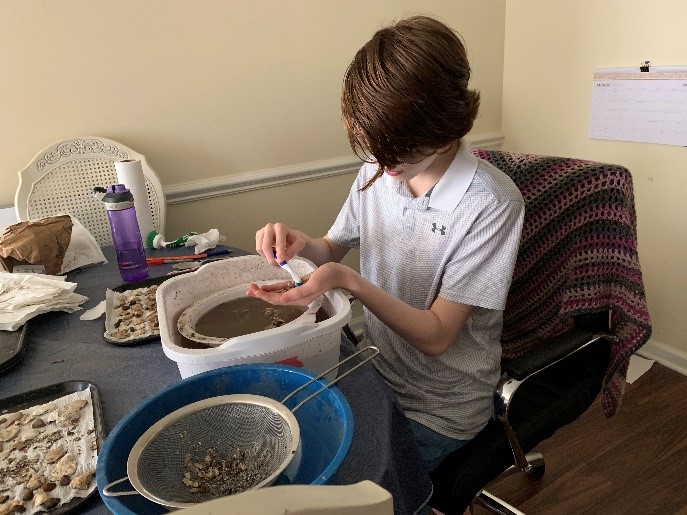
Gabriel had the opportunity to learn about many different artifacts including different types of pottery and shells.
Gabriel helped with every phase of lab work, from washing and sorting to bagging and tagging. He also helped with some of the more mundane aspects of lab work, such as emptying dirty water and cleaning the mud from the buckets.
Although Gabriel says a career in archaeology is not in his future, he enjoyed the experience and can now count himself among those who can tell the difference between a cockle and an ark or a fiber-tempered pottery sherd and a grog-tempered pottery sherd.
 SCDNR Blog