
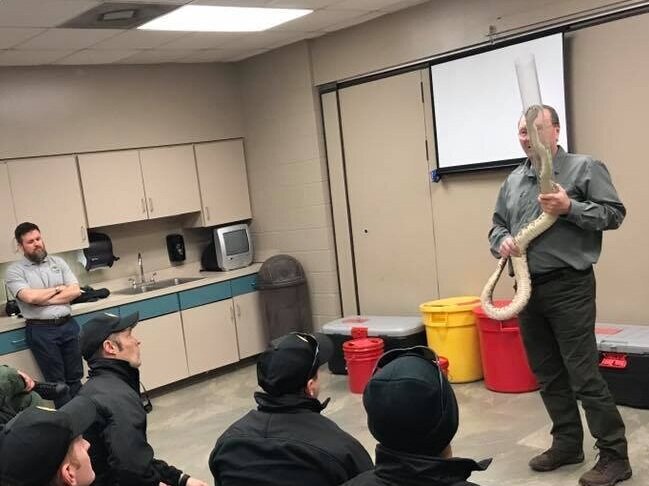
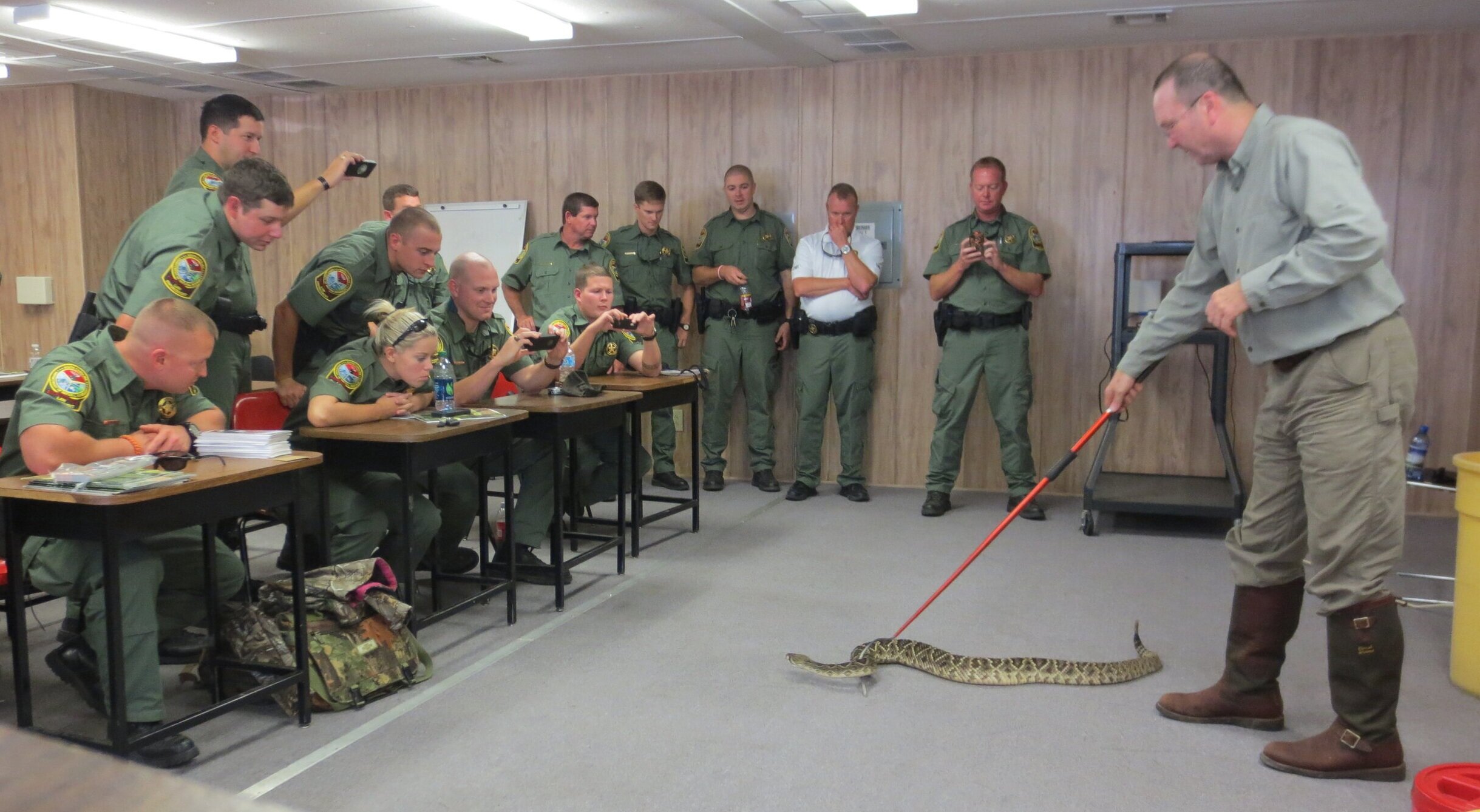
Riverbanks Zoo Curator of Herpetology Scott Pfaff demonstrates safe handling of a diamondback rattlesnake for a training group of SCDNR Officers. During his four-decade career with Riverbanks, Pfaff has worked with SCDNR on many joint research endeavors benefiting at-risk native species in South Carolina. [photo courtesy Scott Pfaff]
Scott Pfaff’s long career at Columbia’s Riverbanks Zoo has included a tremendous amount of work and research aimed at protecting some of South Carolina’s most imperiled native reptiles and amphibians.
by David Lucas
For a guy most folks in South Carolina have probably never heard of, Scott Pfaff has had a pretty amazing career, one that’s included major contributions to wildlife conservation in the Palmetto State. Pfaff is well-known, even internationally, in the scientific world of herpetology research. His role as Curator of Herpetology for Columbia’s Riverbanks Zoo and Gardens for much of the last four decades has taken Pfaff to many places around the world and allowed him to make important contributions to the study and conservation of some pretty exotic wildlife, such as various types of Asian crocodiles and Galapogos tortoises. Closer to home, his work has also had a big impact on some native South Carolina species such as the diamondback rattlesnake, gopher tortoise, and some rare and endangered salamanders — critical wildlife conservation work that he’s been partnering on with the S.C. Department of Natural Resources’ Wildlife and Freshwater Fisheries Division since the early 1980s.
![Juvenile gopher tortoises like the ones above being released by SCDNR herpetologist Andrew Grosse have benefited greatly from SCDNR’s long relationship with Riverbanks Zoo . [SCDNR photo by David Lucas]](https://www.southcarolinawild.org/wp-content/uploads/2022/04/AGTHPHeadstartReleasebyDLucas_093.jpg)
Juvenile gopher tortoises like the ones above being released by SCDNR herpetologist Andrew Grosse have benefited greatly from SCDNR’s long relationship with Riverbanks Zoo . [SCDNR photo by David Lucas]
In today’s world, spending 40-plus years with the same company or institution is increasingly rare, but for Pfaff, Riverbanks — and South Carolina — was a great fit right from the start. He came to the zoo in 1980, and his long association with SCDNR began not long after, through then-SCDNR herpetologist Steve Bennett (retired), and has continued throughout the years with younger SCDNR biologists like Will Dillman and Andrew Grosse, who coordinates the agency’s reptile and amphibian programs. Dillman, now the Assistant Chief of Wildlife for the agency, even spent some time early in his career working with Pfaff at the Zoo, as have some other current senior and retired SCDNR employees.
“Scott and Riverbanks have been great partners in conserving South Carolina’s reptiles and amphibians and helping the public develop an appreciation of these species,” said Dillman. “Their expertise in the husbandry of some of our state’s most imperiled species has helped us to better understand the needs of these animals and how to better manage wild populations. Often people think about zoos in terms of exotic animals, but Scott and Riverbanks have made significant and lasting contributions to the conservation of South Carolina’s native reptiles and amphibians.”
Pfaff recently retired from his “job of a lifetime” and agreed to chat with the S.C. Natural Resources Blog about his successful career in wildlife conservation and research. Our conversation began…well, at the beginning.
“I’ve been at Riverbanks for 40 years now, and not long after I started, my relationship with the SCDNR began through Steve (Bennett),” said Pfaff. “He’s really the guy who got Riverbanks involved with being a partner with SCDNR and with various conservation efforts involving South Carolina amphibians and reptiles.”

SCDNR herpetologist Steve Bennett (right) checks a “seep” for amphibian activity in the S.C. coastal plain. Now retired, Bennett worked with Scott Pfaff and Riverbanks Zoo beginning in the 1980s to establish research projects involving captive populations of rare native frog and salamander species that are still ongoing. [SCDNR photo by Michael Foster]
When Pfaff arrived in Columbia after graduating from the University of North Carolina, and following a brief stint at the Greensboro Zoo, Riverbanks had only been open for about seven years, and at the time, the facility did not have a dedicated exhibit for reptiles and amphibians. Pfaff started out working with birds, but the goal of establishing a herpetology exhibit and research program was always firmly in the back of his mind. Pretty much right away, he said, “I began advocating for the inclusion of crocodilians, iguanas, and other reptiles to the collection.” A turning point came around 1984, when Zoo leaders began looking at possibilities for expansion. Pfaff told his bosses that a reptile exhibit could be a popular drawing card. They didn’t believe him…at first.
“They didn’t know they needed it, but I convinced them,” said Pfaff with a smile. What Pfaff knew, that his bosses didn’t, was that reptiles were a huge draw at other zoos around the country. Then, when Riverbanks conducted a survey in 1984 asking visitors what animals they would most like to see, almost 90% of the respondents chose snakes.
“Our director at the time, Satch Krantz, I think that was kind of a shock to him,” added Pfaff.
It’s understandable that Krantz would be surprised by those results, but Pfaff wasn’t. For one thing, he’d read a survey the world-famous San Diego Zoo had done asking visitors their favorite animal, and – no surprise — reptiles were very low on the list. But when the surveyors followed those same visitors around, the reptile house was overwhelmingly their first stop. The lesson: What people “like” and what they are “fascinated by” can be two very different things. Armed with that data, Riverbanks made the decision to include a reptile house and aquarium in their expansion plans, and it’s been one of the Zoo’s most popular draws ever since. In the years following the opening of the “ARC,” (Aquarium Reptile Complex) attendance at Riverbanks nearly doubled, perhaps proving that, particularly in the South, we seem to have a love-hate relationship with some of our most iconic reptiles.
“Or as I like to say, ‘people in the Southeast just love to hate snakes,’” said Pfaff, only somewhat tongue-in-cheek. “I compare it to riding a roller coaster; when they come in to see that stuff, the big rattlesnakes and crocodilians, and big bizarre things like gaboon vipers – people are afraid of them, but they also really love watching them.”
Any way you slice it, it was clear that reptiles and amphibians were a popular draw for visitors. That was great for the zoo in and of itself, but equally important, it opened up a whole new avenue of possibilities for education, outreach and conservation, particularly on the subject of native Southeastern species.
“It’s the number one goal of zoos to display animals for people to see, and within that, my goal has always been that when people would come here and see the reptiles and amphibians within the ARC, I wanted them to leave with a changed attitude. I wanted them to appreciate reptiles and amphibians and assign to them a sense of worth.” — Scott Pfaff
Creating that sense of wonder – and worth – for these animals is often the first step in building a conservation ethic among members of the public, and it also wouldn’t be very long after the ARC opened that the Zoo’s first opportunity to explore conservation-partnerships with the SCDNR came into focus. Pfaff began talking with his colleague, SCDNR herpetologist Steve Bennett, about ways the Zoo could help with the agency’s mission to protect and conserve native species – especially some of the most at-risk ones. Bennett and SCDNR had PLENTY of ideas.
One of the things that Bennett suggested was for the Zoo to establish “ex-situ” populations of rare South Carolina amphibians in order to gather natural history data about those species that is extremely difficult to get in the field – things like how long these animals can live and their average age at first reproduction.
“Steve suggested that we work with four species of amphibians that he thought were going to be in big trouble — gopher frogs, pine barrens tree frogs, dwarf sirens, which is an aquatic salamander, and flatwoods salamanders — and it turns out that he was just spot on,” said Pfaff.
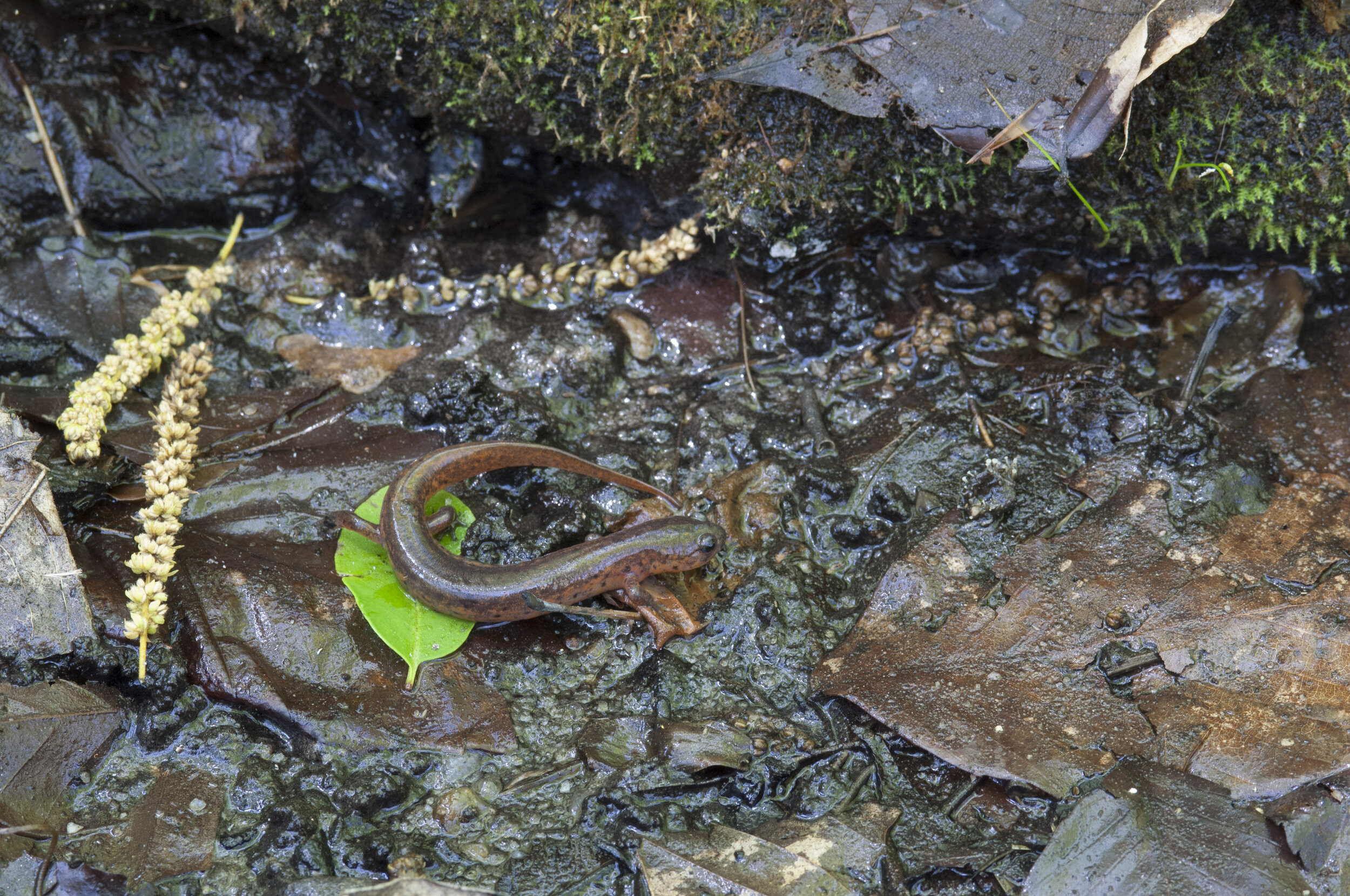
South Carolina is home to a diverse group of salamanders that mainly call aquatic habitats such as springs, seeps and small streams home. Habitat loss and alteration is one of a wide range of environmental impacts that can affect these creatures, some of which are exceedingly rare. [SCDNR photo by Michael Foster]
The Zoo staff set about establishing a large outdoor habitat space for these native species that mimics as closely as possible their preferred natural habitats and began collecting data about those animals’ life histories. In the case of pine barrens tree frogs, for instance, the Zoo’s scientists found that the female frogs reached sexual maturity quickly and were capable – under the right circumstances – of producing hundreds of offspring per year. By comparison, drought adapted species such as dwarf sirens that live in vernal ponds (which remain dry during drought conditions) took 5-6 years to reach maturity and do not produce nearly as many offspring. On the other hand, the lifespan of the sirens is much longer – the Zoo has sirens that are more than 20 years old. Confirming these types of observation in a controlled setting was incredibly useful for resource managers like Bennett and SCDNR, especially in a time before the widespread use of small, GPS-enabled tracking devices connected to cellular networks became available.
In some cases, Pfaff and his colleagues could look to work already being done at other zoos to create the habitats and protocols necessary for a successful program. But with the amphibians, they were pretty-much breaking new ground.
“That first winter we kept the gopher frogs outside, I was just really terrified,” recalled Pfaff. “We had temperatures in the teens, so I went out there and dug up some of them, expecting to find these frozen blocks of ice, and they were encased in ice and the frogs were dormant, but they were alive. I put them back in their burrows for the rest of the winter and in the spring they were fine, so we were finding out first-hand that these animals really are extremely cold-tolerant. We knew these animals were winter breeders, but to me it was really eye-opening to see just how cold-tolerant they are.”
The working relationship with SCDNR’s herpetology program was critical to all of these efforts. Pfaff and his staff spent hours in the field with Steve Bennett and other SCDNR biologists and technicians to collect animals, and made careful observations about their habitats. Back at Riverbanks, they worked hard to recreate those conditions as closely as possible for the study group enclosures.
With the rising popularity of the ARC exhibit helping to push visitation numbers, Pfaff was also able to convince the leaders at the Zoo to begin a program to support field research into these animals financially.
“I felt like it was really important, when we were establishing that grant program [now called the Satch Krantz Conservation program], to support work that was going on right here in South Carolina (and the region). Zoos like ours support conservation efforts around the world, but I was really interested in local conservation, because I felt like our reptiles and amphibians were just as in need of conservation work and research as animals found in faraway places.” — Scott Pfaff
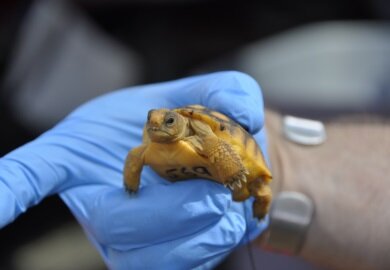
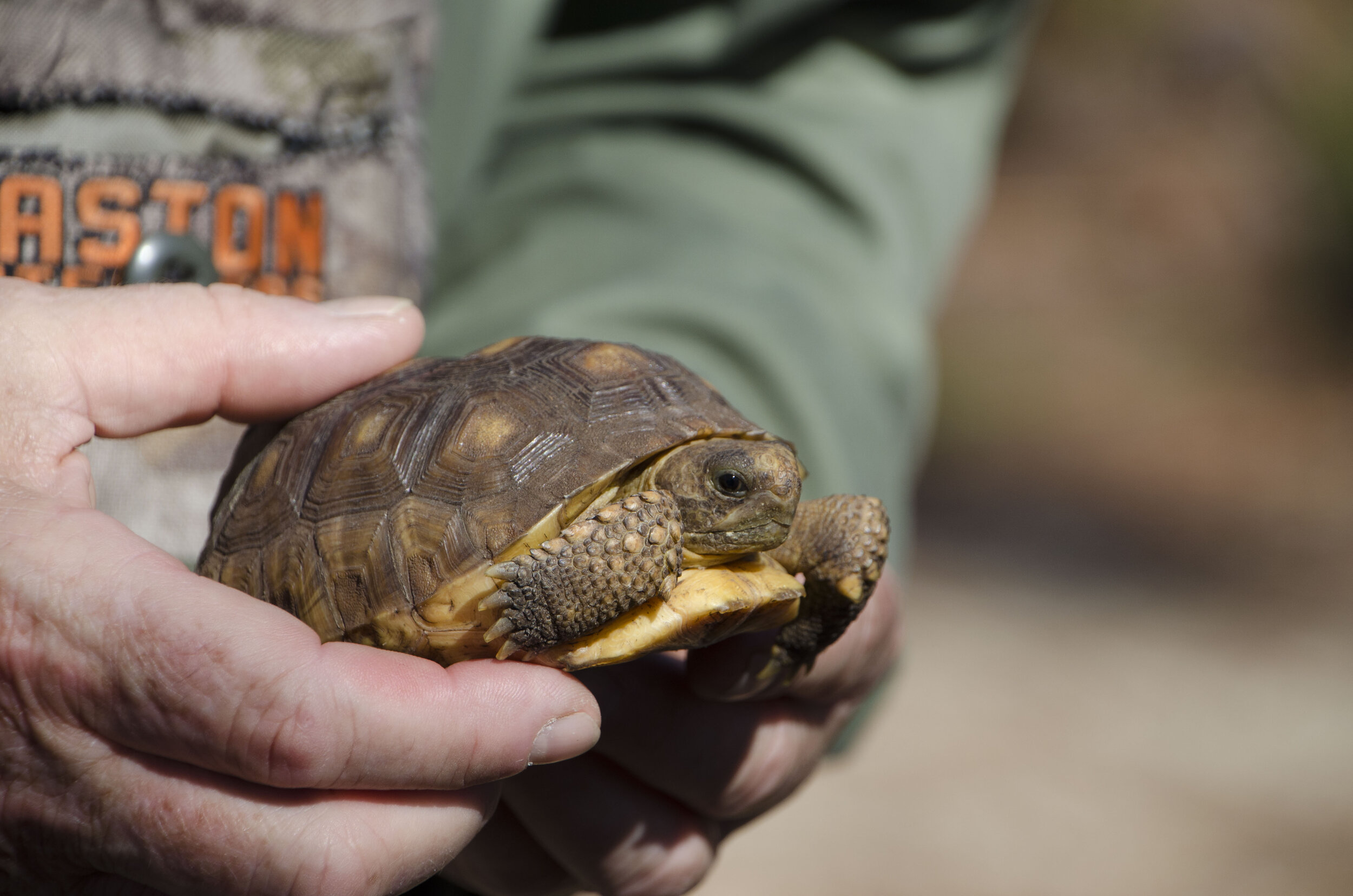
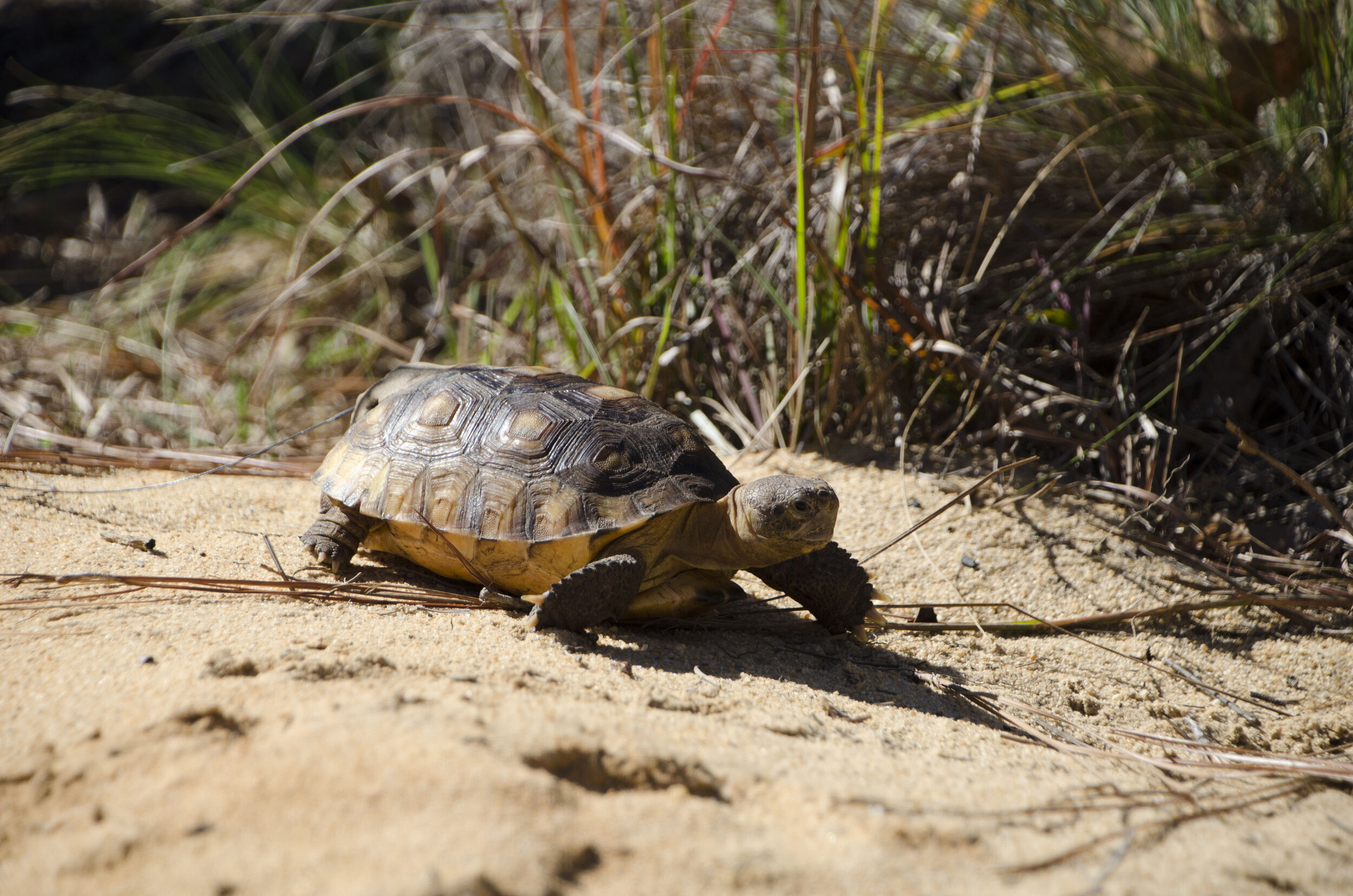
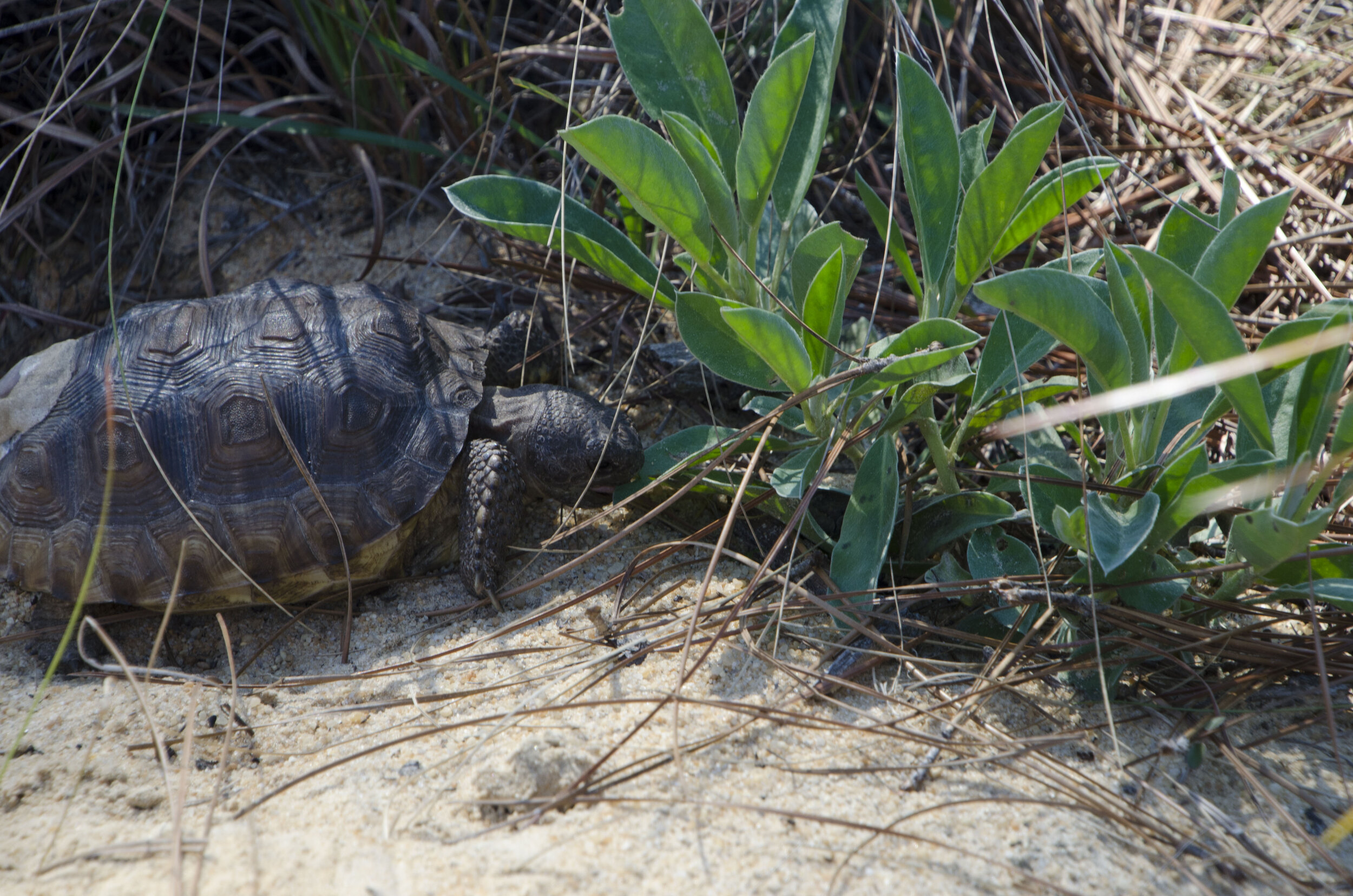
Over the years, the program has supported more than 20 SCDNR fieldwork projects, including six gopher tortoise projects alone. In terms of dollars, it’s added up to more than $100,000 to support to work done by the SCDNR and their other partners, such as UGA’s Savannah River Ecology Lab. Riverbanks also helped out directly with that project by “headstarting” a group of juvenile gopher tortoises — rearing them until they were big enough to be released at the SCDNR’s Aiken Gopher Tortoise and Tillman Sand Ridge Heritage Preserves.
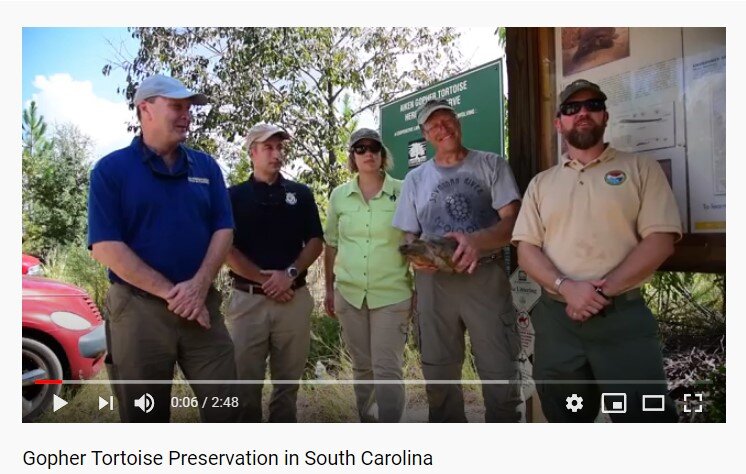
Scott Pfaff (far left) and SCDNR’s Will Dillman (far right), along with representatives from the U.S. Fish and Wildlife Service, University of Georgia’s Savannah River Ecology Lab, SCDNR and the Longleaf Alliance Talk about efforts to restore native gopher tortoise populations on an SCDNR Heritage Preserve property in Aiken County in this 2017 Video. This project has received funding and other support from Riverbanks Zoo, thanks to a partnership and grant program established by Pfaff. (Click image to view complete video or follow the link below.)
[Video Link: https://youtu.be/8t2Klo5zF0o ]
#block-yui_3_17_2_1_1599748855524_95184 .sqs-gallery-block-grid .sqs-gallery-design-grid { margin-right: -20px; }
#block-yui_3_17_2_1_1599748855524_95184 .sqs-gallery-block-grid .sqs-gallery-design-grid-slide .margin-wrapper { margin-right: 20px; margin-bottom: 20px; }
In addition to his work with reptile and amphibian species in South Carolina, Pfaff has also been able to contribute to research into rare crocodilian species – another of his passions — around the world. Making those kind of contributions; mentoring and supporting others and being able to work on research projects both close to home and internationally, has added up to a very satisfying career for Scott Pfaff. His job with the Riverbanks Zoo ended in August, but after a well-earned month-long hiatus involving backpacking and camping in the desert Southwest, he said he expects to continue being involved volunteering with SCDNR and other research projects for many years to come. Scott Pfaff’s quiet and steady dedication to our wildlife and natural resources make him truly one of South Carolina’s “Unsung Conservation Heroes.”
 SCDNR Blog