

![Students from Liberty Elementary school in Pickens County enjoy the view from South Carolina’s highest point. [SCDNR photo by Greg Lucas]](https://scdnrblog.com/wp-content/uploads/2025/02/73a75-sassafraslibertyelementary09-25-2019bylucas.jpg)
Students from Liberty Elementary school in Pickens County enjoy the view from South Carolina’s highest point. [SCDNR photo by Greg Lucas]
Even if you don’t hunt or fish, purchasing a S.C. hunting and fishing license is a conservation investment that can pay enormous dividends in the protection of habitats and nongame wildlife.
by Greg Lucas
We are standing on Sassafras Mountain Overlook on a gorgeous September day, admiring the surrounding mountains in North and South Carolina and Georgia from the highest point in the Palmetto State, 3,553 feet above sea level. To say it’s an awe-inspiring view doesn’t even begin to do this place justice. The 80 third-graders from Liberty Elementary School in Pickens County are spread over the platform, all wide-eyed with wonder, and here come some hawks flying over, just in time for the Hawk Watch man to identify and talk about!
What does this have to do with buying a hunting and fishing license, you might ask? Plenty!
While the funding for the Sassafras Mountain Overlook and the surrounding Jocassee Gorges lands came from many sources, the backbone of the acquisition, and of the salaries for the staff who put together this decade-long endeavor, came from revenue generated from state hunting and fishing licenses.
So what does this mean? It means you should find someone who hunts or fishes and thank them for what they’ve done to protect our woods and waters and the wildlife and fish they harbor! Or better yet, go out and buy a hunting and fishing license yourself and begin your own legacy for conservation.
How does this work exactly, the way that hunting and fishing licenses benefit conservation? It’s not a simple formula, and whenever I try to lay it out for someone who doesn’t fish or hunt, their eyes go glassy after about the second sentence! But here’s the 50-Cent Explanation: thanks to some forward-looking legislation that began in 1937, hunters and anglers pay excise taxes on hunting and fishing equipment that is collected by the U.S. Fish and Wildlife Service, then given back to the states for conservation based on how many licenses a state has sold. The more licenses a state sells, the bigger the amount of funding that goes back to that state.
So if you buy a fishing or hunting license in South Carolina, you’re helping conservation in the Palmetto State. It’s that simple.
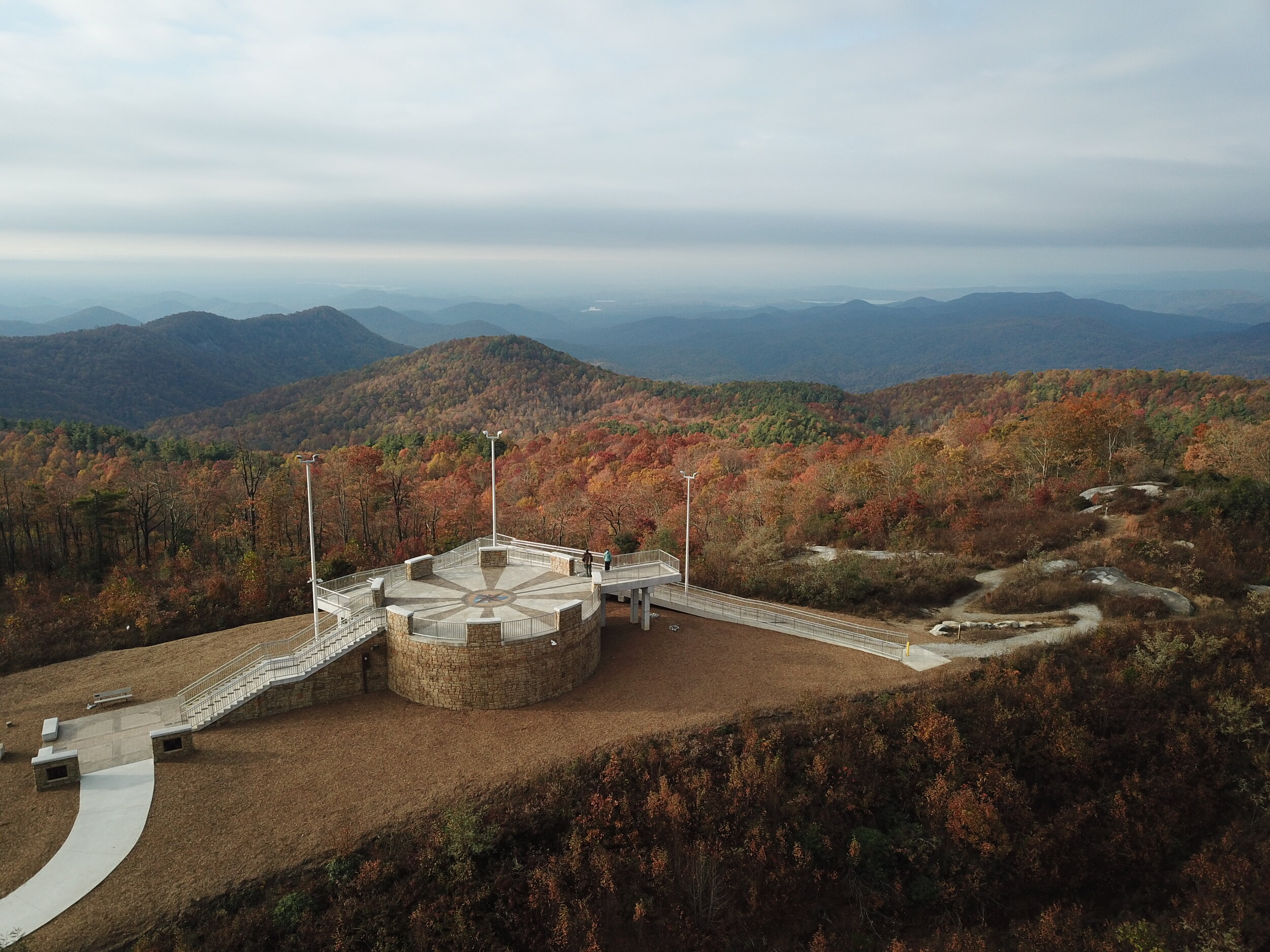
The revenue generated from state hunting and fishing licenses, as well as federal excise taxes on firearms, ammunition, fishing tackle and boat motor fuels, are critical to keeping and maintaining properties such as the Sassafrass Mountain Overlook. Those funds also support other DNR-managed WMA and Heritage Trust properties available for outdoor recreation in South Carolina, AND research and management effort for a wide variety of game, non-game and at-risk wildlife and fish species. [SCDNR photo by Danielle Kent]
Monies returned to the states are the primary source of funding for most state wildlife and fish conservation efforts, like those carried out by my agency, the South Carolina Department of Natural Resources (SCDNR). They benefit all wildlife and fish species, and not just those that are hunted and fished. Good examples from the past, for animals that are not hunted, include the comeback of the bald eagle and the peregrine falcon in South Carolina. Some land acquisitions that benefited greatly from hunting and fishing license revenue were the Jocassee Gorges in Pickens and Oconee counties, where hikers, paddlers and wildflower enthusiasts may outnumber hunters and anglers. The ACE Basin in Colleton County, a bird-watching mecca in South Carolina, is another landmark conservation partnership that would not have been possible without the revenues generated from the sale of hunting and fishing licenses.
On the aquatic side, the funding from fishing gear helps pay for our fish hatcheries, such as the Walhalla State Fish Hatchery in northern Oconee County, the only hatchery in the state that raises cold-water fish like trout. These funds have also helped to reintroduce the Southern Appalachian brook trout, our only native trout, back to many Upstate streams after nearly disappearing due to habitat change and competition from non-native trout.
So if you want to encourage more projects like these, go out and buy a hunting or fishing license, or a combination license. They’re pretty inexpensive. You can get them at any store that sells sporting goods, you can come to any SCDNR office and buy one in person, or you can buy them online from the comfort of your home by visiting http://www.dnr.sc.gov/purchase.html.
The fish and wildlife of the Palmetto State, and the waters and lands they require, will thank you for it!
(Greg Lucas has worked in conservation education and outreach with SCDNR for more than 30 years. He is stationed at the Clemson SCDNR office.)
 SCDNR Blog