
By: Angelica Williams, SCDNR Archaeology Intern
Growing up amongst the historic buildings and monuments of Old Town Alexandria and Washington, D.C., I had always been taught to observe the history that sat above the surface. Large, imposing buildings easily catch one’s eye and lead them to think of the history that once took place along the very streets that they now walk their dogs and do their weekly grocery shopping. Now, as a graduate student studying Public History at the University of South Carolina, I am still being trained to look at the physical monuments that remain and attest to human ingenuity and legacy. It was not until my first trip into the field with SCDNR that I began to truly consider what history may lie below the surface, even in woodlands bordering urban environments like the ones I have spent my whole life in.
For our first day of field work, the SCDNR Archaeology team and interns all piled into multiple trucks to go visit Congaree Creek Heritage Preserve in Cayce, South Carolina. When hearing the name of the Preserve, I automatically assumed that we would be going deep into the woods, way off the beaten path, and far outside of the city limits. Our goal for the day was to visit the newest addition to the Preserve and conduct shovel testing there in order to locate artifacts. Imagine my surprise when we never got off the main road until right before we were going to reach the site! Traveling along a small state highway we passed grocery stores, businesses, and fast-food restaurants, all places that characterize most urban environments. Additionally, we rode by billboards, parking lots, and exit markers, none of which are typically associated with the promise of nature and ancient history. However, it was these monuments that we encountered before pulling off onto a discreet dirt road along the highway that wound between large trees and small vines, with foliage that choked out the weak morning sunlight. As the van rumbled along the narrow pathway, I was amazed by how this world felt completely separate from the one we had just left behind. All of my life I had driven along similar main streets and passed the pockets of trees scattered along them, dismissing these sections of land as containing nothing worth much notice. But now, as we arrived at this clearing in the woods, we were informed that recent artifacts had dated this very place back a few thousand years.
The unassuming land we then stood on, just beyond the nearest burger place or ice cream shop, had once been home to Indigenous peoples centuries ago. Along the dried riverbeds, they had once built their homes, hunted and grew food for their families, and spent their lives under these trees or their predecessors. Though an urban environment had since sprung up around the site, the soil still contained this history right under our feet. There were no monuments in this place to attest to the existence of these communities on that particular plot, so the responsibility of the SCDNR archaeologists, and the interns who were able to assist, was to find the stories that had been buried beneath the scattered foliage and mountains of dirt. After digging holes and screening for much of the day, our group did not walk away with any new artifacts of note that afternoon. However, moving forward, my perspective of meaningful and notable history has shifted noticeably, as I come to realize that ancient and historic places remain even amongst new urban and built environments. Sometimes it just takes a shovel and screen to locate them. Moving forward in my studies of history, I am reminded to be just as conscious of what lies below the ground as I am of what sits above it.
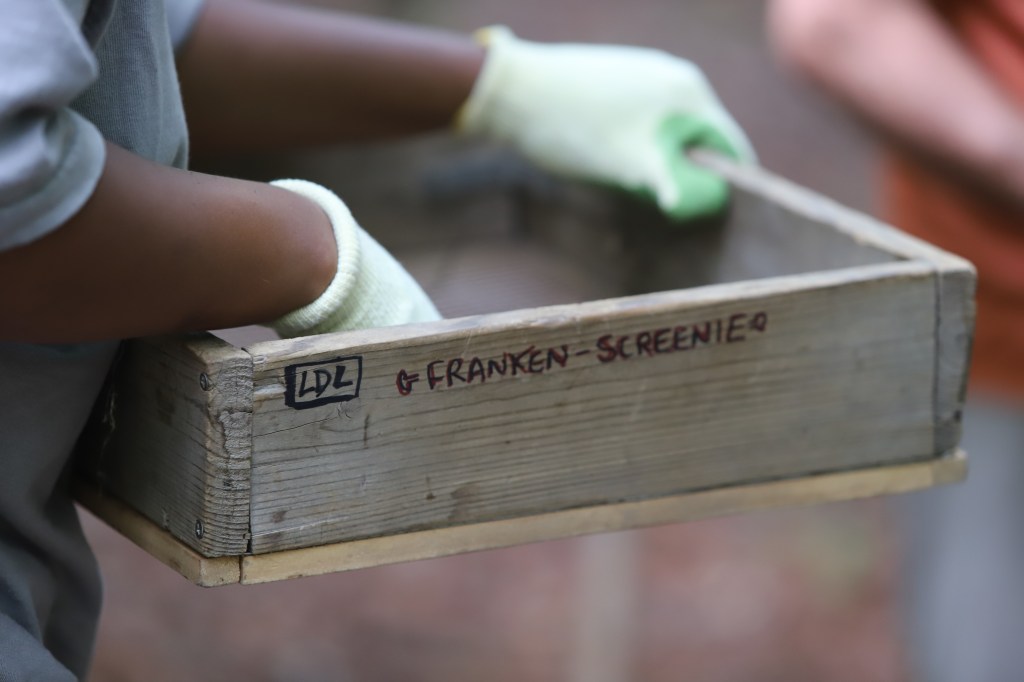
Angelica Williams screening for artifacts at Congaree Creek Heritage Preserve. Photo Credit: Meg Gaillard.
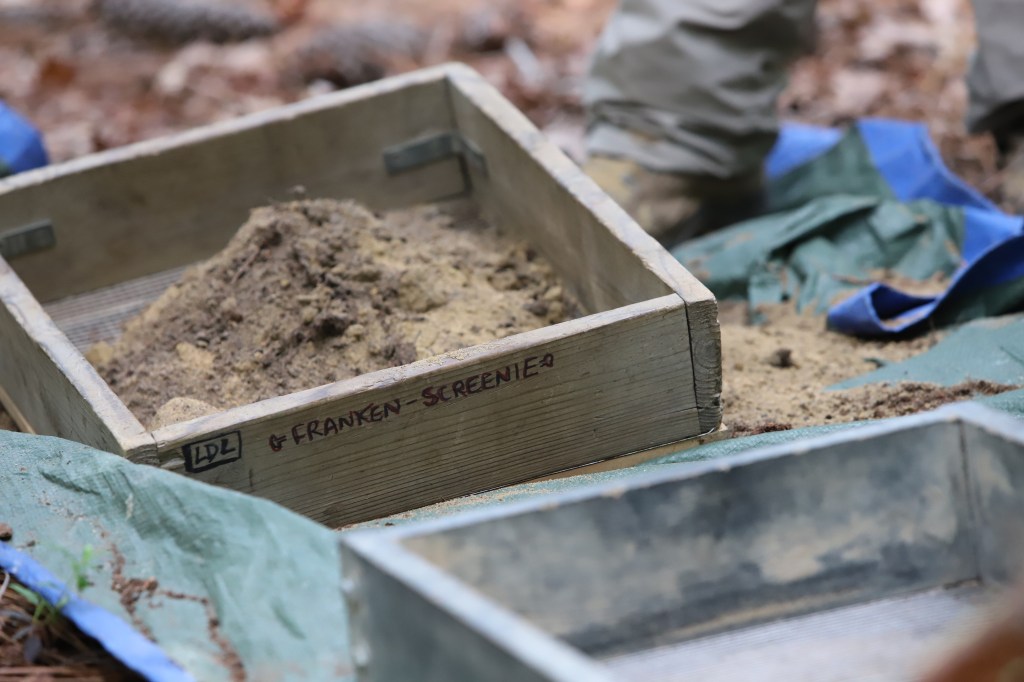
Screens and tarp with soil from shovel testing at Congaree Creek Heritage Preserve. Photo Credit: Meg Gaillard.
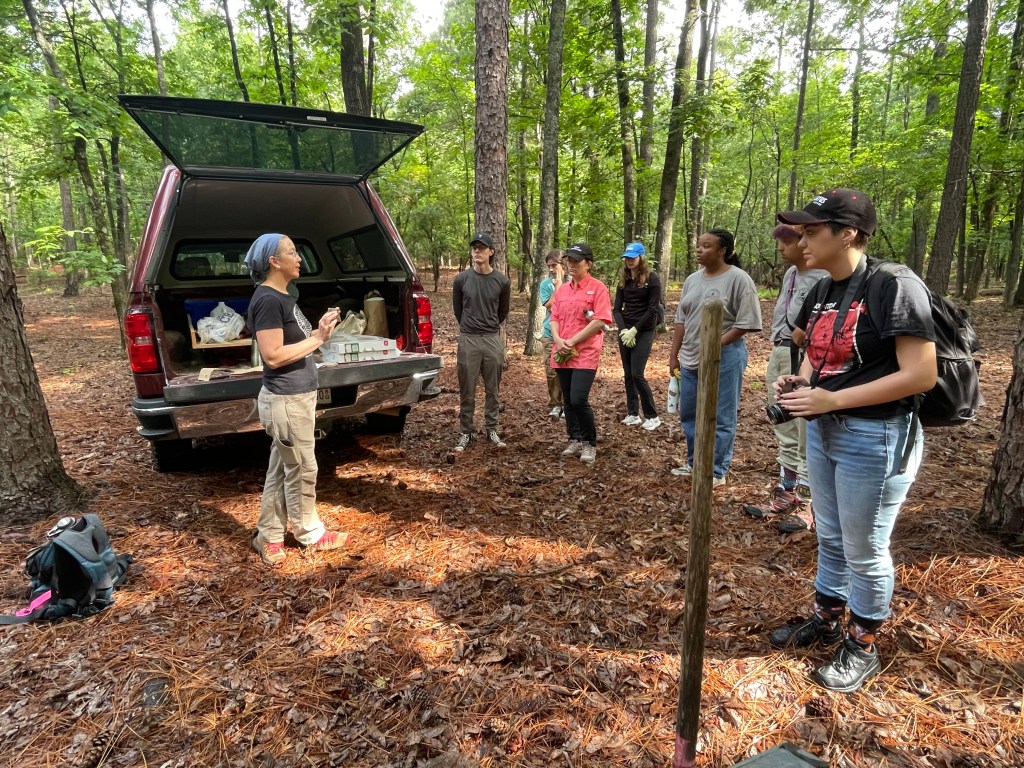
SCDNR Archaeologist Tamara sharing guidelines for shovel testing and artifact collecting with interns. Photo Credit: Meg Gaillard.

SCDNR Archaeologist Larry Lane, along with interns Angelica Williams and Kale Dalton, shovel testing within an enclave of bushes. Photo Credit: Meg Gaillard.
 SCDNR Blog