

By Juno Ham, SCDNR Archaeology Intern
In the last few years of my undergraduate experience there is no question I have come to loathe the question, “What do you intend to do for a career?” This question follows most of us throughout our education, with a crude answer usually forming sometime around high school before being refined throughout college. I, however, have witnessed a backwards development. I graduated from high school confident in my desire and ability to pursue chemical engineering before becoming disillusioned with the field and falling in love with anthropology during my sophomore year of undergrad. Now, entering my final year at Clemson University, and working towards a bachelor’s degree in both mathematical sciences and anthropology, my greatest fear is pigeonholing myself into a discipline that I find ultimately ungratifying.
Prior to my internship with SCDNR’s Cultural Heritage Trust Program (Archaeology team), my interest in archaeology was strong, but wavered at the thought of committing to it for my entire career. I found the process of material analysis, background research, and most of all cultural insight to be captivating, but it was difficult to see myself taking that path while still being able to utilize my mathematics background. This line of reasoning was tied to my belief at the time that archaeology is a relatively self-contained field of study possessing little overlap with other disciplines. However, as I write in the final week of my internship, I can safely say that the version of myself from six weeks ago was comically incorrect. Archaeological progress is only made possible through collaboration with a wide range of professions, be those in engineering, medical science, or museum studies. This has provided me with many ways to consider how my academic interests can cross-pollinate within one position.
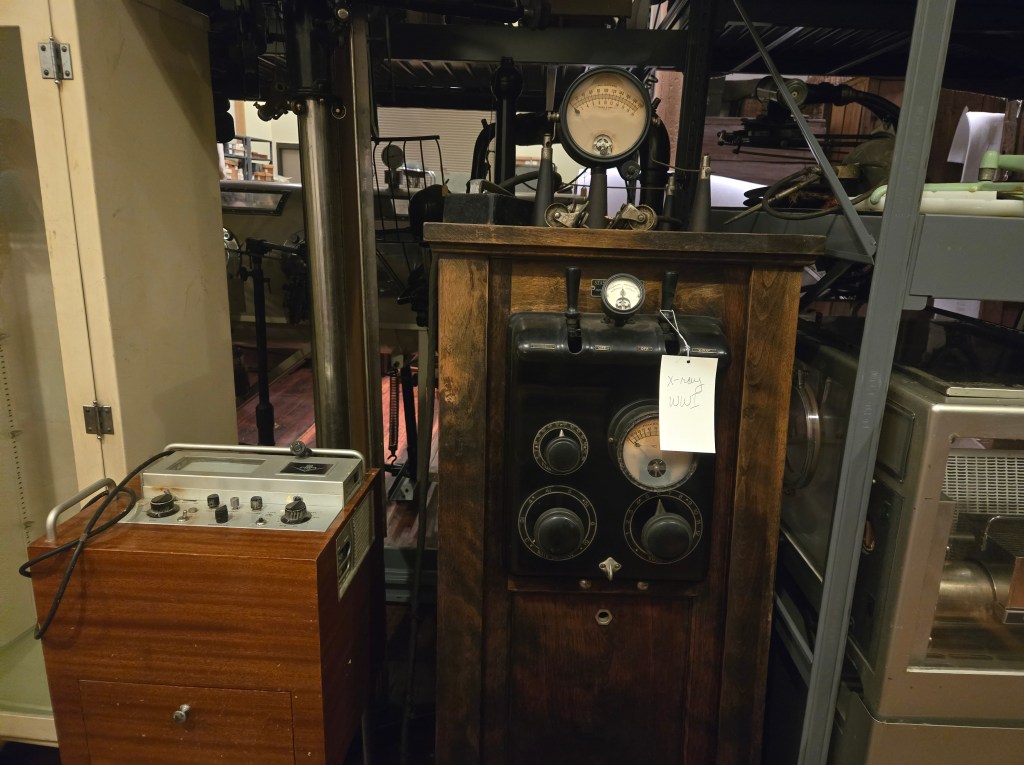
The first event that challenged my preconceived idea of archaeology came on the first Thursday of the internship when Joe Lemeris, the SCDNR GIS Program Manager, delivered a short lecture on the application of geographic information systems (GIS) to the field of archaeology. In retrospect, it was obvious that archaeologists would benefit from working with those specialized in obtaining and displaying geographic data, but at the time I was surprised. I had associated GIS squarely with engineers who analyzed the information solely for construction purposes, not anthropologists screening an area for material indicators of a centuries-old cultural presence. Subsequently, I learned that knowledge of GIS is a valuable asset should one pursue a position in archaeology. This disrupted my assumption that archaeologists all exhibit the same skillset, as a variety of seemingly effective skills may prove useful in conjunction with those utilized in the field. This lecture, though I was unaware at the time, foreshadowed much of the subsequent five weeks. We spent time in the South Carolina State Museum, Richland County Coroner’s Office, and South Carolina Department of Archives and History, all of which featured people who most would not consider as a stereotypical archaeologist. Each person was eager to share how archaeology is used in a typical workday.
To close with an analogy, before my time with SCDNR, I viewed archaeology much like a solitary flower – enchanting on its own but seemingly uncoupled from the surrounding foliage. However, I now consider archaeology to be much more like a large tree, with roots extending outwards to interact with and affect many different plants, which in turn assist in its development. This, more than any experience gained during my internship, has refreshed my outlook towards the field as a whole. Even if I ultimately decide to utilize my education elsewhere, I can rest assured knowing that I’m never too far away from archaeology.
 SCDNR Blog
Leave a comment