
By Meredith Morningstar, SCDNR Archaeology Intern
Throughout my time as a SCDNR Archaeology intern, I’ve had the privilege of speaking with archaeologists across the globe. While every archaeological specialty we’ve learned about has been intriguing, one in particular stood out to me, experimental archaeology. Sean Taylor, an SCDNR archaeologist, taught us that experimental archaeologists use a variety of construction methods to recreate Precontact technologies in modern contexts.

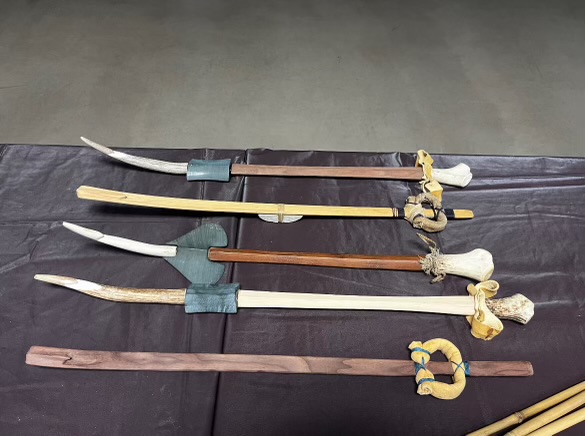
First, Sean introduced the atlatl which is a handheld, wooden tool that launches projectiles with power and force. I noticed that the size of the atlatl depended on the user’s arm length so that the tool sat comfortably in one’s arm. Many types of atlatls also use weights to increase force upon the thrown object. These weights are melded to the wood using sinew. I discovered that sinew is an effective tool for holding handles and points to atlatls. The more dehydrated it gets, the more unmovable it becomes which allows it to act like industrial glue.
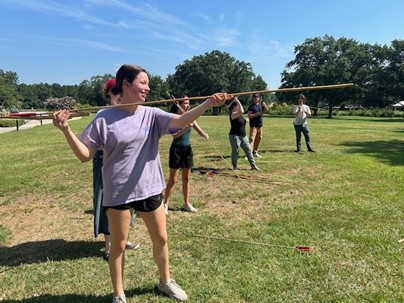
After acquiring knowledge on the atlatl’s makeup, we tested atlatls and targets in a nearby park. The activity proved to depend greatly on your upper body strength and ability to gain momentum. I found that my most successful launching technique came when I rotated my shoulder and pushed off the ground with my feet. Others found that using precise wrist movement allowed for a more accurate shot.
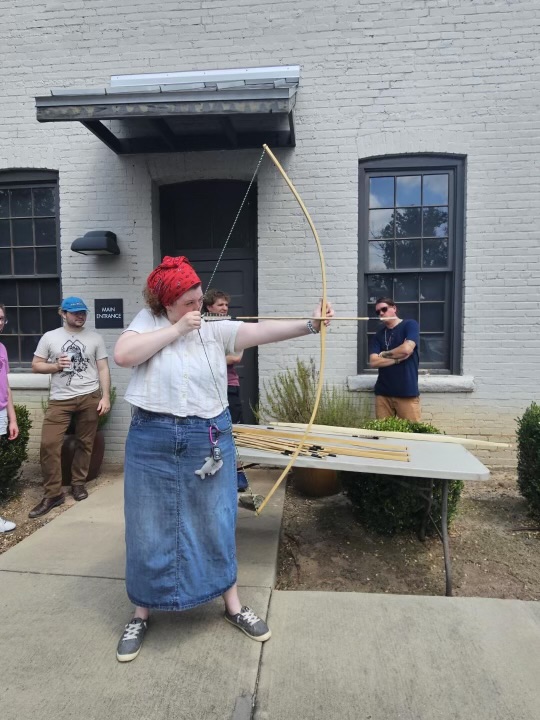
Atlatls were replaced in the archaeological record by bows and arrows. So, it’s only fitting that those were the tools we used next. Sean brought in bows that he carved and demonstrated the technique of wood bending in order to get cordage onto the bow. We made cordage ourselves by twisting and braiding synthetic grass strands together. It was impressive how a simple plant fiber could hold so much tension through knotting. I learned that this tension determined how much force an arrow gained when we shot at a distanced target. Although it was a fun and breezy activity, it included a high level of strength and accuracy I wouldn’t have previously understood.
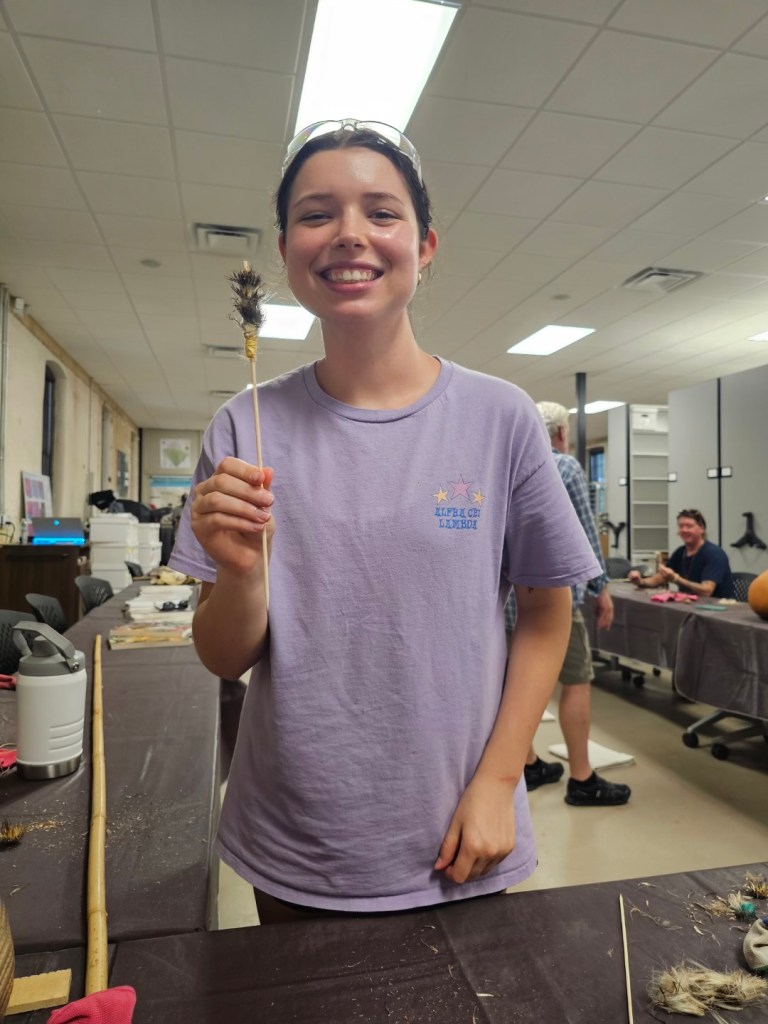
We later transitioned to constructing blow darts using thistle, yarn, and wooden skewers. To make a dart, I cut a tiny nook into one end of the wooden skewer (dart) which secured the string. I then de-seeded and fletched thistle onto the dart. Although it took me many tries to properly fletch thistle onto the dart, it sure was fun to pass around my messed up darts that resembled yarn balls rather than darts.
When we shot our darts through hollow river cane, I was shocked at how powerful a launching device these tubes were. The length of these tubes, which ranged from 6 to 8 feet, allowed the darts to gain speed rapidly in the projected direction. Blow darts proved to be a very controlled hunting tool that I would love to study more in the archaeological record.
Our last activity was flint knapping. We used copper billets to flake novaculite rock, typically found in the Midwestern United States. Arkansas novaculite rock is a beginner-friendly rock due to its hard exterior that has no inclusions that could cause unpredicted breakage.
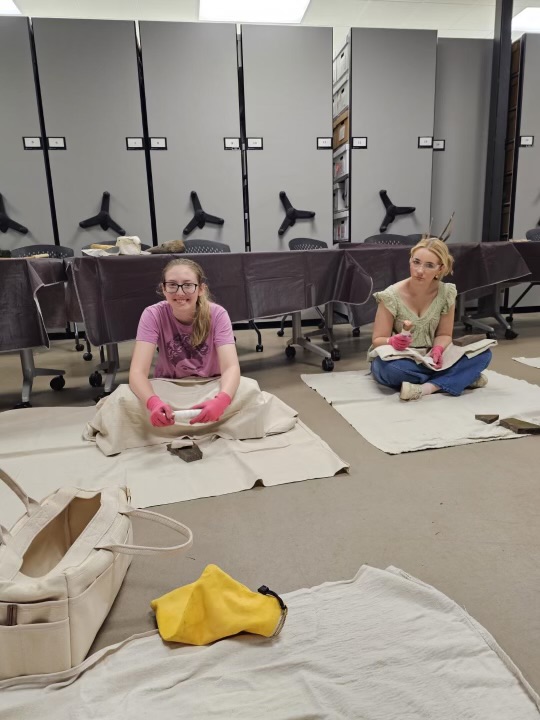
Through practice, I realized that flint knapping takes a lot of precise, striking coordination on the rock’s surface as even one mis-strike can lead to the entire rock shattering. Breaking off projectile points involved a great deal of smoothing the rock’s sharp edges and eliminating any protruding rock clusters.
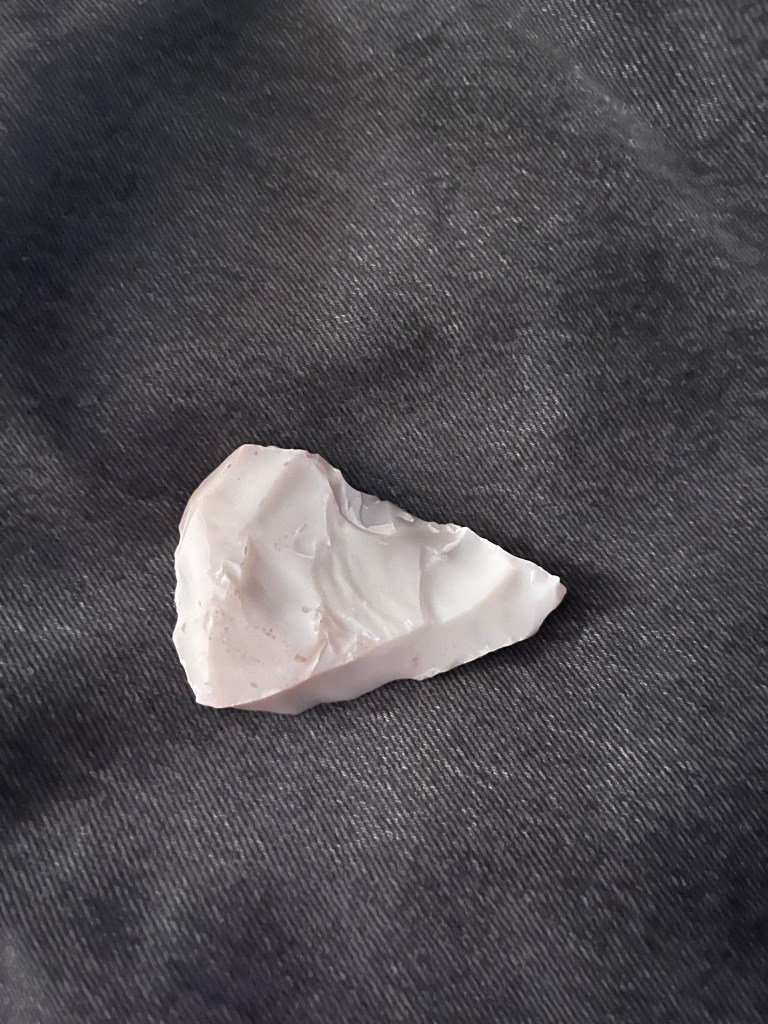
The regional migration patterns of Indigenous hunters in South Carolina can be roughly traced given the rocks they used to flintknap projectile points. As the SCDNR Heritage Trust archaeologists continue to maintain and excavate sites, it’s critical to study what rocks are available in the greater region and beyond for this purpose.
Overall, experimenting with the construction and intended use of Precontact Period tools have emphasized how resource availability and efficiency determine what Indigenous peoples in South Carolina used in daily life. Because these materials are reflected in the archaeological record, it’s important for archaeologists to explore the sustainable practices of past societies. Experimental archaeology can provide students, educators, craftspeople, and society as a whole with a greater understanding of the past through hands-on experience while inspiring creativity along the way. The SCDNR Heritage Trust’s Summer Series is an excellent opportunity for kids ages 6 to 18 to gain hands-on experience with experimental archaeology. Visit https://heritagetrust.dnr.sc.gov/ for more information.
 SCDNR Blog
Leave a comment