
By Hope Norris, SCDNR Archaeology Intern
Throughout history, clothing and style have been what connect and define cultures and civilization as a whole. An often forgotten but essential piece to garment construction and use is the button. The button sturdily holds together clothing, simultaneously preventing scandal and adding charm and decoration to an outfit. During our processing of the artifacts from SCDNR’s Fort Fredrick Heritage Preserve in Beaufort, South Carolina, we discovered a number of unique and charming buttons, each with its own unique story.
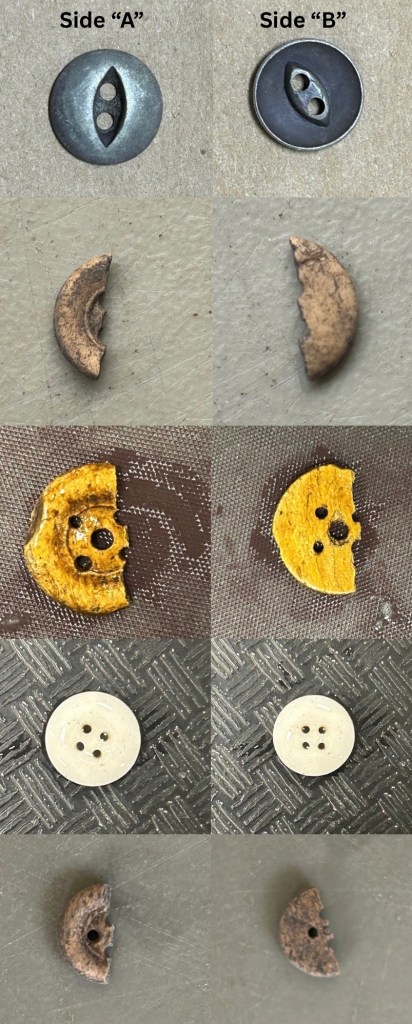
There were the more ordinary buttons, such as flat buttons of various materials, such as wood, glass, metal, and even ones that appear to be of relatively modern design (Image Collage 1- Flat buttons).
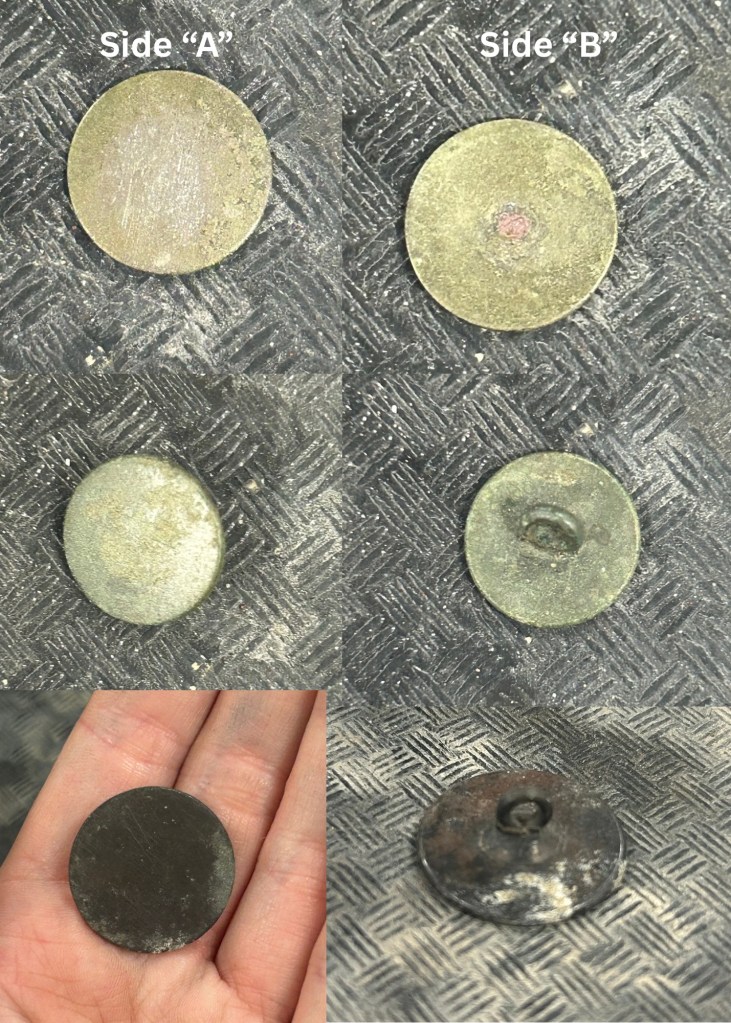
As well as many shank buttons of various sizes that were made of metal (image collage 2 Shank buttons).
It is easy to look at these buttons as boring because of their visual lack of pizzazz and intricacy, but where they are lacking, they make up for in potential. Every garment and every button has a deep personal connection to a real person’s life. Not only was a button a part of something that someone wore, but it was an essential piece to something that kept a person warm and protected. Even the least visually impressive buttons have deeply personal stories to potentially tell.
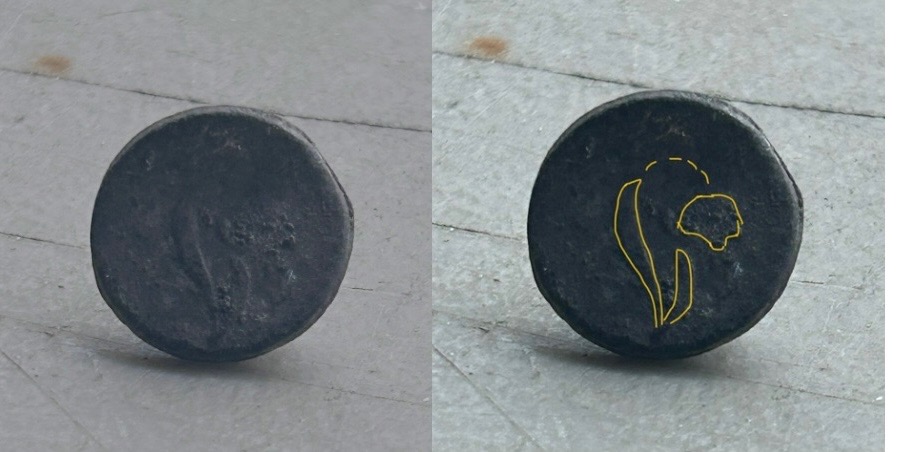
While ordinary buttons do have impressive stories to tell, decorated buttons can often reveal more about who could have worn them. One such case of this was a metal shank button we came across while sorting the Fort Frederick artifacts. Upon further inspection, the button appeared to have some sort of design on it. Through a great deal of squinting and zooming in on photos I took, I made out what I believed at the time to be lily of the valley, or some other sort of drooping flower on the button (Image collage 3).
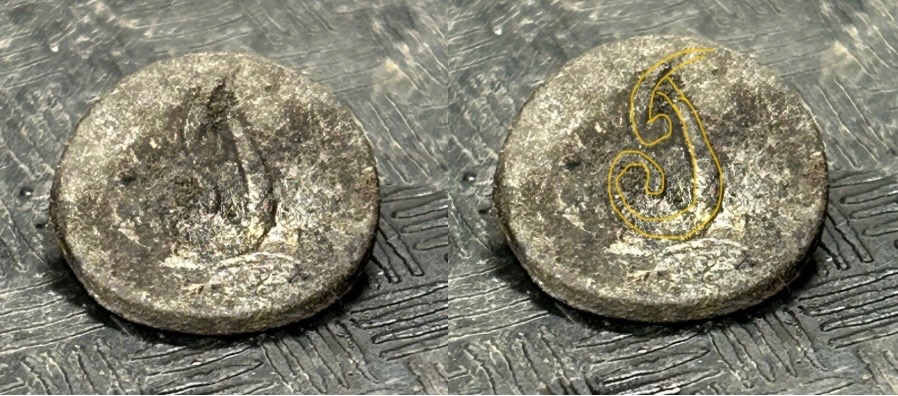
Later on, I washed this button and further inspected it, finding a sun or eye-like symbol near one edge (image collage 4), and discovering less of a resemblance to lily of the valley but rather to a more paisley-like scroll (image collage 4).
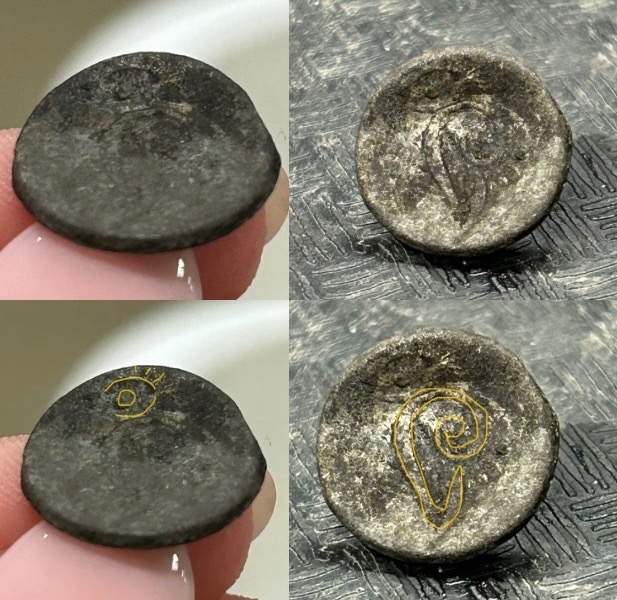
Upon showing this to the SCDNR archaeologists who consulted with one another, they determination that it appeared to be a cursive “T”, perhaps an initial. This opens doors for an even deeper insight into who could have worn the button because an initial is part of a name, an identity. This button not only served to help keep someone warm and protected, but also potentially served as a piece of identity.
Though we may never know the name of the person who wore that button, it still provides an impressive piece of what could have been their name. A name, which could be all someone has in this life, and one of the most important facets of one’s identity, making it more personal than any of the other buttons.
Buttons may not definitively be able to tell us much about the wearer, but they are still valuable to provide insight into who someone might have been. Buttons help humanize history on a personal level. Through these buttons, I have felt a definitive connection to the people who wore them, and the Fort Frederick Heritage Preserve as a whole. It puts into perspective how future generations will learn about us from what we leave behind, just as we learn about those who came before us. Through time our fabric garments will rot away, so we can only hope that someone may take the time to look at our buttons we leave behind and think about us as individuals and dream of who we might have been.
 SCDNR Blog
Leave a comment