

Header photo courtesy of Farmers’ Almanac
Friday, August 8, 2025, is the sturgeon moon! August’s full moon crests on Saturday, August 9, reaching peak illumination at 3:55 am EST. Look up on the evening of Friday, August 8, to catch a spectacular view of this fishy full summer moon.
Traditionally, the name sturgeon moon comes from the giant lake sturgeon of the Great Lakes that were readily caught during this part of summer as an important food source for Native Americans in the region.

In South Carolina, the Catawba Nation in Rock Hill are our only federally recognized tribe. They have called the Carolinas and parts of Virginia their home for over 14,000 years.
During their long relationship with the southern landscape, the people of the Catawba Nation learned to utilize their fish “relations” including sturgeon and other migratory fish. Animals and plants are referred to as “relations” to reflect the attitude of respect, kinship and connectedness with the natural world.
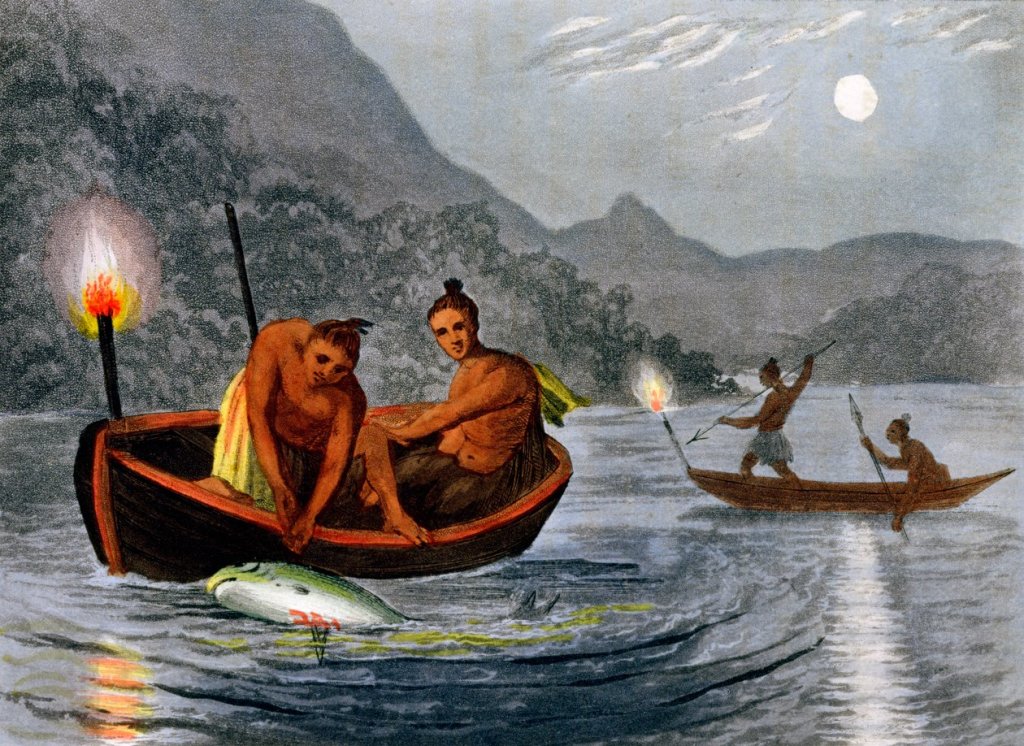
Historically, sturgeon were harvested from February to October with the primary hunting in late summer. Smaller sturgeon were taken in the spring and early summer. There are stories of sturgeon populations so abundant you could walk across the river on their backs.
Sturgeons were captured by several methods:
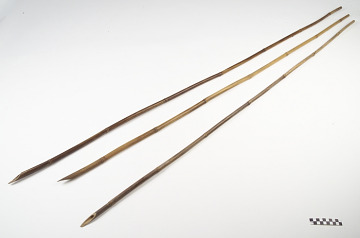

- Sturgeons were impaled with rivercane spears. The spear was often two notched and hardened in fire before use. The air pockets in the cane caused the fish to struggle to dive. They eventually became exhausted and were pulled ashore.
- A rope with a loop was placed around the tail of sturgeon in shallow water. The fish would pull the fisherman underwater in a struggle that eventually tired the fish. When John Lawson observed this in 1702, the rope was attached to a pole. This method risked the angler drowning.
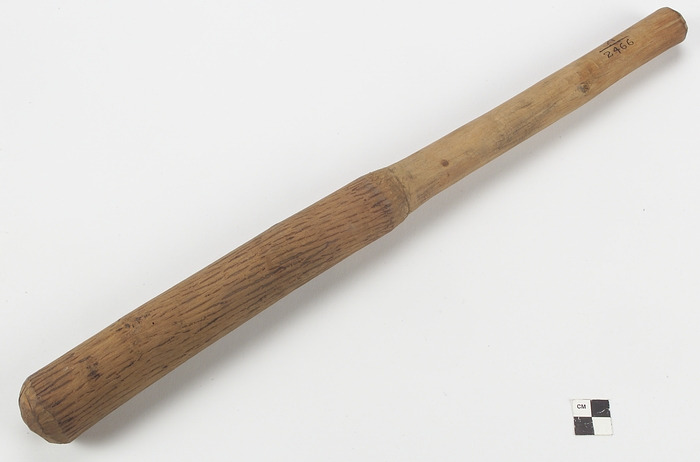
- Some Indigenous people also fished from canoes at night. A torch was held over the water and when the sturgeon came to investigate, they were clubbed or speared.
- Sturgeons would leap from the water and land on their sides. The loud noise could be heard up and down the river. The Indigenous people canoed to favorite jumping spots to allow fish to jump into their canoe. You can still see sturgeon jumping today.
Sturgeon were mainly preserved by smoke and sun drying.
There is a word for sturgeon in Catawba, but much of the traditions concerning sturgeon, shad, and another anadromous fish, have been lost.
These fish have not been able to travel to the interior of the Carolinas to reproduce since the rivers were dammed.
Information in this article has been provided by Robert Carter, Clemson Extension Agent and Catawba Nation Outdoor Educator.
 SCDNR Blog
Leave a comment