
By Pete Wright, Vice Chair of the South Carolina Native Fish Coalition
The sun was high, the temperature above 90 degrees Fahrenheit, and the shaded eddy on the far side of the river had my undivided attention. “Excuse me,” a nice woman said. Her words startled me. I turned to see her standing a few feet behind me with her son. “Have you seen a pair of sunglasses float by,” she asked. I had not. In fact, I intentionally wasn’t paying attention to the shenanigans upriver around the bend. I kindly let her know I hadn’t seen her glasses but would keep an eye out for them. She sighed, thanked me, then headed back upstream to the beach along the river and the festivities with her son. My eyes returned to the eddy.
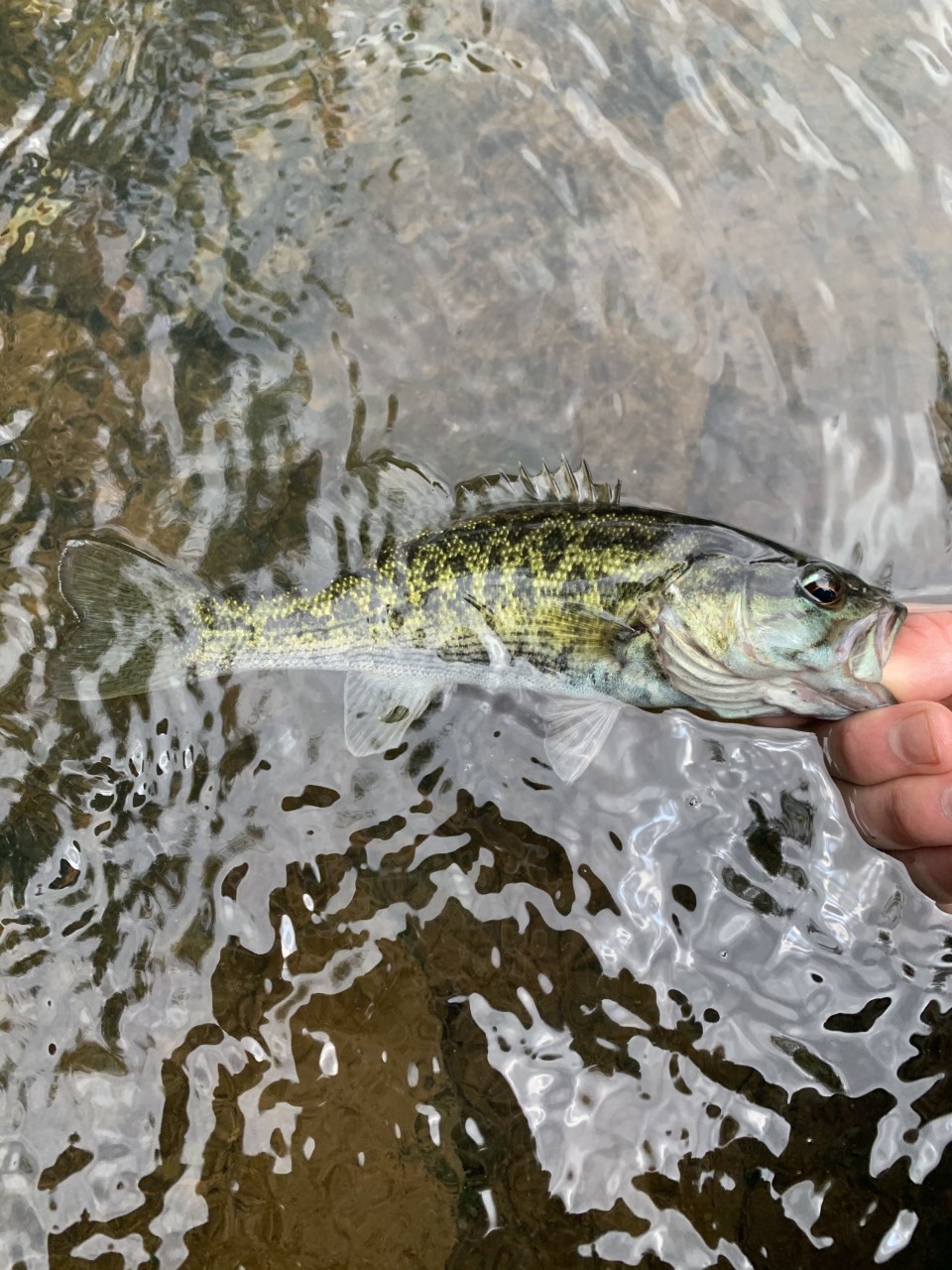
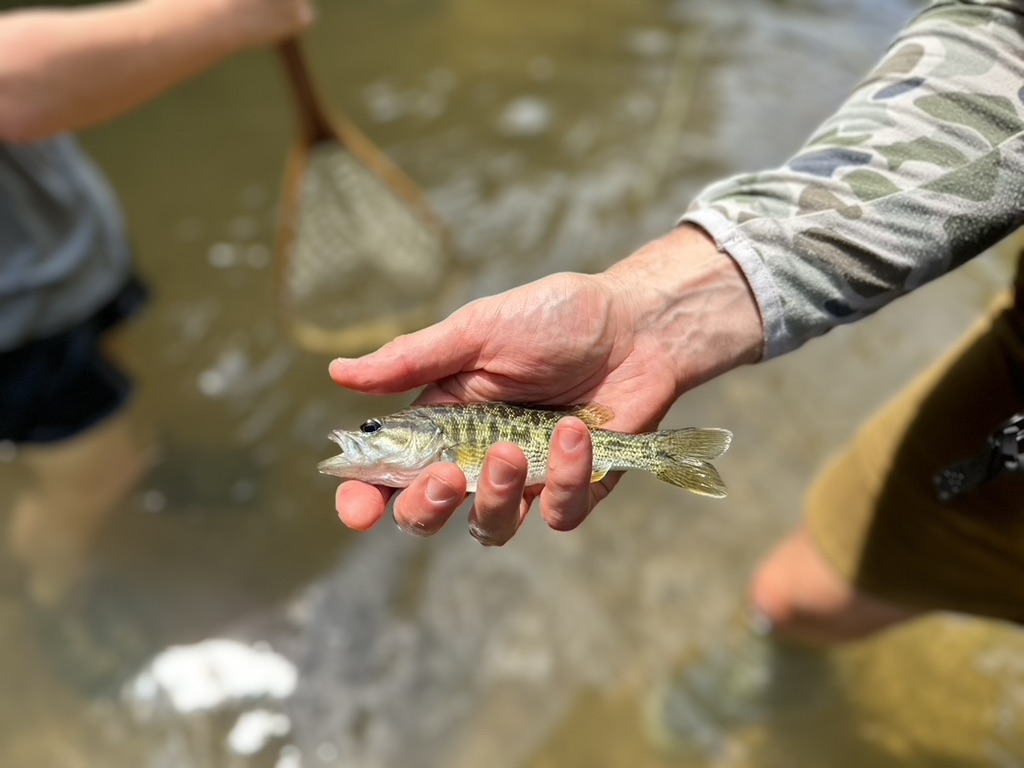
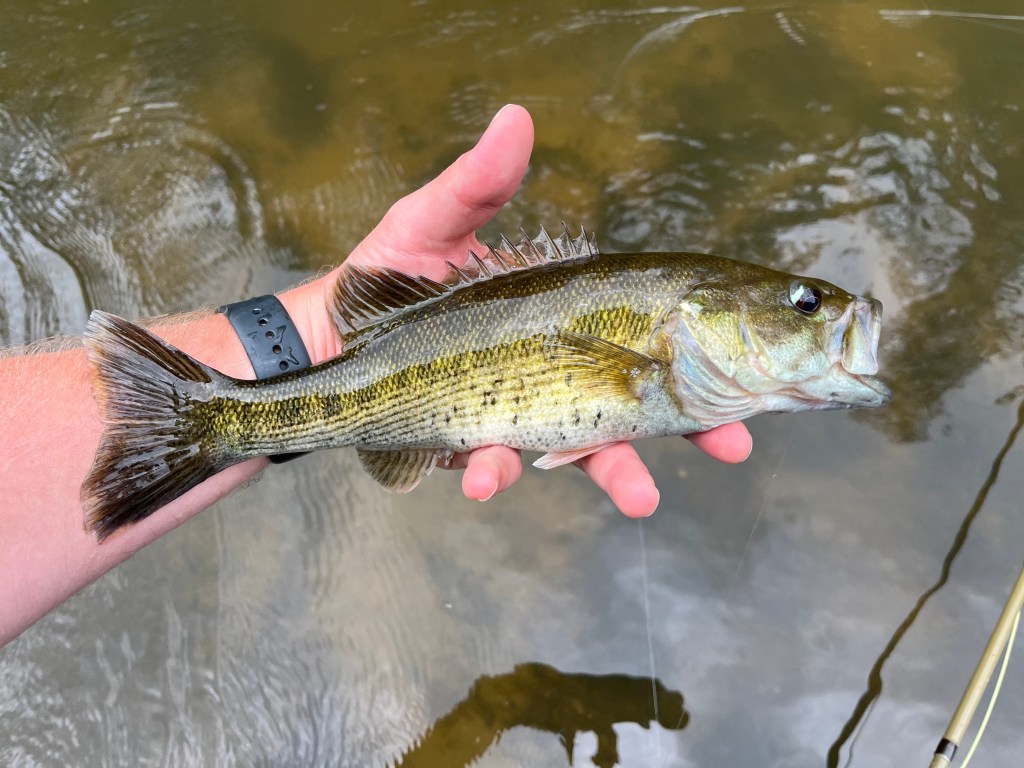
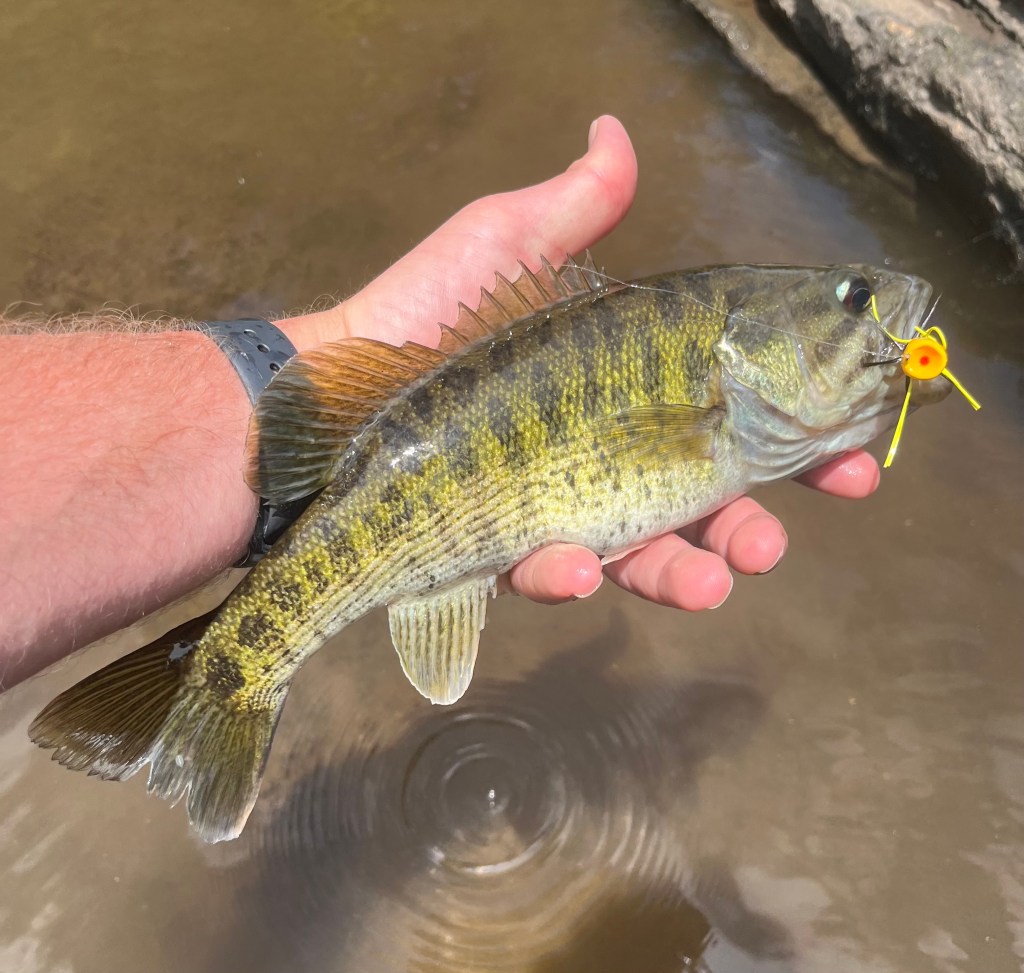
I was fishing for Bartram’s bass (Micropterus pucpuggy). A South Carolina native. These fish exist in a beautiful corner of the upstate. Their habitat mirrors that of brook trout, another state native, but in lower elevation and warmer water. The day’s encounter served as an example of why we need to increase awareness of their existence.
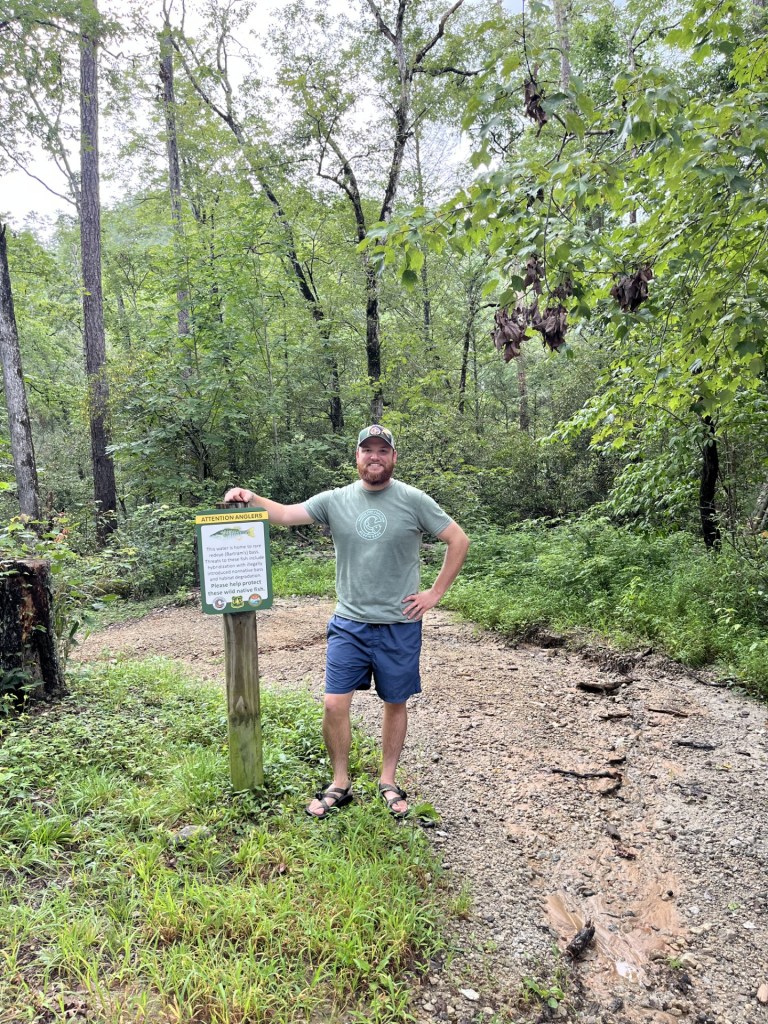
People love to recreate in the same water these fish call home. Most of whom have no idea they share water with an ancient species of fish that makes this river special. Our role as the Native Fish Coalition is to give these fish a voice. In many cases, the same people who love these waters for other reasons would likely appreciate information about the native fish beneath the surface. Rarely do folks intentionally cause harm, but ignorance and carelessness cause destruction regardless of intent. Our chapter decided to mitigate the chances of human error by adding visible reminders on the way to enjoy the shared water.
Our Native Fish Coalition chapter board members proposed the signage idea to national. We worked together to design signs like those used by other states for similar purposes. Designing the signs was easy. The hard part was the approval and coordination that followed.
The National Forest Service and the South Carolina Department of Natural Resources manage the areas we included in the program. As a result, we needed to establish approval from both entities. We leveraged local relationships to identify the key points of contact in each organization. We initiated communication with email. We learned the USFS defers to the SCDNR in most cases but still reserves the right to edit sign verbiage as needed.
The process took time. We navigated message and image concerns from both the USFS and SCDNR. Federal and state organizations must follow certain protocol. As a result, the effort took longer than anticipated. In the end, we designed a sign accepted by all parties.

The signs couldn’t come fast enough. Shortly after we received approval, one of our friends fished a spot known to contain these fish. He met some anglers along the bank as he worked his way upstream. They greeted each other and took a moment to discuss the day. After a few pleasantries and fishing updates our friend prepared to move along so the gentlemen could enjoy the remainder of their day. Before he left, they called to him and reminded him to kill any bass in the water who might “eat the trout.” They moved their chairs, and our friend looked in horror as he noticed not one, but multiple trophy size Bartram’s bass lying dead on the bank. These bass grow roughly one inch per year, and the combined age of the fish he saw covered decades of life in the river. These anglers hadn’t done anything wrong, if they planned to eat the fish. The men’s catch was within the established bag limit for the area even if they didn’t realize the difference in bass species living in that water.
The heart-breaking aspect of this story is the fact those particular bass are native to the stream, and the trout are stocked for put and take recreation. Not to mention the Bartram’s are smaller than most of the trout introduced for recreational purposes and pose little threat. Illegally introduced species of larger bass cause hybridization risk to the native Bartram’s and eat trout. Knowing the difference between a native Bartram’s and an introduced bass species can help protect this unique fish. Our signs intend to serve that purpose.
Summer in upstate South Carolina provides many opportunities to enjoy the outdoors. Folks can hike the foothills of the Appalachian Mountains, camp at one of the many state parks in the area, or fish some of the best rivers in the southeast. Our goal as a Native Fish Coalition chapter in South Carolina is to educate people about our home water and give them the knowledge they need to help care for these wild places and fish who live in them.
You can learn more about the Native Fish Coalition in South Carolina by visiting www.nativefishcoalition.com.
 SCDNR Blog
Leave a comment