
By Alan Nguyen, SCDNR Archaeology Intern
In the field of arts and sciences the biggest question is always “why?” Why does what we do matter? Within academia, that answer feels obvious. But to those outside of it, it can seem distant or irrelevant. That question, why should others care? This is what led me to apply for the Fall 2025 SCDNR Archaeology Internship Program.
I’ve always believed archaeology has deep value, but I also know that belief isn’t universal. If someone asked, “Why does that even matter?”, I wouldn’t want to avoid the question. I’d want to invite them into the conversation.
Growing up, I was told that success meant choosing a STEM field. Astronauts, doctors, engineers those were the examples of “making it.” But in my senior year of high school, I realized there were other ways to contribute through stories, culture, and history. I started college as a history major, but after taking an introduction to anthropology class, I fell in love with the human side of it all and decided to double major.
By my junior year, I had experience as a Resident Assistant (RA) at the University of South Carolina (USC) but nothing that felt connected to my studies until my friend and fellow Anthropology Student Association (ASA) member, Charles Scarborough, told me about an SCDNR internship in archaeology. I decided to apply, inspired by the amazing work I’d seen from the team, especially Gabe Donofrio’s presentation at the 2024 annual meeting of the Southeastern Archaeological Conference (SEAC). When I found out I’d gotten the position (while on vacation in Japan), I was thrilled.
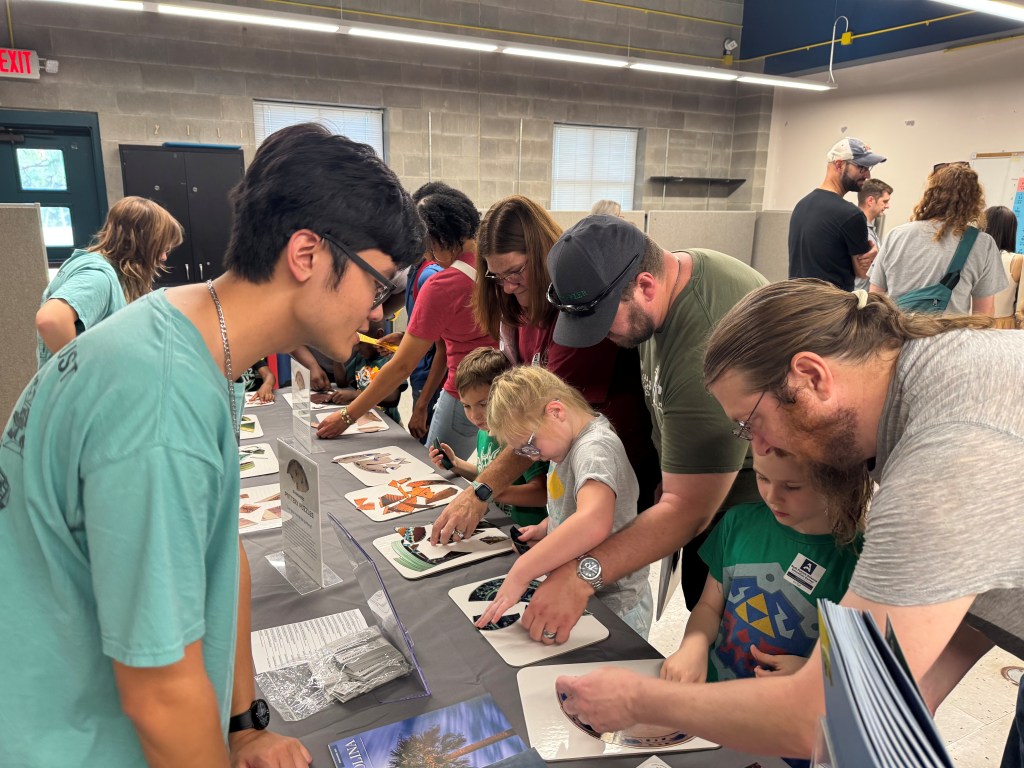
What surprised me most was how much of the internship focused on education, especially for kids. Many had no idea what archaeology was, so every event was an exercise in creativity, marketing, branding, and communication. At the 40th annual USC Aiken SEED STEM Festival, I learned how even small things like a cup of pencils, some stickers, or a 2D magnetic pottery re-fit puzzle activity can draw a child in to learn more about archaeology. From there, it’s all about what they take home – a spark of curiosity, a story, maybe even the first idea of a future career.
I also learned how important it is to engage parents by teaching them the right terminology, or helping them see archaeology not as a hobby, but as a vital, meaningful profession. When both parents and children walk away with a deeper appreciation for cultural preservation, that’s the real success of outreach.
In a world obsessed with quick results and quantitative outcomes, archaeology and all the humanities need people who can make the work feel real to others. That’s what the South Carolina Heritage Trust Program does so beautifully. It connects people to the past in ways that shape how we understand the present.
This internship showed me that public outreach isn’t just about explaining what we do, it’s about sharing the why behind it. And when people understand that they start to see themselves as part of the story too.
 SCDNR Blog
Leave a comment