
By Gabi Daniels, SCDNR Archaeology Intern
During the fall of 2025 and spring of 2026, I had the opportunity to intern with the South Carolina Department of Natural Resources’ Cultural Heritage Trust Program, where I focused on public outreach and education. My role challenged me to step outside the familiar rhythms of what I became comfortable with my entire college career—dense terminology and an academic audience. At first, this shift was difficult. An important aspect of my role as an intern was to translate the ideas of archaeology for a younger audience who typically thought of archaeology as having to do with dinosaur bones or the adventures of Indiana Jones. Stripping away jargon without losing understanding and clarity requires both creativity and patience!
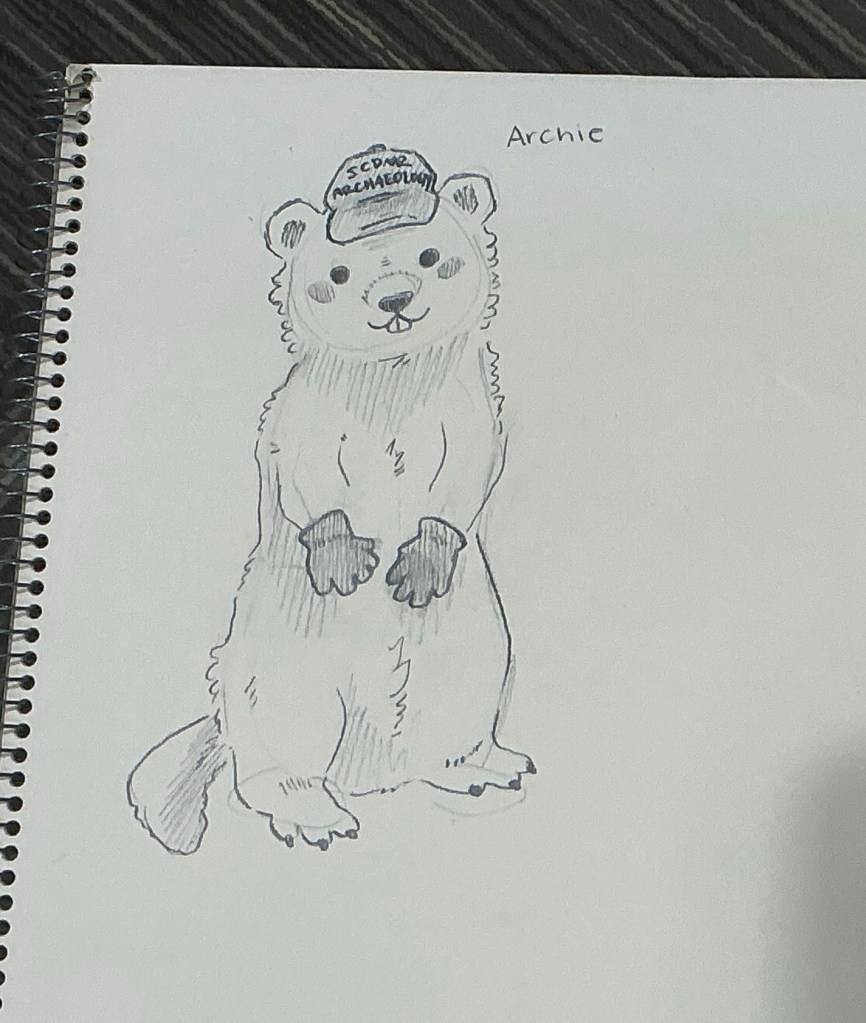
I was excited to challenge myself when I was asked to consider how an archaeology story time book for young children could be created. As a lifelong artist, I also saw this as an opportunity to merge my two passions of art and archaeology! I began this process with the cornerstone of any good children’s book—a loveable main character— reimagining a familiar face previously used in outreach materials, Archie the groundhog, originally created by SCDNR archaeologist Katie Gray in 2021. From there, I researched other children’s books, storyboarded potential narratives, and experimented with visual aesthetics.
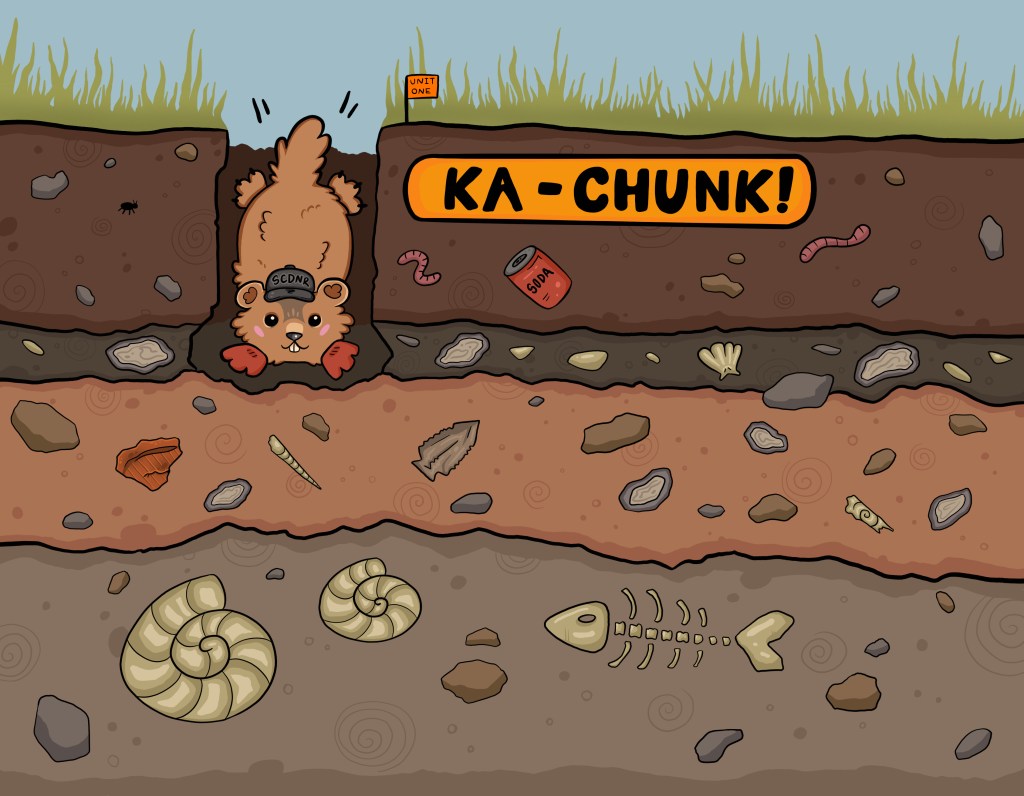
The story that I landed on follows Archie on an excavation at the Pockoy Island Shell Ring Complex, a 4,300-year-old cultural site within Botany Bay Plantation Heritage Preserve/Wildlife Management Area on Edisto Island. The challenge was not only to tell an engaging story, but also to introduce foundational archaeological concepts. Ideas such as soil layers being older the deeper they get, also known as stratigraphy, were conveyed with simple sentences and clear illustrations. Key terms that might be difficult but were necessary like “archaeologist,” “artifact,” and “excavate” were supported by simple explanations and clear imagery.
In my second semester, I expanded this work through a follow-up story focused on what happens after an archaeological excavation—specifically, the laboratory processes. This presented a new set of challenges as this story would directly focus on curation, preservation, and why it all matters. These practices are very important and are the way that archaeologists can study and learn about people of the past. Though fundamental to understanding archaeology as a field, these methods of preserving the past felt overwhelming to translate into one or two sentences with accompanying illustration.
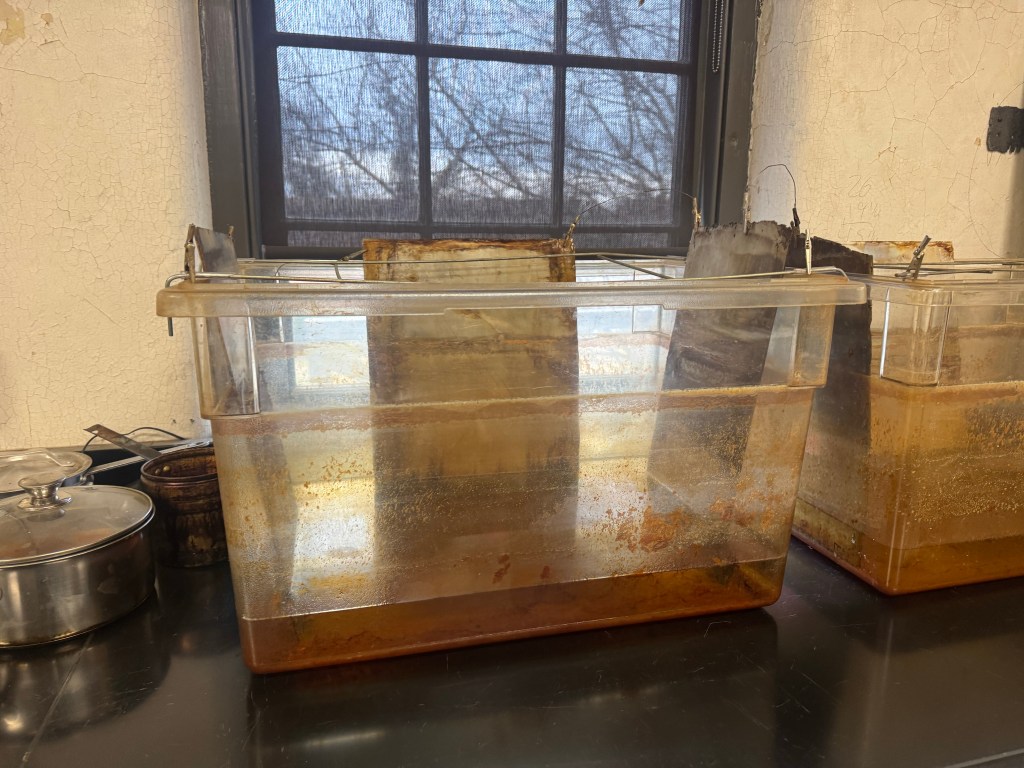
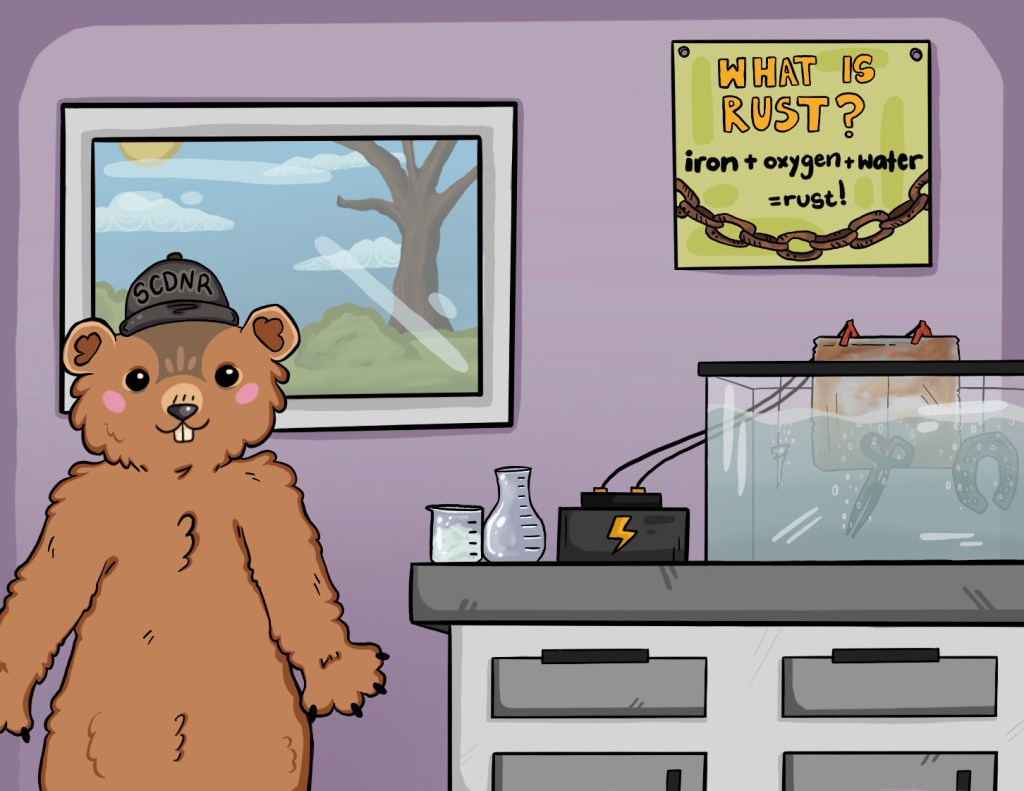
I found myself stuck on how I could illustrate something as complicated as electrolysis, a chemical process used to conserve metal objects, for a very young audience, or how I could explain the labeling structure of artifact bags for curation. By studying equipment, speaking to archaeologists working at SCDNR’s Parker Annex Archaeology Center, and considering how SCDNR archaeologists who provide programming to the public approach these concepts in kids programming and at festivals; I was able to translate these processes into symbols and simplified illustrations that complemented the text while remaining grounded in real archaeological practice.
Developing these storybooks has been one of the most rewarding aspects of my experience working as an intern with SCDNR. It has reinforced to me the importance of public outreach, particularly for children, who are often encountering these ideas for the first time. I hope these stories spark curiosity about the past and maybe even inspire kids to follow in Archie’s footsteps to become archaeologists themselves one day!
 SCDNR Blog
Leave a comment