
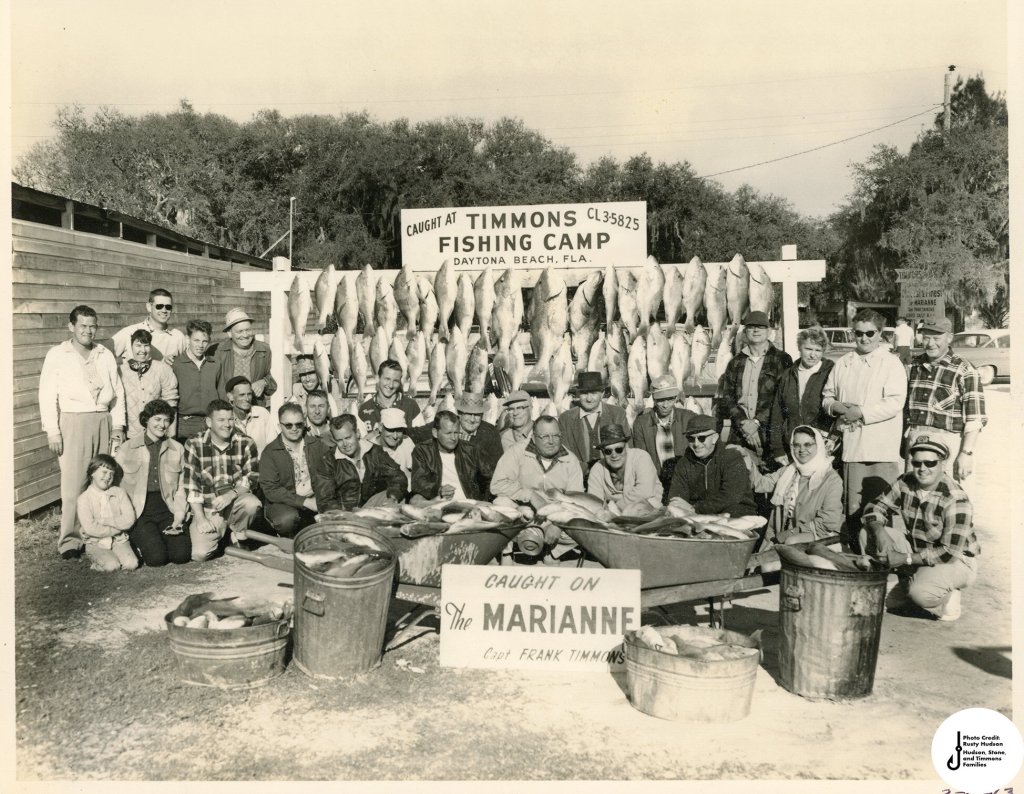
It’s 1963. Salt spray peppers your arms and face as you stand at the bow of the Marianne, departing Daytona Beach to fish the day away with friends, family, and Captain Frank Timmons, a war vet who has been guiding fishing parties since age 10. By the end of the day, your boat is loaded down with red snapper, grouper, and amberjack. You commemorate the day with a single photograph back at Timmons Fishing Camp. No real records are kept on how many fish you catch; in fact, you have so many, you fill wheel barrels and trashcans full for the group photo.
Transforming Myths to Metrics
Today, we look back on the early years of fishing boat chartering as years of abundance and few restrictions. Our ideas about fishing during that era feel mythic, derived from passed-down stories of massive fish and black-and-white photos in family albums.
Those old photographs have the potential to provide more than just nostalgia. In fact, they’re one of our only quantifiable glimpses of the state of South Atlantic fish populations before scientific monitoring programs began tracking recreational and for-hire fishing trips in the 1970’s. It was this realization by third-generation charter boat captain Rusty Hudson — and his generous donation of three decades’ worth of old charter photos — that led to a fascinating new citizen science project from the South Atlantic Fishery Management Council (SAFMC).

A group photo commemorating a 1950’s trip aboard the Mako (left) and the Mako near Daytona Beach during the same time period (right). (Photo: South Atlantic Fishery Management Council FISHstory Project)
Volunteering Virtually
The FISHstory project relies on volunteers turning those photographs into useful information by identifying the species of fish shown in a given photo. Each photo is shown to multiple volunteers, and inconsistencies in fish identification are sent to experts for final confirmation, so volunteers of any level can participate. The online platform includes straightforward tutorials and a specialized field guide to lead new users through the fish identification process. The project’s FAQs provide an additional source of guidance when getting started.
“Exploring fisheries of the past could help us better understand the health of fish stocks today and into the future,” said Julia Byrd, who manages citizen science projects for the Council. With enough virtual volunteer participation, the FISHstory project holds the potential to provide valuable information about the numbers, sizes, and movements of common fish species across four decades missing from official records.
““If you are familiar with fish in the South Atlantic or simply enjoy looking at fishing photos, this project is for you!””
So far, 1,012 volunteers have joined on to help create useful data from the first set of photos, all capturing fishing charter trips taken from Daytona Beach, Florida, between 1940 and 1980. If successful, the project could be expanded to other locations across the region to broaden our understanding of fish populations in decades that previously seemed lost to history.

Photos from the collection donated by Rusty Hudson depicting fishing charter trips out of Daytona Beach between 1940 and 1980. (Photo: South Atlantic Fishery Management Council FISHstory Project)


 SCDNR Blog
Leave a reply to E. Weeks Cancel reply