
By Briesie Stewart, SCDNR Archaeology Intern
“Do you have any experience in Spanish language translations?” This was the last question I expected to hear when meeting with SCDNR archaeologist Meg Gaillard, after being accepted into the SCDNR Heritage Trust Archaeology internship. As a bilingual anthropology student, the question thrilled me. The internship that I had been so excited to receive somehow got even more interesting.
My passions for archaeology and language began in the same place. When I was 13 my family moved to Mexico for my dad’s work. For three years, I was immersed in Spanish language, culture, and history. As I grew to admire all three, I began to understand that just as language connects people in the present, archaeology helps to connect people of the present to people of the past. Yet even as I continued to study Spanish and Anthropology at the University of South Carolina, it never occurred to me the power that these two fields could have when brought together until I came to this internship program.
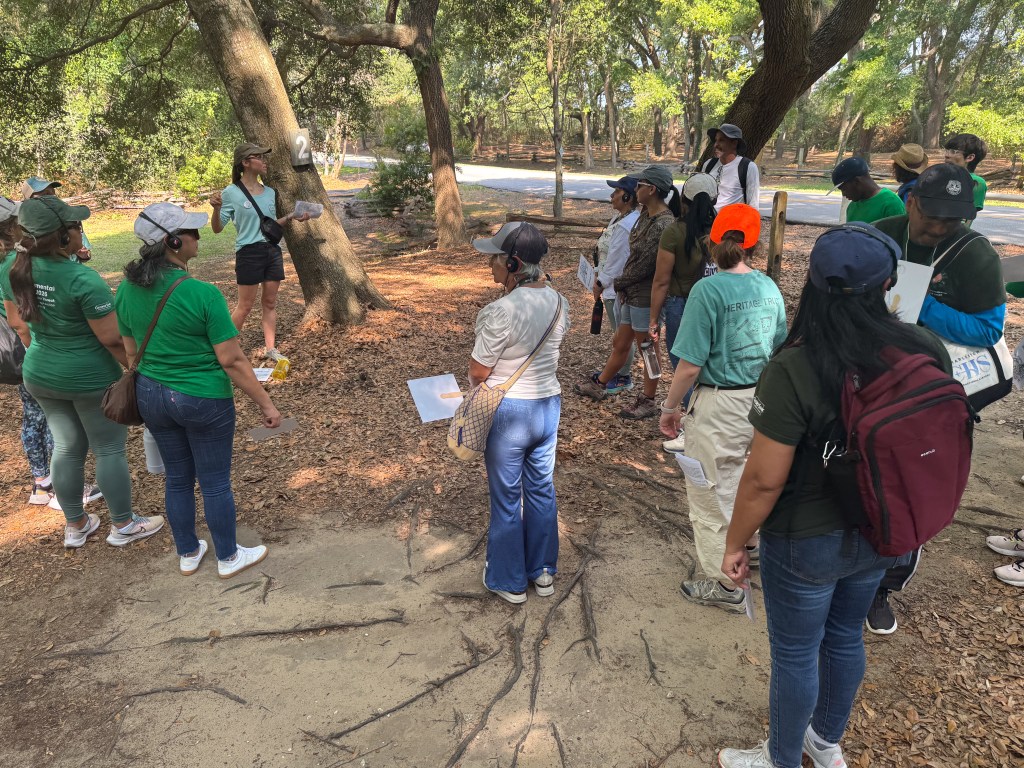
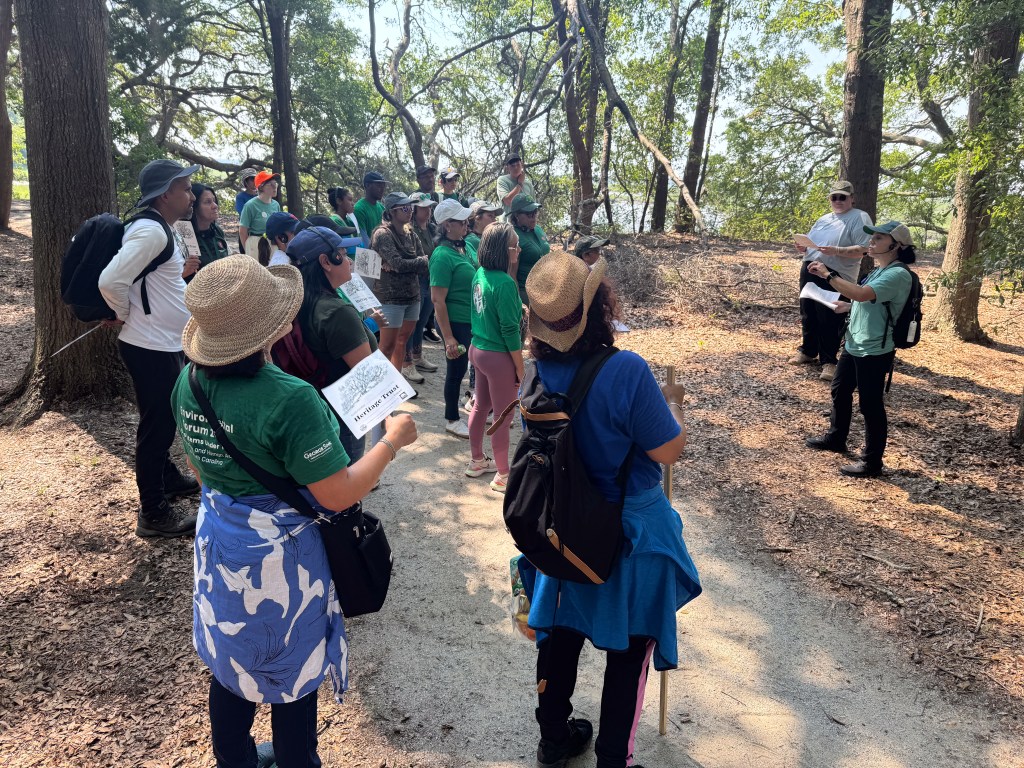
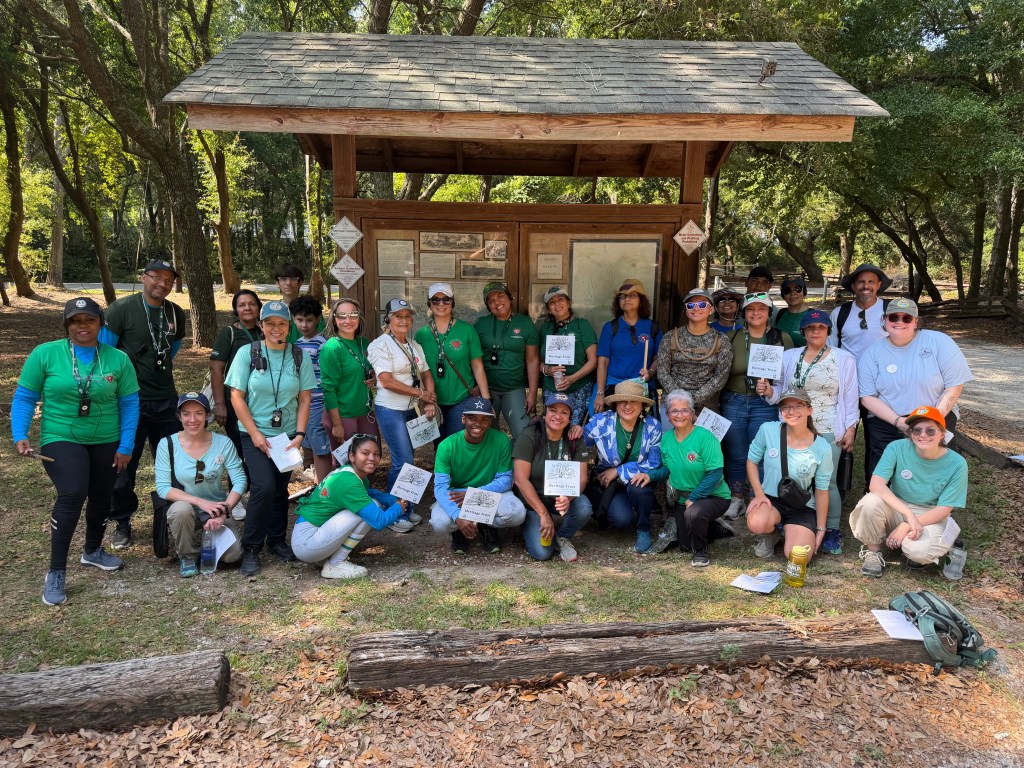
I got to experience the combined strength of language and archaeology firsthand while assisting a bilingual hike at Fort Lamar Heritage Preserve on James Island in June. The tour was a combined effort by Meg Gaillard, Leila Rice (Heritage Trust Program community archaeologist), Alix Pedraza (SCDNR director of community engagement) and the Mujeres Latinas of South Carolina volunteer network.
The guided hike took an hour and a half with eight different stops. The team of archaeologists co-authored a script with Alix ahead of time. Throughout the hike around the earthworks next to the pluffmud, archaeologists presented the historical aspects of the American Civil War Battle of Secessionville, as well as demonstrating the role of the Heritage Trust Program in South Carolina. This information was translated from English into Spanish by Alix through tour guide headsets to more than 30 participants. These participants came from a variety of Spanish-speaking countries and had a wide range of English fluency.
While I was able to present part of the tour in Spanish, what I most enjoyed about the experience was serving as a bridge of communication between tour participants and the archaeologists. Their questions led to fascinating conversations in both languages about the everyday lives of soldiers and the comparison of the American Civil War to other Latin American conflicts.
For me, the experience felt like my worlds coming together. Getting to present to the Latino community about history and archaeology in Spanish was a true delight, but it also showed me the value of bilingual services as a feature of accessibility. In South Carolina, there is a growing need for bilingual services. According to the South Carolina Revenue and Fiscal Affairs office, approximately 7.5% of South Carolina residents speak a language other than English at home. That’s more than 360,000 people across the state! More than 4.7%, or 226,000 of these people are Spanish speakers (SCRFA, N.D). Moreover, the Hispanic population of South Carolina has increased by 24% between 2020 and 2024 and is predicted to continue increasing (Atkinson, 2025).
As someone who has both previously lived abroad and regularly pursued relationships with international communities within South Carolina, I have personally felt the impact of multilingual community outreach. I believe that the Heritage Trust Program, as stewards of South Carolina’s cultural and natural heritage, is uniquely positioned to oversee that responsibility well. Some practical ways that the Program could further connect with multilingual communities is by translating educational materials and signage, and by continuing to offer tours and programs specifically designed for multilingual communities. These specialized community outreach efforts could make South Carolina’s heritage more accessible to all its residents and visitors; informing them of the culture, history, and environment of the state we all call home.
When I applied to SCDNR’s Heritage Trust Program Archaeology internship I expected the lab work. I expected a wide variety of lectures that would enhance my understanding of archaeological work. I expected to work with a qualified group of individuals who deeply care about this state’s natural and cultural heritage. I did not expect to gain a new perspective on how my passions and talents could be combined to better serve the state I have grown to love so much.
Atkinson, Macon. “SC’s Hispanic and Latino Population Keeps Growing.” Palmetto Politics, June 26, 2025. https://www.postandcourier.com/politics/sc-census-hispanic-population-growth/article_720b29e5-edd2-40af-acdb-03202fcf0602.html.
SCRFA. “Language Spoken at Home for the Population Age 5 & Older by County 2017-2021 | South Carolina Revenue and Fiscal Affairs Office.” South Carolina Revenue and Fiscal Affairs Office, Socioeconomic data, 2022. https://rfa.sc.gov/data-research/population-demographics/census-state-data-center/socioeconomic-data/language-spoken-at-home-2016-2020.


Leave a Reply