
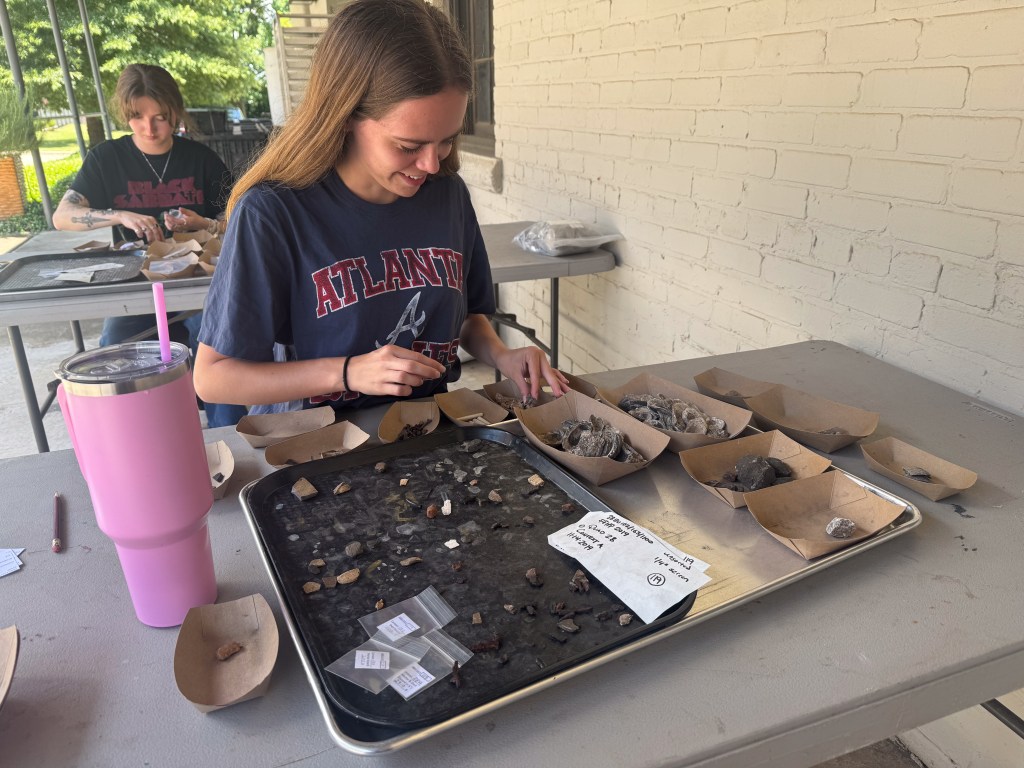
By Amelia Gay, SCDNR Archaeology Intern
Archaeology is often associated with excavation, artifact analysis, and preserving the past, but one of most important responsibilities of this science extends beyond the field: communicating what is learned to the public. Without effective journalism and public communication, archaeological research can remain inaccessible to the communities it is meant to benefit. Throughout my internship with the South Carolina Department of Natural Resources (SCDNR), I have come to appreciate that archaeologists are not only researchers, but they are also storytellers. Whether through articles, interviews, social media, or public programs, journalism helps transform archaeological findings into stories that educate, inspire, and encourage people to value cultural heritage.
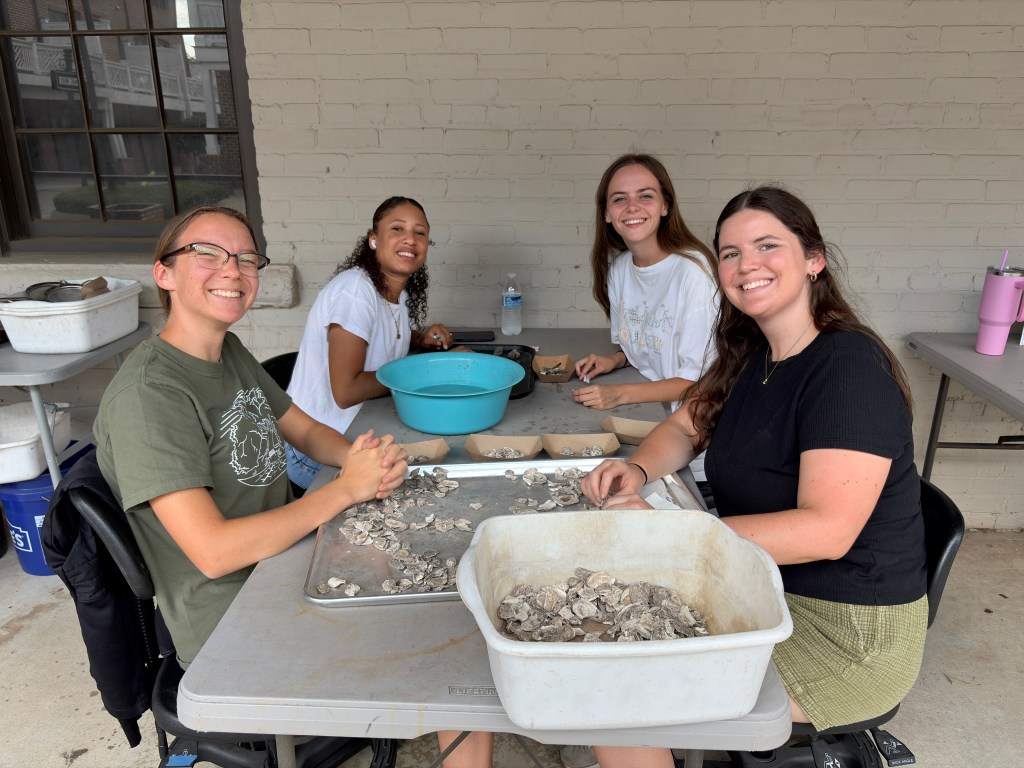
Throughout the internship, our cohort participated in far more than laboratory work. We learned how archaeologists communicate with the public through programs like Unearth a Story at local libraries, where families and children explored archaeology through hands-on activities, like learning how shell beads could have been created 4,000 years ago or being taught how to piece back together a broken pot. Learning about how community members become excited about history reinforced that archaeology is not only about preserving the past but also about inspiring curiosity in the present. Public programming transforms archaeological research into something that people of all ages can understand and appreciate, and it showed me that outreach is an essential part of the profession.
One of the most meaningful lessons I learned came from the internship’s emphasis on ethical storytelling and public engagement. During our sessions with the Muscogee Nation Historic and Cultural Preservation Department and later with Chief Lamar Nelson, Chief and Tribal Archaeologist for the Eastern Cherokee, Southern Iroquois, and United Tribes of South Carolina, we discussed how archaeology should be conducted in partnership with descendant communities rather than simply about them. We also learned the importance of the Native American Graves Protection and Repatriation Act (NAGPRA) and how respectful communication plays a vital role in preserving cultural heritage. These conversations reinforced that journalism has the power to amplify Indigenous voices, provide historical context, and ensure that archaeological discoveries are shared with accuracy, respect, and collaboration rather than sensationalism.
The internship also demonstrated that effective communication takes many forms. We participated in workshops on conducting interviews, capturing environmental sound, creating photo essays, and producing blog posts, all of which highlighted how multimedia storytelling can bring archaeological research to life for broader audiences. Sessions on science communication and media relations emphasized the importance of translating technical information into language that is engaging without sacrificing accuracy. As someone with a journalism background, I found these experiences especially valuable because they showed how strong communication skills can bridge the gap between researchers and the public.
As I pursue careers that intersect both history and journalism, this internship showed me that the two fields are closely connected. Journalists have the ability to highlight archaeological discoveries, explain why preservation matters, and ensure that diverse histories, including those that have traditionally been overlooked, are represented accurately. At the same time, archaeologists benefit from learning how to communicate their work beyond academic audiences.
Ultimately, archaeology does not end when artifacts are cataloged or excavations conclude. Archaeology continues when those discoveries are communicated to the public and understood by those outside of the field. Communication allows archaeological research to reach audiences beyond academia, fostering curiosity, education, and a deeper understanding of the diverse histories that have shaped our communities. My experience with SCDNR has shown me that preserving the past also means sharing it, and that thoughtful, ethical storytelling is one of archaeology’s most powerful tools.


Leave a Reply